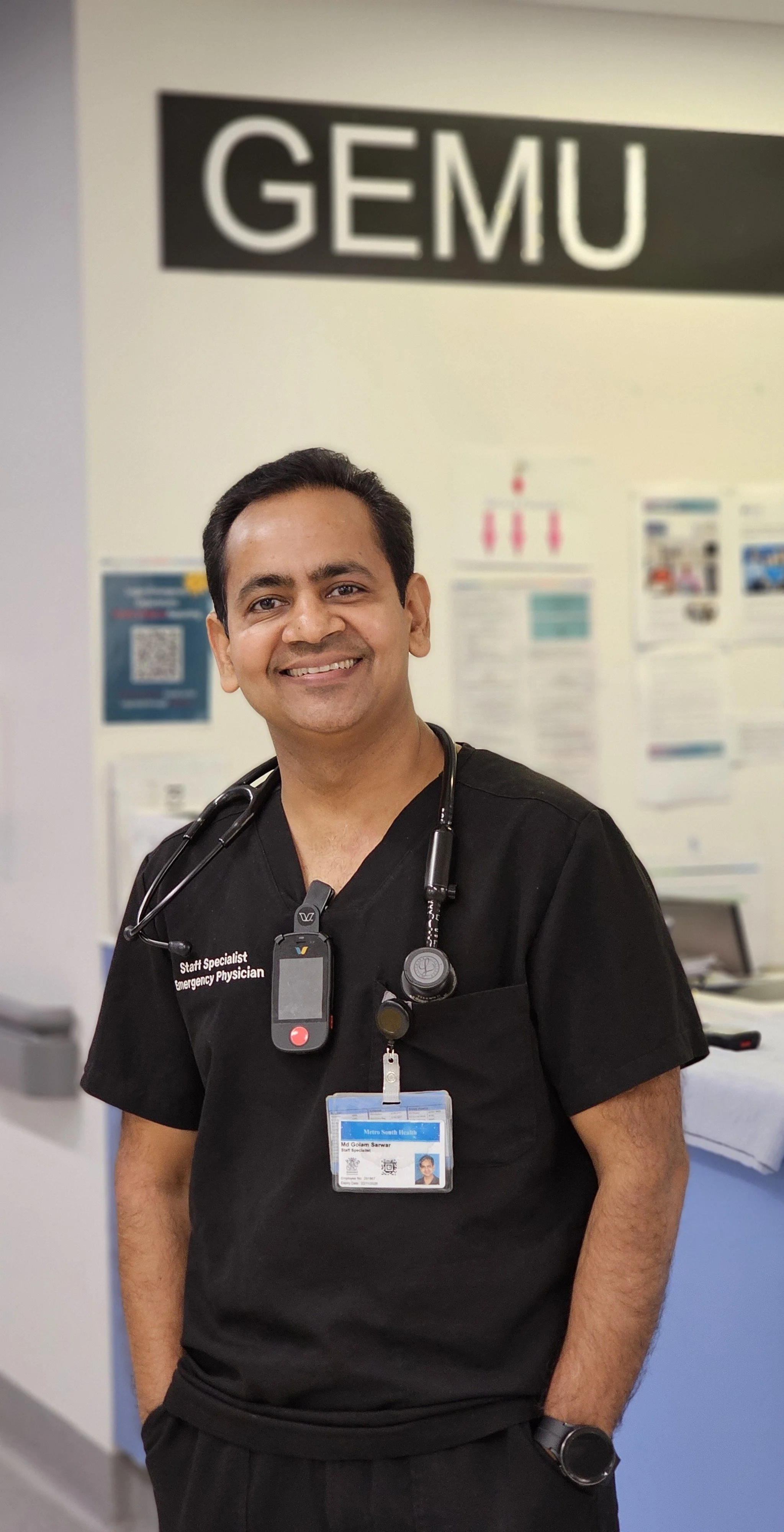
Setting a new benchmark in emergency care for older people
An incident early in his medical career made an indelible impression on FACEM Dr Golam Sarwar.
‘An older patient in a corridor bed was trying to call out to me for help as I hurried past to attend a code just beside her,’ Dr Sarwar said. ‘In that moment, I couldn’t stop, and I remember asking a colleague to please check on her as I rushed on.
“I believe our older patients deserve better care and that we can absolutely do better.”
‘I finished my shift three or four hours later and went to check on the patient. She was still there, in the same corridor, in the same bed, and still calling out for help.
‘That experience, along with multiple other moments involving the care of older patients in the ED, has driven me to push for change. I believe our older patients deserve better care and that we can absolutely do better.’
Time for change
As an Emergency Staff Specialist at Queensland’s Logan Hospital, Dr Sarwar found himself in a position where he could help alleviate this sadly all-too-common situation. He launched, and is the Clinical Lead of, Logan ED’s Geriatric Emergency Medicine Unit (GEMU), a unique and innovative dedicated emergency unit for older persons.
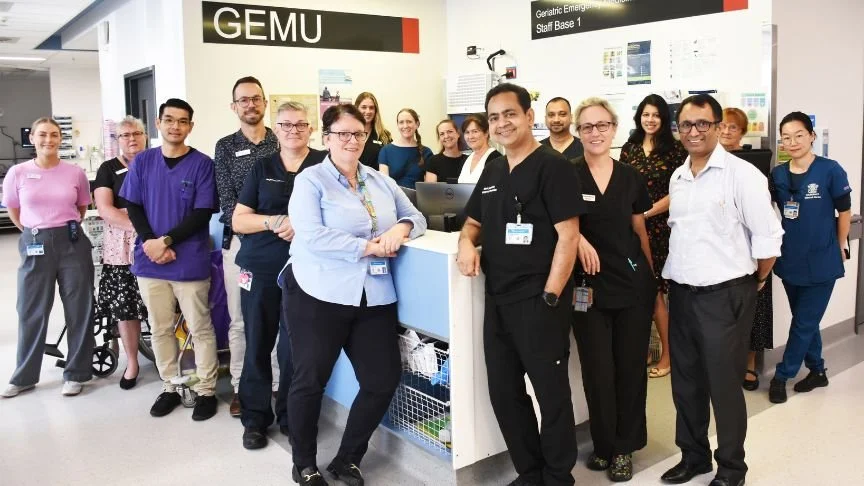
The multidisciplinary team of ED clinicians, geriatricians, nurses, allied health staff and volunteers behind Logan ED’s Geriatric Emergency Medicine Unit (GEMU).
Although patients aged 70 years and over comprised only 14 per cent of ED presentations at Logan Hospital in 2024, they accounted for a substantial proportion of resource utilisation. Over half (51 per cent) required inpatient admission, and this cohort represented 47 per cent of all patients who experienced an ED length of stay exceeding 24 hours, highlighting the extent to which this age group is affected by access block and patient flow challenges.
GEMU was established in February 2025 to address the complex and specialised medical, functional and psychosocial needs of older patients presenting to the ED.
Labour of love
The unit’s development has been a labour of love for Dr Sarwar.
‘The idea of creating GEMU and making it a six-bed space is to set a benchmark for how we care for older patients in the whole emergency department.
‘I had discussions with multiple geriatricians and ED physicians and tried to find any existing models in Australia, particularly for the older population and how that can be streamlined, with a dedicated basic space and set-up,’ Dr Sarwar said.
“The idea of creating GEMU ... is to set a benchmark for how we care for older patients in the whole emergency department. ”
‘The good thing is I found multiple teams in Australia engaged in this work. Some of them have geriatrician involvement and some are ED-based teams. But I couldn't really find an age-based, dedicated space.
‘There are a few other examples with a different model of care, mostly for residents from residential aged care homes or short stay spaces, but not in the acute ED space.’
The initial development phase was a long process, which included consulting the ACEM policy for care of older persons in the ED (with its current review nearing completion) to align with ACEM requirements.
A new model of care
The model of care encompasses a designated zone within the ED, redesigned for patients aged over 70. It includes an integrated, multidisciplinary team including ED clinicians, geriatricians, nurses, and allied health and a focus on both clinical and non-clinical needs such as comfort, orientation, mobility and communication. Streamlined assessment, early intervention, and discharge planning is tailored to older patients.
The ultimate aim is to optimise patient flow to reduce unnecessary admissions and reduce re-presentations.
‘I formed a working committee with a group including geriatricians, emergency physicians, allied health staff, pharmacists and nurses. We had two years of workup and finally we were able to achieve something we were really proud of,’ Dr Sarwar said.
Creative redesign
With no budget, thoughtful and creative adaptation was required. The unit was established by redesigning and repurposing the existing ED space to create a calm, age-friendly and person-centred environment.
“Our GEMU had absolutely no funding. We redesigned the ED and basically redirected the resources we already have. Almost no extra money was spent.”
‘Our GEMU had absolutely no funding. We redesigned the emergency department and basically redirected the resources we already have. Almost no extra money was spent.’
Age-friendly and person-centred care
‘This space has been modified. Instead of a hard trolley bed, we have a more comfortable bed with pressure-reducing mattresses. We have a clock showing the day and time so patients don't get disoriented. There’s better lighting, and a chair in case they don't want to lie in bed all the time. There is a separate fridge in that area as well for their food,’ Dr Sarwar said.
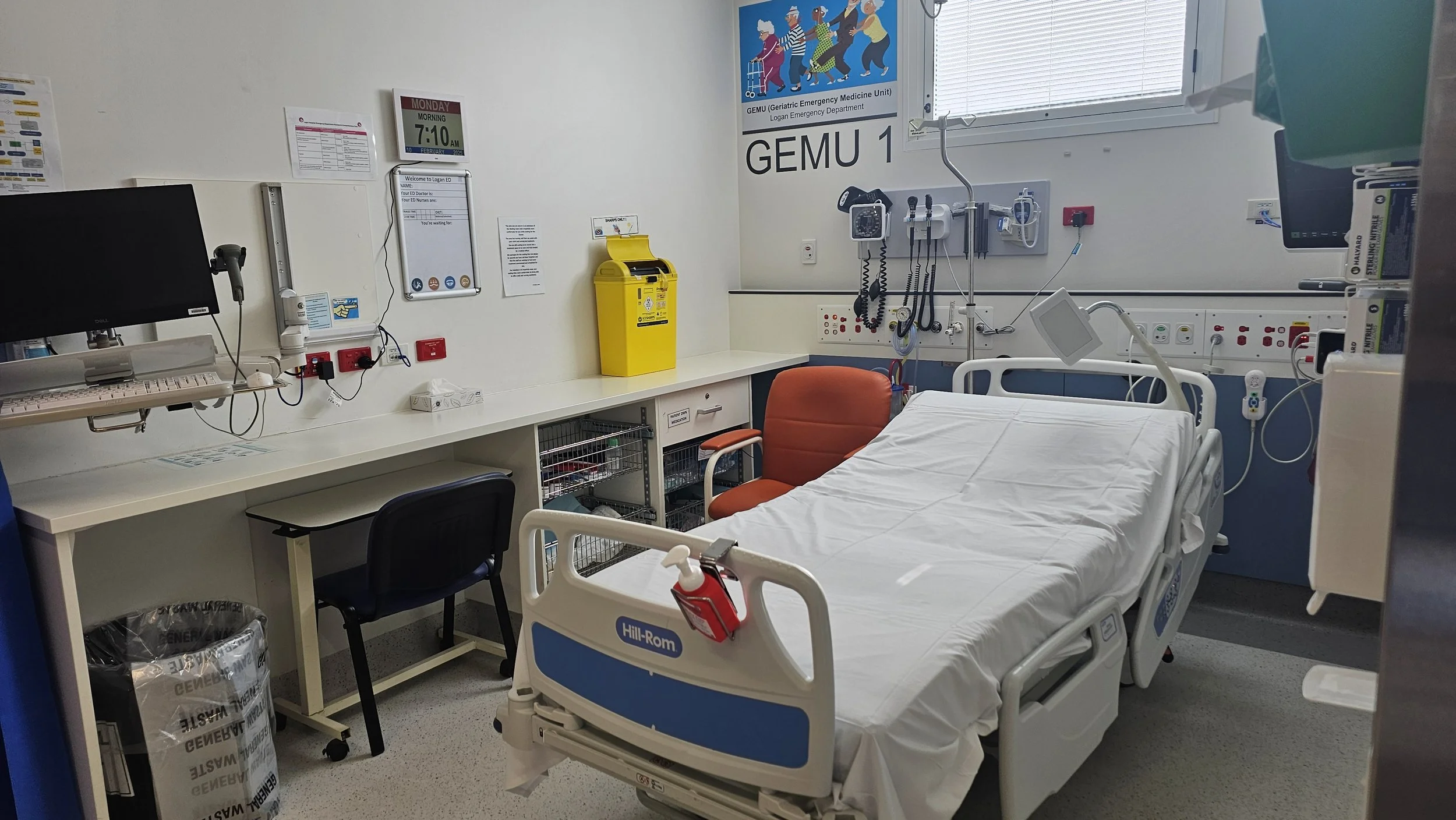
Resources were redirected to create the modified age-friendly ED space.
‘In addition to that, we have a dedicated team of geriatric-trained nurses, a pharmacist, allied health support, as well as geriatrician support in the emergency department seven days a week - five days physically there and the rest on call - to give support and streamline care.
‘Currently in our ED, older patients may be allocated directly to GEMU, even for lower-acuity presentations, if a bed is available. This provides a streamlined pathway with early assessment and coordinated multidisciplinary care. As GEMU capacity is limited, we are developing alternative pathways to ensure timely assessment and intervention for older patients who are unable to access a GEMU bed.’
Preliminary data is promising. Within the first three months key outcomes included a 61 per cent reduction in ED bed allocation time (from 105 to 40 mins); 29 per cent faster clinician review (from 142 to 100 mins); 84 per cent fewer patients staying more than 24 hours in ED (from 63 to 10); and a five-fold reduction in 72-hour re-presentations for patients aged over 70.
Exploring opportunities
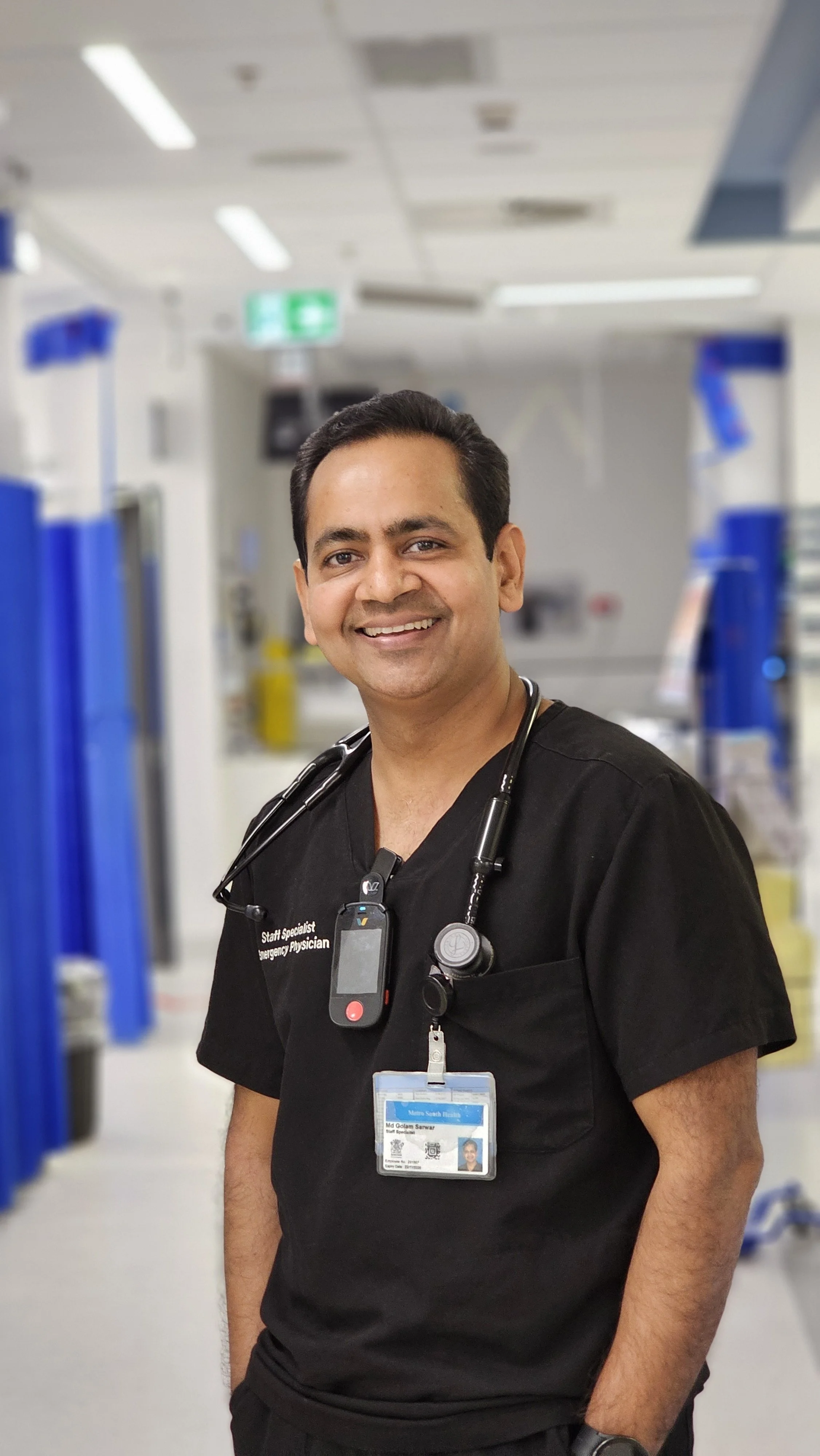
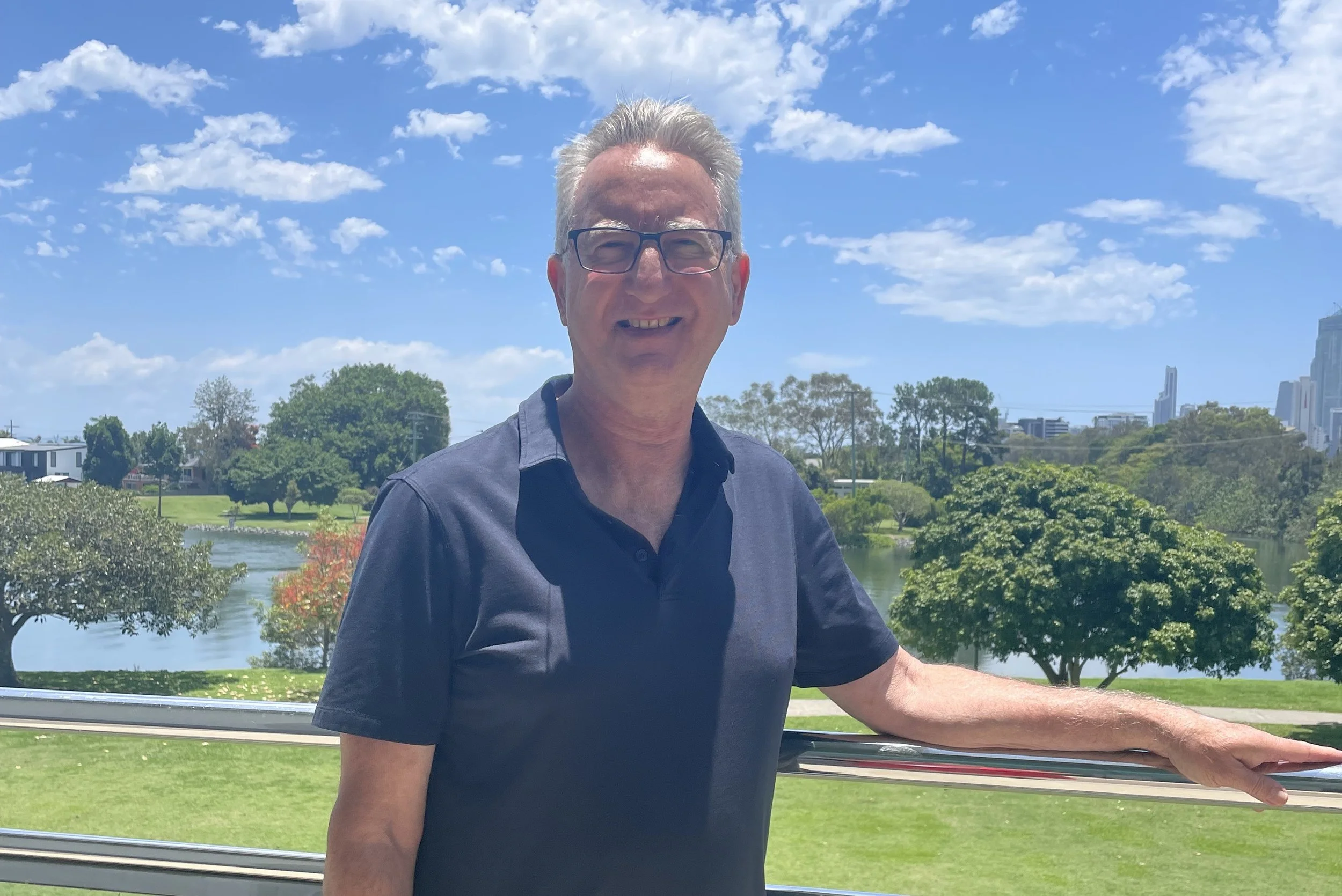
FACEM Dr Golam Sarwar heads Logan’s GEMU.
Dr Sarwar originally studied in Bangladesh and received a scholarship for a fellowship in emergency medicine in Saudi Arabia, where he trained until 2011. He has also studied geriatric medicine and is a member of ACEM’s Geriatric Emergency Medicine Network.
‘I decided to explore opportunities in Australia, as I had a few friends already working here, and joined Ipswich Hospital as a House Officer. To gain a better understanding of the Australian healthcare system, I chose to complete my specialist training through the Australian pathway and subsequently became a FACEM in 2021.’
GEMU’s genesis came from a firm conviction that avoiding delays in healthcare for the older population was vitally important, even for seemingly low-acuity presentations such as minor falls or sprains.
Atypical presentations
‘I think there needs to a bigger focus on recognising that older patient presentation is always atypical to some degree,’ he said.
‘In older patients, seemingly normal vital signs can be misleading. A heart rate of 100 bpm or a systolic blood pressure of 100 mmHg may appear acceptable in the general adult population but can indicate significant physiological compromise, particularly in those taking beta blockers or living with chronic hypertension.
‘Serious conditions such as sepsis, head injury, or intracranial bleeding can sometimes be mistaken for dementia, leading to delayed recognition and treatment. Older people may not clearly communicate their symptoms.
“I think there needs to a bigger focus on recognising that older patient presentation is always atypical to some degree.”
‘Older patients often experience multiple delays throughout their ED journey, from triage and bed access to investigations and treatment. Diagnostic processes may take longer due to difficult cannulation, the need to wait for renal function results before contrast imaging, and additional testing. Their complex presentations, multiple comorbidities, social challenges, and extensive medication lists often require multidisciplinary and multi-specialty input, further prolonging assessment and management.’
Dr Sarwar cites multiple research studies which show that once an older patient is in the emergency department longer than eight hours, there is a significant risk of developing delirium.
‘Patients with delirium always have a higher risk of mortality. There's a higher risk of falls, of hospital-acquired infection and other hospital-acquired complications.’
He said that at Logan Hospital the average length of stay for a patient aged more than 70 is 10 hours and 27 minutes, and for those aged under 70 it is five hours and 28 minutes.
High impact but low cost
Dr Sarwar is particularly proud of the volunteer program he instigated that supports the compassionate patient-centred care provided by the GEMU. Skywalker Volunteers are trained and recruited through the hospital system then work in the GEMU and other parts of the ED.
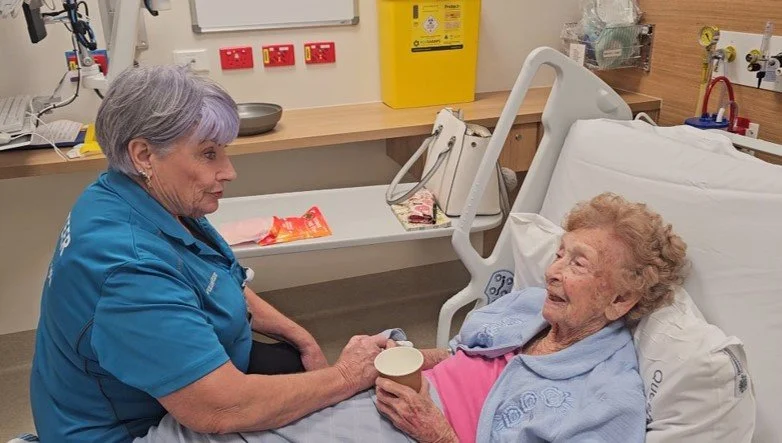
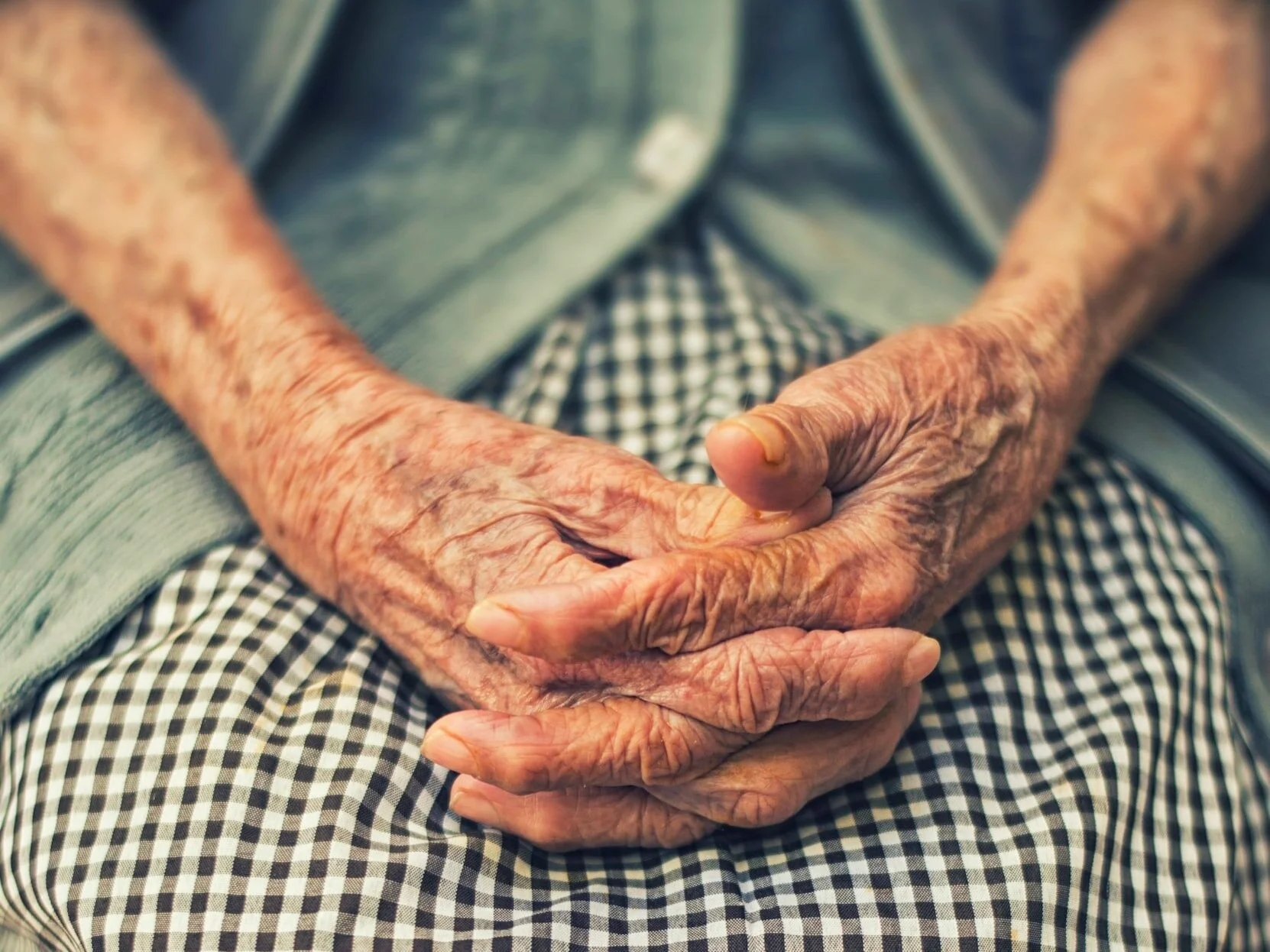
GEMU patient 100-year-old Norma, having a chat and a cup of tea with a Skywalker Project volunteer.
‘Most older people don't have anyone coming with them. They're often brought by ambulances and family members come later on. That's where the volunteers come in very handy. There is almost no cost involved, aside from their training and education. They are lovely people.
“It’s a very high-impact but low-cost project.”
‘It's a very high-impact but low-cost project.
‘Older patients sometimes come to the ED with a lot of polycomplexities. Some are socially isolated.
‘The ED is always crowded and they wait for a long time surrounded by beeping machines and bright lights. The environment is very noisy, fast-paced and it can be very, very stressful. It can be overwhelming for a lot of the patients.
‘It's not uncommon to see a patient trying to climb out of bed and fall because the environment is so unfamiliar.
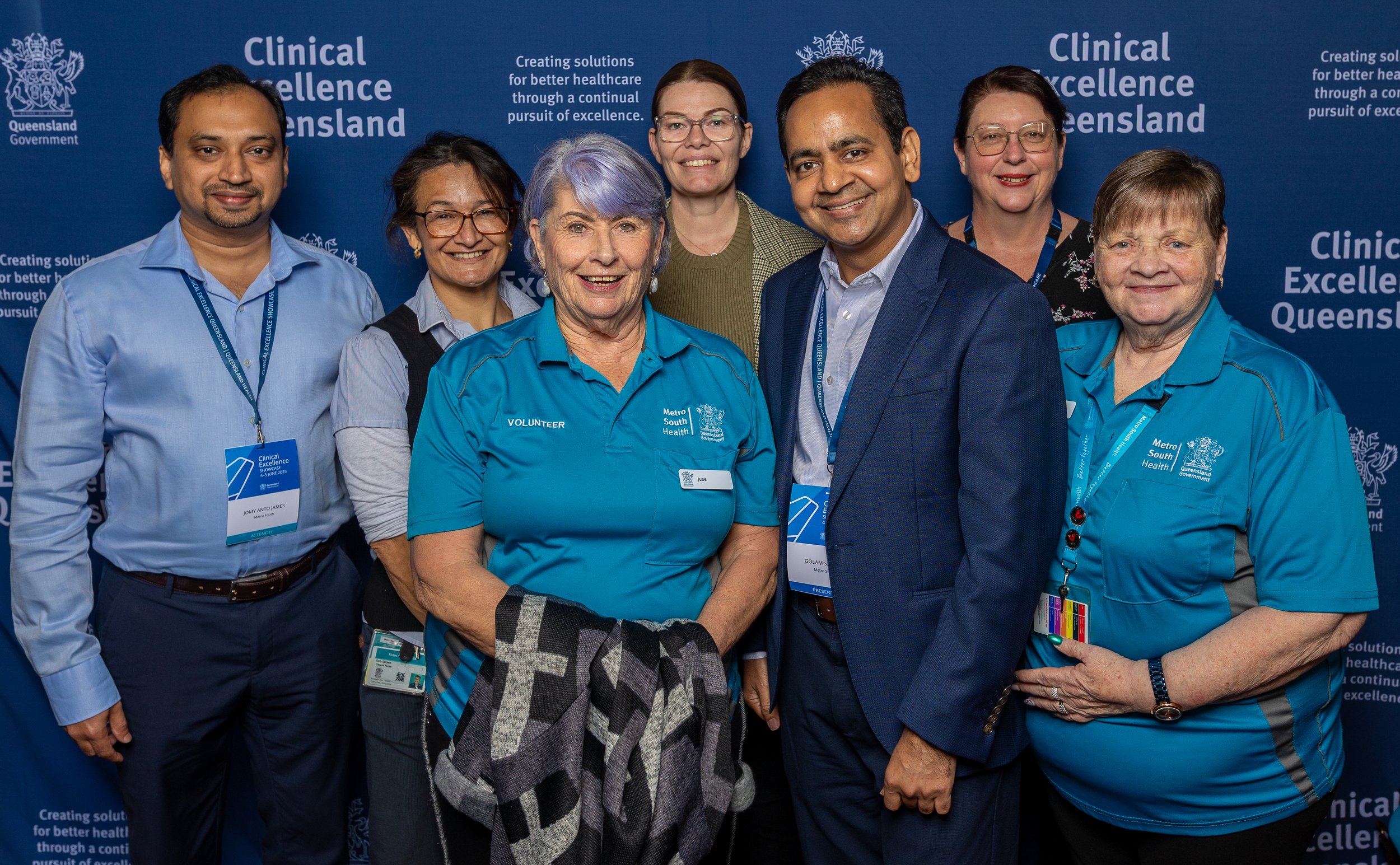
The dedicated volunteers of the Skywalker Project received the Metro South Health Staff Award in 2025.
‘Doctors and nurses are always busy with clinical care,’ he said. ‘But for older people, it's not just clinical care that they need. They have a lot of unmet needs. They need people who can come and give them companionship and hold their hand, talk to them. Someone is there to support them, read to them, bring food and drink whenever indicated.’
Human connection
He presents a recent example of a 78-year-old patient who required a cannulation.
‘She was extremely needle-phobic and didn't want it. There was no family member around. Sedation or physical restraint was not ideal. One of our volunteers walked in and held her hand, to provide reassurance, gave her a glass of water and had a bit of a chat. And that cannulation was done in a blink of an eye. She didn't even realise that it had been achieved.
“Delivering world-class healthcare is not just big fancy buildings and technology. It’s all about human connection, giving people the best care they deserve.”
‘Delivering world-class healthcare is not just big fancy buildings and technology. It's all about human connection, giving people the best care they deserve.’
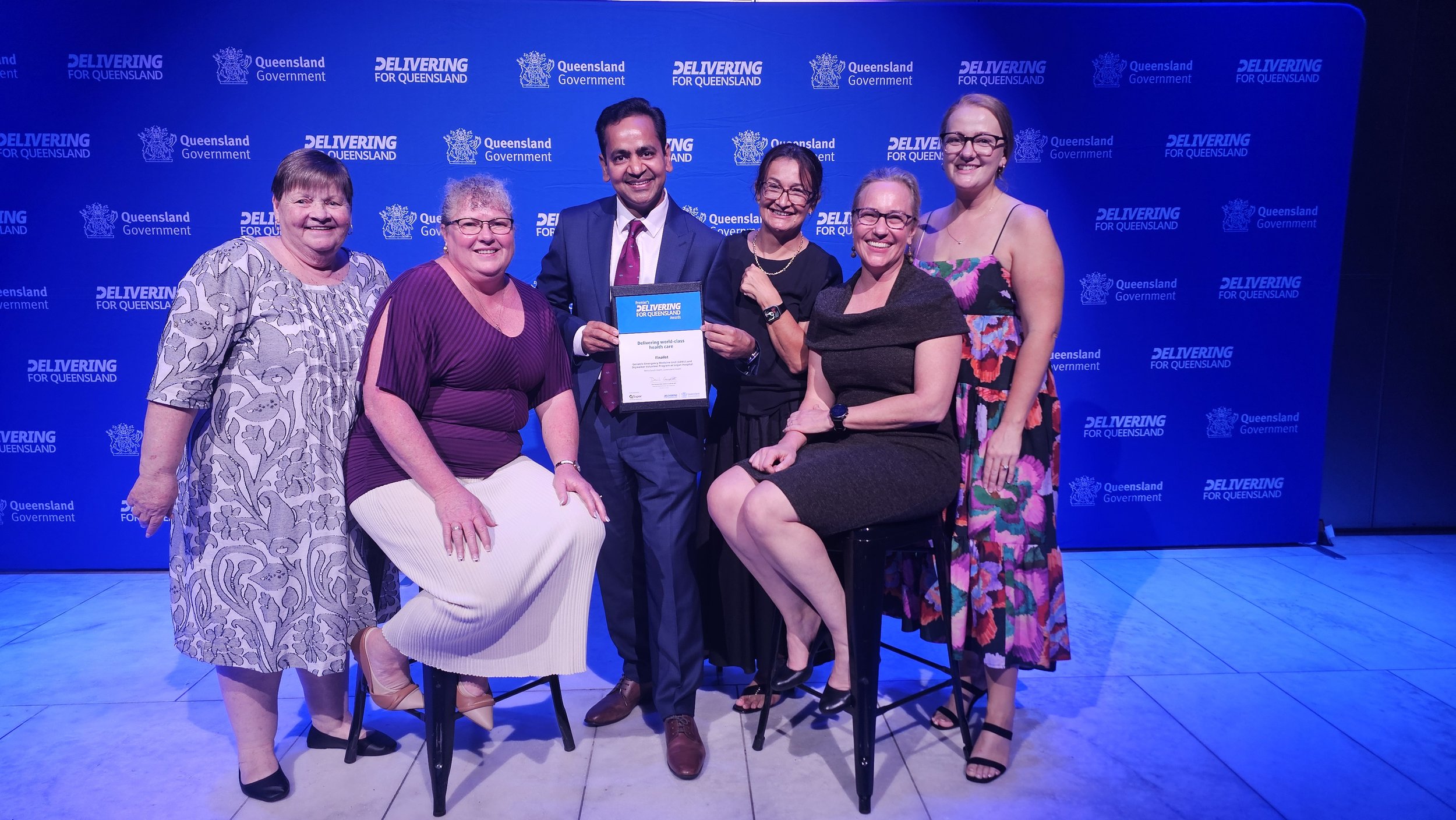
GEMU and the Skywalker Volunteers projects were finalists for the Queensland Premiers Award.
While GEMU and the Skywalker Volunteers projects were finalists for the Queensland Premiers Award, competing against multimillion-dollar projects, most important of all, they have received ‘a tremendous amount of good feedback from the patients’, Dr Sarwar said.
Patient satisfaction surveys conducted pre- and post-implementation reported that ‘Poor’ or ’Fair’ ratings for non-clinical care dropped from 42 per cent to 3 per cent and ‘Very Good’ or ‘Excellent’ ratings increased from 20 per cent to 80 per cent.
Dedication and support required
ACEM’s 2025 Statement of Commitment on Emergency Medicine Preparedness for Population Ageing projected challenging increases in patient numbers and complexity in presentations due to ageing populations.
In light of this scenario, Dr Sarwar believes the GEMU model of care could be easily replicated, adapted and scaled for other EDs - with an important caveat.
“You need a dedicated bunch of people who want to take it on board.”
‘You need a dedicated bunch of people who want to take it on board,’ he said.
‘You need your executives and hospital director to be supportive of it. Because it does need existing bed space redesigned, you need a dedicated person to lead this.
‘Unfortunately, there's not much non-clinical time available. A lot of the things I've been doing are in my own time, in my home, because I have an interest in it. You need people that want to spend and commit that time. And you need a few other people as well to be on board. You need take-up from your multidisciplinary team: emergency clinicians, geriatricians, nurses, and allied health professionals.
“This model of care is adaptable because every ED is different: all have a different population, complexity and socio-economic conditions. I’d like to see that all EDs have a dedicated team that can look after the needs of older patients and to recognise that they are special and deserve better.”
‘This model of care is adaptable because every ED is different: all have a different population, complexity and socio-economic conditions.
‘I’d like to see that all EDs have a dedicated team that can look after the needs of older patients and to recognise that they are special and deserve better.’
Pioneering project
Dr Sarwar is keen to share his experiences and is pleased to have received interest including multiple emails and site visits from other hospitals about the pioneering GEMU model of care.
“I just feel that we could do much better for older people.”
‘I always think if that was my parents, my mother and father, how would I want them to be treated?
‘Our older generation, our senior citizens, actually built the community that we are living in. If we don't recognise their needs, if we don't give them the respect and dignity they deserve, it’s not really good for us as community members. We have a moral duty to provide them the best care that they deserve.
‘I just feel that we could do much better for older people.’