EDNA a real-world example of research-driven excellence
FACEM Professor Daniel Fatovich’s journey to speak at the United Nations (UN) in Vienna began with a bus journey in Perth.
‘First day of medical school, 1977, Orientation Day. You had to get on a bus,’ he said. ‘There were three teaching hospitals in Perth, and you randomly chose a bus and I got taken to Royal Perth Hospital. There was a tour all through the hospital and obviously through the emergency department (ED) and I looked around and thought, “Well, this is where I want to work.”
‘There's no rhyme or reason to that, but that's what happened. Obviously when I started in medicine, emergency medicine wasn't a specialty, so I wasn't sure how that would pan out, but the College came along and solved that.’
Daniel said that emergency medicine was very stimulating work with a great deal of mastery involved. It was also a privilege to care for people in their time of need. He said that teamwork and research are his passions.
‘Being part of a team and being valued and respected by the team means a lot. I love the research side of it because I get to meet and interact with so many amazing people who I can learn from.’
Daniel gained his Fellowship in 1990 and more than three decades later is a senior emergency physician and clinical researcher at Royal Perth Hospital ED. He is also Head of the Centre for Clinical Research in Emergency Medicine at the Harry Perkins Institute of Medical Research, Director of Research for East Metropolitan Health Service, and Professor of Emergency Medicine at the University of Western Australia.
He leads the Emerging Drugs Network of Australia (EDNA), a National Health and Medical Research Council (NHMRC) funded project, and is a leading figure in Australian emergency medicine research.
All about EDNA
Daniel, along with EDNA National Data Manager Dr Courtney Weber, presented the project’s work on emerging drugs of concern at the UN Office on Drugs and Crime in Vienna in March 2025 – the first FACEM to present at the UNODC. They were invited to speak during the 68th Commission on Narcotic Drugs, which focused on innovative early warning tools for informing drug policy.
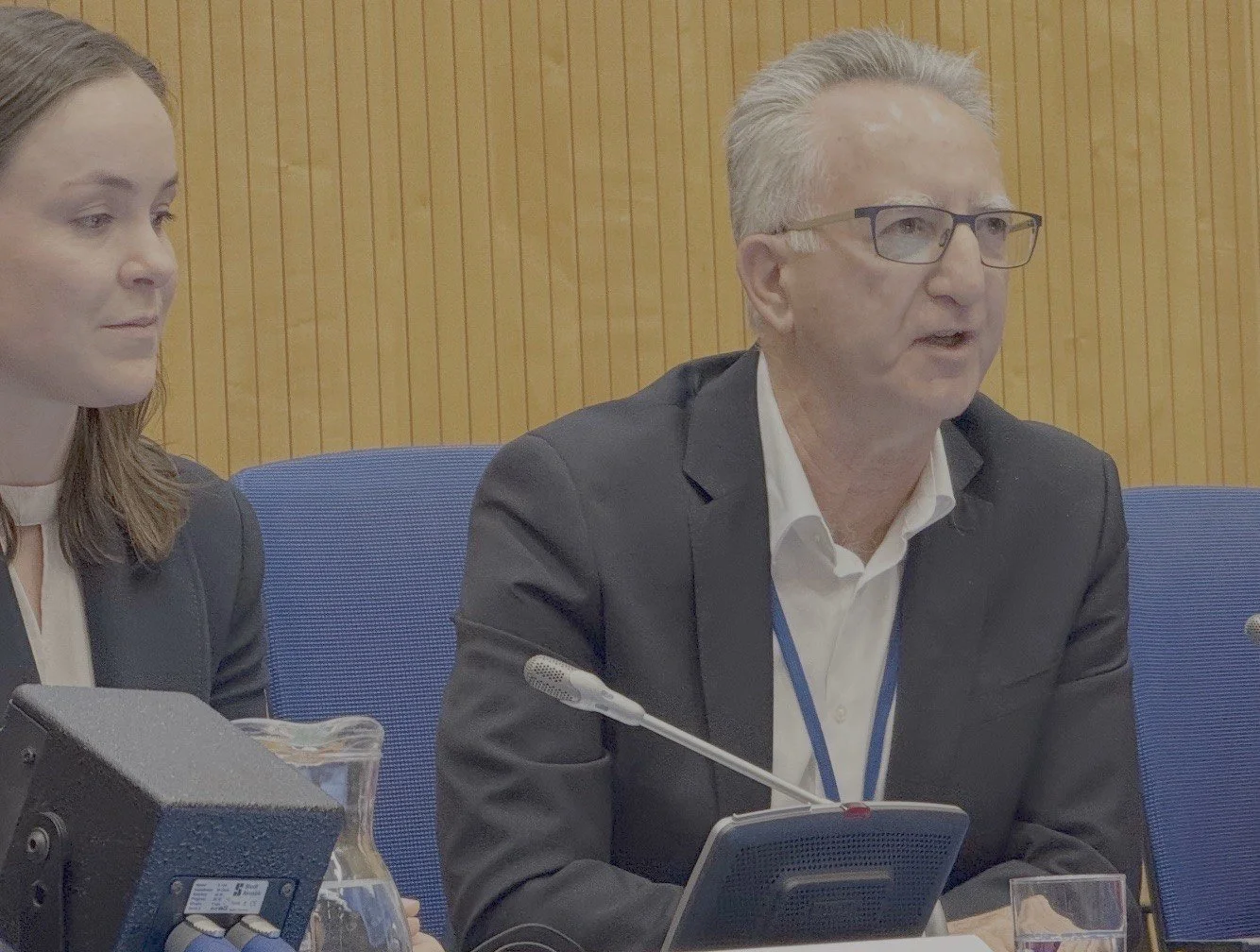
EDNA National Data Manager Dr Courtney Weber (left) and Professor Daniel Fatovich at the UN in 2025.
‘EDNA submitted the first national contribution of ED data on Novel Psychoactive Substances to the UN Office on Drugs and Crime,’ Daniel said.
‘We are their most regular contributor of national-level hospital data, which strengthens Australia's contribution to global surveillance networks. It led to us being invited to speak to the UN because they were very interested in our work.’
EDNA detects emerging drugs causing harm in the community through 16 sentinel EDs in Western Australia, Victoria, Queensland, Tasmania, South Australia and New South Wales. It provides data to key stakeholders in near real time, and this evidence improves clinical care, forensic testing and public health responses.
Aims and criteria
‘The project has three main aims,’ Daniel said. ‘There's a clinical aim, which is to understand what drugs people are taking and their clinical effects.
‘There's a forensic laboratory aim, which is to do with sharing the analytic process between the laboratories in each state so they're all more efficient and talking to each other.
‘Then there's the public health aim, which is to promote harm reduction responses and early warning systems.’
The project’s highly specific criteria led to wide-ranging outputs, including clinical alerts, public health alerts, state-level drug libraries for forensic laboratories, a standardised drug list consisting of more than 700 different drugs and substances, articles in medical journals, and a quarterly newsletter. The data contributes to an online community platform (theknow.org.au), which was established by the Prompt Response Network.
‘To get into EDNA, you have to have a severe or unusual intoxication or be part of a cluster of intoxications,’ Daniel said. ‘We've set up a whole system and process to develop the EDNA Clinical Registry, which is now approaching 6000 cases.
‘We've got a whole bunch of information, we know what kind of drugs are detected, including novel psychoactive substances, and we've got a lot of data that we can drill down into.
‘We produce clinical alerts, as needed, that we send to the clinicians or the departments. We've had public health alerts that have been generated directly from EDNA samples. What we're doing aligns with various national and international drug strategy policies and programs.’
The project also aligns with ACEM’s people-centred position statements on Alcohol and Other Drug Harm.
You mean you're not doing that already?
Daniel, who has spent the past 18 months giving presentations to stakeholders including state and Commonwealth governments, envisages a future where EDNA is ‘just a part of business as usual.’
‘We just can't go back to where we were before. Every now and then, I've given a public talk about EDNA, and the most common feedback I get from the public is, “You mean you're not doing that already?”
‘We now have objective data on what people are using and, with objective data, we can reliably and accurately inform public health harm reduction responses. We're advancing patient care via research-driven excellence.’
The AIHW reported that according to the 2022–2023 National Drug Strategy Household Survey (NDSHS), an estimated 3.9 million Australians (18 per cent) had used an illicit drug in the previous 12 months, up from 13 per cent in 2007.
In 2023–2024, hospitalisations with a drug-related principal diagnosis accounted for 1.2 per cent (around 146,000) of all hospitalisations.
According to the Australian Burden of Disease Study 2024, illicit drug use contributed to 2.9 per cent of the total burden of disease and injury in 2024. The age-standardised rate of total burden of disease and injury attributable to illicit drug use increased by 42 per cent between 2003 and 2024.
Before the development of the EDNA network, identifying, detecting and understanding new illicit drugs in circulation had always been a time-consuming and difficult process.
‘There was a huge knowledge gap in this field, which nobody knew how to address,’ Daniel said.
‘Up to seven per cent of ED presentations result from the use of illicit drugs. Through most of my career, we've relied on people telling us what they've taken - if they're well enough to tell us. But we've never actually had objective data.’
Near real-time results
‘Some people use urine drug testing, but that can be unreliable. Those results can give both false positives and false negatives,’ he said. ‘To do it properly, you need a blood sample, and you need very sophisticated high-level laboratory equipment (e.g. mass spectrometry), which are generally found in forensic laboratories, not hospital laboratories.
‘Conventional sources of data rely on things like wastewater analysis. That data is delayed by months. There are also police seizures of pills, but that’s just pills, it's not what's happening to patients. Coronial reports may take years. Toxico-surveillance systems like EDNA address this.
‘Depending on the clinical case, we can turn something around within 24 to 36 hours. So it's near real time and helps inform early warning systems.’
Real-life example
While it might sound familiar to Seinfeld fans (an episode of the sitcom featured character Elaine failing a drug test after eating poppy seed muffins), a real-world example of the applications of EDNA’s work can be seen in the tainted poppy seed tea cases in 2022.
‘Across the country, two dozen people went to ED and were really sick. Some of these cases were captured by EDNA-participating hospitals, and blood samples were taken and analysed. Long story short, it turns out that they were drinking poppy seed tea, but the food source had been contaminated with a toxin called thebaine, which is like strychnine and causes adverse outcomes like seizures and death.
‘But we knew right away what it was. It was immediately reported to Food Standards Australia and Aotearoa New Zealand, and they were able to recall the item of food within one week. Previously that process took much longer.
‘Having a system in place like this really makes a difference to the hospitals, to public health, and to patients.’
Agent for change
‘One of the things I've most learned is that having objective data is a powerful catalyst for change,’ Daniel said.
EDNA uses specific blood tests to identify causative agents in illicit drug poisonings, addressing a crucial knowledge gap in clinical practice where evidence is currently limited. This innovative approach, developed in Western Australia at Royal Perth Hospital (RPH) and the Centre for Clinical Research in Emergency Medicine (CCREM), enhances clinician capacity to manage patients. The project's methodology was validated in the proof-of-concept Western Australian Illicit Substance Evaluation (WISE) study, led by FACEM Dr David McCutcheon.
EDNA received significant cross-jurisdictional state and federal funding, including a National Health and Medical Research Council (NHMRC) Ideas grant valued at $3.7 million – the highest amount received in its funding round. The NHMRC funding finishes in 12 months.
‘We received crucial support from the Mental Health Commission, and the Department of Health, and the National Centre for Clinical Research on Emerging Drugs, and then in 2020 we got a NHMRC ideas grant.’
ACEM support
Daniel was a long-standing executive member of the ACEM Research Committee and is a member of the ACEM Clinical Trials Network.
‘The WISE study, which was supported with an ACEM Al Spillman early career research grant, proved that we could do what we wanted to do,’ he said. ‘That gave us the pilot data and proof of concept for the NHMRC application.
‘Importantly, ACEM endorsed the study. When I speak to funders or put it in award applications, ACEM endorsement is a reflection of its credibility and veracity, and system support. That means a lot, because in 2024 we won the WA Health Excellence Award for Excellence in Research and Innovation, and the University of Western Australia Vice Chancellor's Award for Research Impact and Innovation. Last year we were a finalist in the Premier’s Science Awards.
‘Although we didn’t win, I felt like a winner just being there. We were in the new category of Government Science Project of the Year and to be one of the four finalists was fantastic.
‘They had two winners. One was a geochemistry project related to mining, and the other winner was a conservation project about cuddly animals. We were caught between a rock and a soft place,’ he jokes.
‘When you saw the kind of projects that were happening, and many of those projects have been going for 10-15 years, and we've only been doing this for five years, I am so proud of what we have achieved so far’.
Research-driven excellence
While emergency medicine research makes up only a tiny proportion of research, it is vitally important. Last year it made up only 0.4 per cent of NHMRC funding, and ACEM is focused on substantially increasing this.
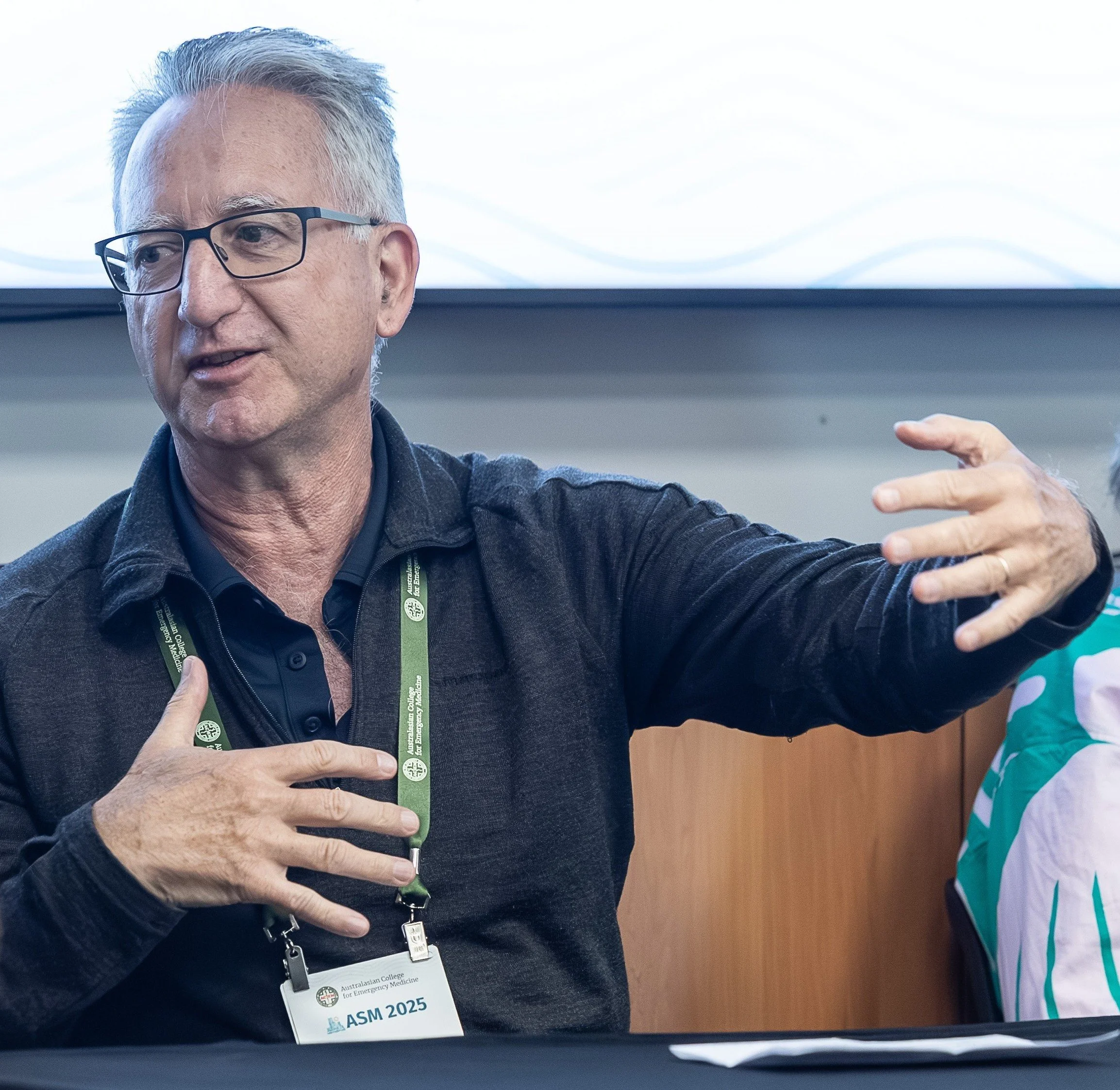
‘In 2022 there was a report released by the Australian Academy of Health and Medical Sciences about integrating research into everyday practice,’ Daniel said.
‘In that report, they said that research-active hospitals have better clinical outcomes, including a lower mortality, have more satisfied patients, are better at attracting and retaining staff, and provide more cost-effective care.
‘We want to be a learning health system where the whole system is constructed to advance patient care by research-driven excellence.
‘If you're not doing the research, you can't advance patient care in the way that it needs to be advanced. There's a bigger risk in not doing the research.’
Commitment to help
Daniel and the EDNA team - including FACEM and clinical toxicologist Dr Jessamine Soderstrom - are committed to continuing this important work.
‘I tell people that this is the most fabulous project of my career and I really mean that. It is best exemplified in a quote by Victor Hugo, who said, “There is nothing so powerful as an idea whose time has come”.
‘To me, EDNA really represents that because this was so needed. I can't believe the incredible engagement from so many people, from so many different disciplines, to come together because there was a real need for this.
‘Thanks to our talented team of Dr Jen Smith, National Coordinator, Dr Courtney Weber, National Data Manager, Ellie Kotkis, Project Officer and FACEM Dr Jess Soderstrom, we’re helping people in better ways.’