Under a wider sky – what RRR emergency medicine taught me
‘I first went rural because that was where my Australian journey began. I continue to return because rural medicine remains part of the doctor I choose to be.’ FACEM Dr Suhail Wani has penned a personal account of how working in his first RRR ED shaped him as a doctor, and why working rurally remains so important to him.
Somewhere along the road, the noise begins to fall away. The traffic thins. Buildings give way to paddocks and long stretches of sky. The journey changes the rhythm of my thinking, not just the view.
Inside the rural emergency department, the work is no less intense. There are alarms, interruptions, deteriorating patients and decisions that cannot be deferred. But outside the hospital, there is space.
On some journeys after a shift, I stop beside a green meadow. I sit on a hay bale, put on soft music and watch the clouds move across the sky. Nothing dramatic happens. That is precisely the point. After hours of vigilance and responsibility, the stillness gives me enough distance to let the shift end.
“The hospital where I work now is not the same rural hospital where my Australian career began, but both places have shaped me.”
I still work rurally, usually travelling for one- or two-day blocks while my family remains at home. The hospital where I work now is not the same rural hospital where my Australian career began, but both places have shaped me. The first taught me how vulnerable it can feel to enter an unfamiliar health system. The second taught me how it feels to become the senior clinician others depend on. Between those two hospitals lies much of my professional journey.
I began working in Australia as an International Medical Graduate (IMG) in a hospital in regional Victoria. I arrived with clinical experience, but limited system knowledge and little support.
A new professional culture
There were good experiences and difficult ones. I was grateful for the opportunity to begin. At the same time, I was learning a new professional culture while continuing to function as a doctor: how referrals worked, when to escalate, who to call, and what information mattered most.
I was also learning the capabilities and limits of a smaller hospital. Which services were available locally? What could be managed safely? Who needed specialist input, and how long would retrieval take? These were not abstract questions. They shaped real decisions.
Rural, regional and remote (RRR) practice made the boundaries of the health system visible. In a metropolitan tertiary hospital, the next investigation or specialist team may be available within the same building. In a rural one, the clinician must think beyond the immediate diagnosis towards the patient’s entire pathway — what could be done here, what had to happen elsewhere, and which phone call could not wait.
These questions sharpened my thinking early. They also taught me that rural medicine is not a test of isolated courage. Safe rural practice depends on teams.
“Rural medicine is not a test of isolated courage. Safe rural practice depends on teams.”
Experienced rural nurses know their hospital’s rhythms and limits better than anyone. Paramedics know the realities of distance and transport. Local GPs may know the patient and family in ways no record can. Retrieval clinicians and specialists complete the network.
As a new IMG, I needed those people. I needed to listen before assuming, to understand local systems rather than impose my own expectations, and to learn that asking for help was not weakness — it was safe clinical judgement.
That first rural hospital taught me an important distinction: Knowing medicine is not the same as knowing how medicine moves through a health system.
Later, I entered metropolitan emergency medicine training: greater clinical depth, higher patient volumes, subspecialty exposure, and structured teaching backed by extensive resources. Metropolitan practice deepened my knowledge. Rural practice broadened my judgement. They were complementary, not rivals. It took several more years, however, before I understood how profoundly rural work would influence my confidence.
Professional voice
After three unsuccessful Fellowship OSCE attempts, my professional voice had changed. Repeated examination failure is not merely an academic experience. It can alter how a doctor speaks, thinks and sees themselves. You may continue to function clinically yet become hesitant in the examination room. You may know the answer but qualify it excessively. You may list possibilities instead of identifying priorities. You may speak as though seeking permission to have a plan.
The deficit is not always knowledge. Sometimes it is the ability to express judgement with clarity.
At that point, I returned to rural practice in a different hospital, this time on an SMO roster. Although I had not yet attained Fellowship, the role was essentially consultant-level. I was in charge, on call, supporting junior staff and expected to make senior decisions.
“That first rural hospital taught me an important distinction: Knowing medicine is not the same as knowing how medicine moves through a health system.”
The position demanded a different version of me. I had to define the problem, decide what mattered first, and state a plan clearly. I had to support junior doctors, coordinate retrieval, communicate with receiving specialists and manage risk within the limits of the local service.
I also began to see the administrative pressures behind clinical care. Senior decisions are rarely only clinical — they involve staffing, bed capacity and retrieval availability. Rural work made those interdependencies impossible to ignore. I could no longer remain a passive participant in the system. I had to engage with it.
A safer form of confidence
Over time, my confidence changed. Not because I believed I could manage everything alone, but because I became clearer about what I could manage, what required escalation and what had to happen before help arrived.
That is a safer form of confidence. It is not fearlessness. It is recognising the sick patient early, beginning treatment and setting priorities. It is knowing the limits of the hospital and one’s own limits and being able to say, ‘This is what we can do here. This is what we cannot do here. This is how we will keep the patient safe while moving towards definitive care.’
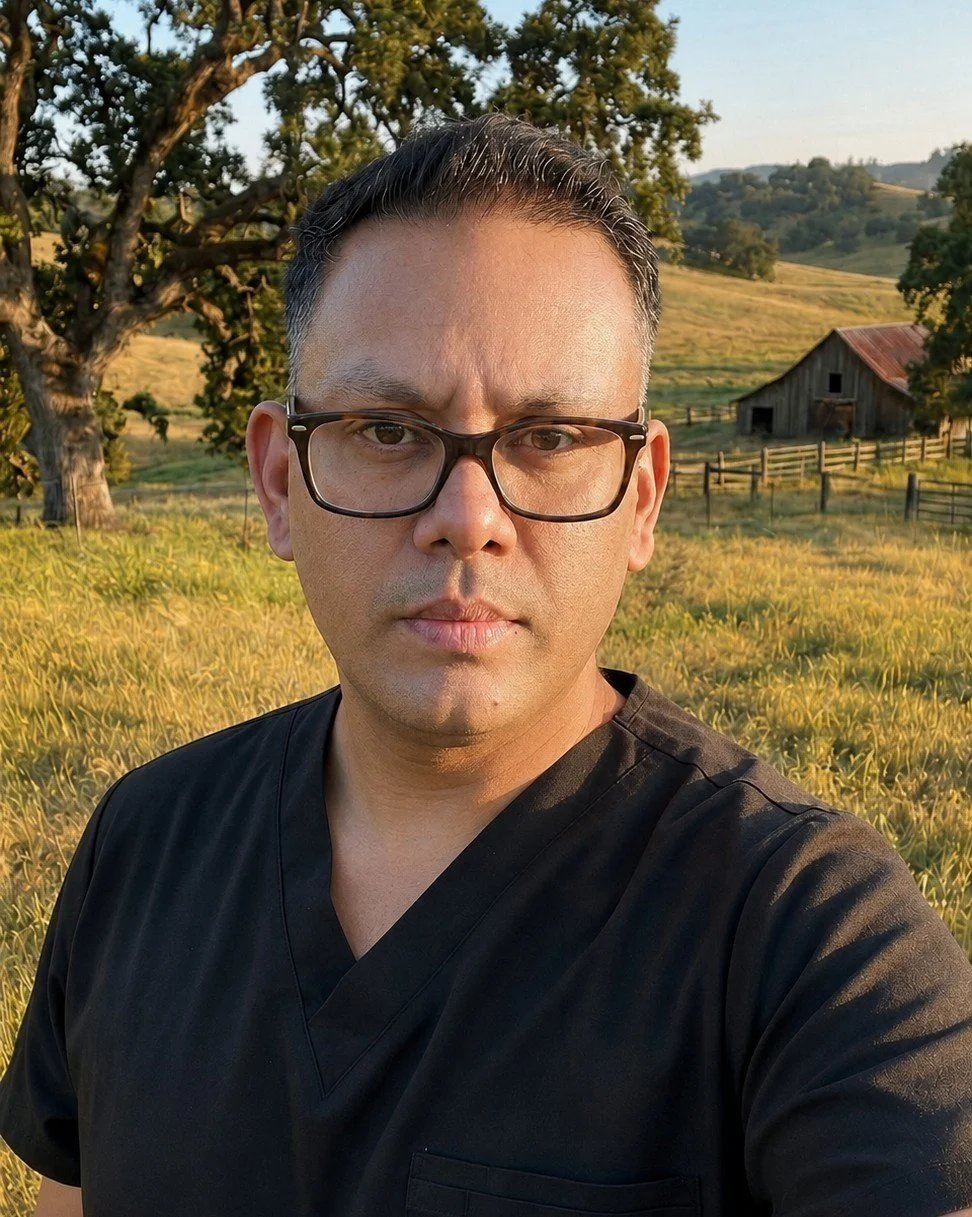
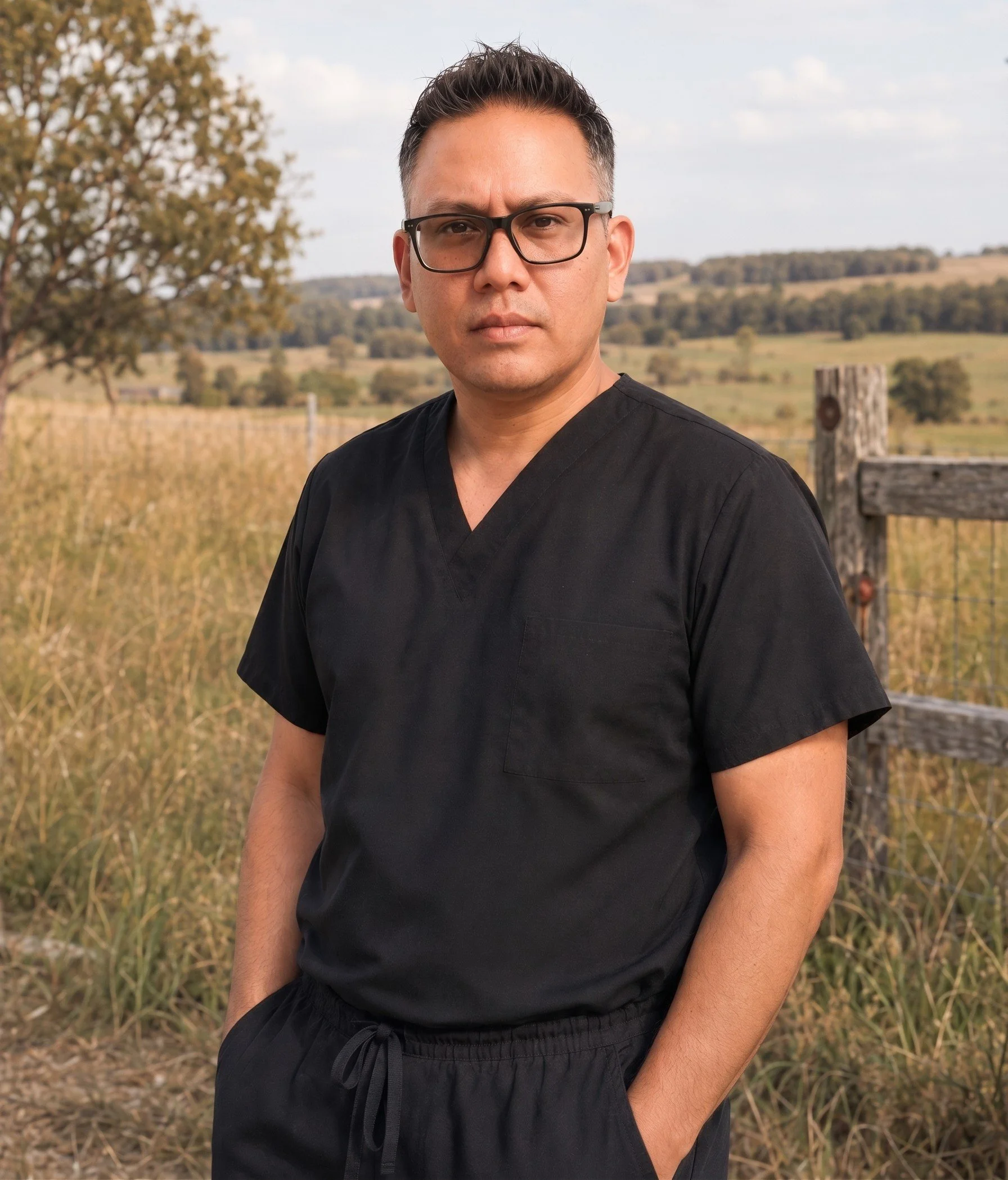
FACEM Dr Suhail Wani
The role also changed the way I spoke. I stopped sounding as though I was asking permission to have a plan. I began speaking as the clinician responsible for making one. That shift became important when I returned to Fellowship examination preparation. Rural work did not provide an examination script. It gave clinical scenarios operational reality.
A rural OSCE station was no longer simply a checklist of ideal actions. I could picture the room, the available team, the absent service, the retrieval delay and the patient’s journey beyond the resuscitation bay.
A lower gastrointestinal bleed scenario, for example, was not simply about recognising haemorrhage and listing investigations. The real challenge was balancing immediate resuscitation with rapid transfer. Was the patient stable enough to travel? What might deteriorate in transit? Was blood available, and what needed to be reversed? Did this call for local stabilisation, a “scoop and run,” or a judged mix of both? How long would retrieval take, and who needed to be contacted first?
Rural experience
Rural experience taught me the clinical and logistical questions were not separate. They were one problem. That changed how I approached OSCE scenarios. I became better at identifying immediate threats, anticipating deterioration and explaining contingency plans.
I also became more comfortable thinking like a consultant. A consultant-level answer demonstrates prioritisation, leadership and systems awareness — the kind of thinking rural practice made me rehearse in real time.
I would not suggest that rural work guarantees examination success. Nor should rural rotations be treated merely as an examination strategy. Their value is broader. Rural medicine teaches doctors to think in context: geography, time, risk, transfer, staffing, local capability and the patient’s life beyond the hospital.
“Rural medicine teaches doctors to think in context: geography, time, risk, transfer, staffing, local capability and the patient’s life beyond the hospital.”
That broader perspective has mattered more to me as a Fellow. In emergency medicine, it is easy to focus on the immediate problem — resuscitate, investigate, refer, admit or transfer — but in a rural setting, the consequences are often more visible.
Sending a patient to a metropolitan hospital can mean transporting them hundreds of kilometres from home, away from family support, while relatives arrange travel and time off work. A short admission can become a prolonged disruption.
This does not mean avoiding transfer when required — it means asking better questions. What cannot safely be managed locally? What time-critical treatment must occur before retrieval? Can part of the patient’s care be completed close to home, so that an unnecessary transfer — and unnecessary time away from family — can be avoided? A transfer is not simply a destination decision. It is part of the patient’s lived experience.
That understanding has also shaped how I support junior doctors. At my first rural hospital, I was the IMG trying to understand the system with limited support; now, I often think about the junior doctor standing where I once stood.
I want to make the system less opaque — to help junior clinicians build confidence without overconfidence, understand not just what to do but why it matters, and recognise deterioration, escalate early and speak clearly when asking for help. I also want rural teams supported through education, not judged from a metropolitan distance.
RRR rotations matter
This is one reason RRR rotations matter. A well-designed RRR term can expose trainees to breadth, responsibility and systems thinking they may not see in larger centres and strengthens their comfort with uncertainty. But a mandatory RRR rotation should not become a euphemism for filling workforce gaps. If RRR experience is to be meaningful, it must be properly supported.
Trainees require clear orientation and defined scope of practice, appropriate supervision and safe rostering, reliable escalation pathways and access to retrieval and specialist advice, suitable accommodation and respectful inclusion in the local team, and time and structure for reflection and learning.
“A well-designed RRR term can expose trainees to breadth, responsibility and systems thinking they may not see in larger centres and strengthens their comfort with uncertainty. ”
RRR services should not be expected to absorb trainees without educational investment, and trainees should not be sent into settings where responsibility exceeds competence or support. The aim should not be to test toughness. It should be to develop judgement.
Trainees should approach RRR placements with humility: learning the retrieval pathway before they need it, listening to local clinicians, and resisting the assumption that metropolitan practice is inherently more sophisticated.
A different way of seeing
RRR emergency medicine is not simply metropolitan medicine with fewer resources. It is a different way of seeing. It asks what matters first, what cannot wait, and what can be done here — and what must happen elsewhere. It also asks something of the doctor. Can you lead without pretending certainty? Can you recognise your limits without becoming paralysed by them? Can you support a small team when everyone is carrying more than one role? Can you see the patient as a person, not just a clinical problem, whose care may take them far from home? These are not peripheral skills. They are central to emergency medicine.
Rural work has also given me something outside the department. Emergency clinicians spend hours among alarms, crowding and sustained vigilance. The shift may finish, but the mind does not always leave with the body. Sometimes, on the road after rural work, I stop beside that meadow. I sit on the hay bale and watch the clouds. Soft music plays. For a few minutes, nothing is required of me.
“I first went rural because that was where my Australian journey began. I continue to return because rural medicine remains part of the doctor I choose to be.”
The quiet does not cure fatigue. It does not erase difficult cases or replace sleep, family, safe staffing, peer support or professional care. It simply creates a transition — a space in which the senior doctor can become a person again before returning home.
I began my Australian career in one rural hospital, uncertain and dependent on others’ guidance. Years later, in a different rural hospital, I learnt to lead, teach and make the decisions others depended on.
I still work rurally now, usually for one or two days at a time. I continue because rural medicine remains part of how I understand emergency medicine. It has sharpened my priorities, strengthened my confidence and deepened my awareness of the patient’s entire journey. It taught me that confidence is not knowing everything. It is knowing what matters now, what cannot wait and when help must be called. And it taught me that sometimes the clearest thinking begins only after the alarms stop.
I first went rural because that was where my Australian journey began. I continue to return because rural medicine remains part of the doctor I choose to be.
This story is part of an ongoing ‘RRR in the Spotlight’ series of articles highlighting the great work being done by FACEMs and ACEM trainees in RRR settings.
The six-month (FTE) RRR training requirement applies to new trainees commencing FACEM training in 2027. People will be required to formally acknowledge this training requirement as a condition of their acceptance of a place on the training program.