
Quality and patient safety: not a niche interest, but a core part of emergency medicine
For much of my training, quality improvement and patient safety felt like one of those mandatory domains that appeared in job applications, accreditation requirements and college forms. Important certainly, but somehow separate from the ‘real work’ of emergency medicine.
It was not a topic that featured prominently in my medical school education, nor was it something I fully appreciated during my early years as a junior doctor or emergency registrar.
Asking questions
My perspective began to change when I was asked to present a ‘morbidity and mortality’ case during the latter part of my emergency medicine training. As I worked through the case, I found myself feeling a little like Sherlock Holmes, trying to reconstruct a timeline and understand not only what had happened, but why.
I initially approached it as a task to be completed for training. Instead, I found myself becoming absorbed in the process. Every answer seemed to generate another question. Why was this information missed? What assumptions had been made? What competing priorities existed?
The deeper I looked, the less the case resembled a single error and the more it resembled a complex system interacting with a complex patient.
What became apparent was that adverse outcomes are rarely the result of a single mistake. More often, they arise from a complex interaction of circumstances, communication challenges, competing priorities, environmental conditions and system factors.
Staying curious
I became increasingly interested in understanding not simply where things went wrong, but what conditions allowed those events to occur. Equally, I became interested in understanding why things go right. Every day, emergency clinicians navigate complexity, uncertainty and competing demands, yet the vast majority of patients receive safe and effective care.
Understanding the factors that contribute to success is just as important as understanding the factors that contribute to failure.
This curiosity led me to become more involved in quality and patient safety activities within my own department. Through reviewing incidents, complaints, compliments and adverse events, I came to appreciate that quality and patient safety are not separate from clinical practice, they are clinical practice.
Improving systems
Patients present to emergency departments (EDs) seeking safety. Yet EDs are also among the most complex and risk-laden environments in healthcare.
We work amid unpredictable demand, varying levels of experience, frequent interruptions and increasing system pressures. Bed block, hospital overcrowding and workforce fatigue create conditions in which errors and delays can occur. Understanding and improving these systems is therefore fundamental to improving patient care.
It was with this interest that I applied for ACEM's Committee Experience Program and attended a meeting of the Quality and Patient Safety Advisory Committee (QPSAC). What struck me was not simply the breadth of work undertaken by the committee, but how closely the discussions reflected challenges that emergency clinicians encounter every day.
One of the strongest themes was the importance of systems thinking. In healthcare, there is often a natural tendency to focus on individual decisions when reviewing adverse events. However, quality and patient safety work repeatedly demonstrates that outcomes are shaped by the interactions between people, processes, environments and systems.
Exchanging information
One discussion reinforced how often patient outcomes are influenced by information flow. As emergency physicians, we frequently make decisions using fragmented information gathered from multiple sources. Important details may exist within referral letters, outpatient investigations or previous presentations.
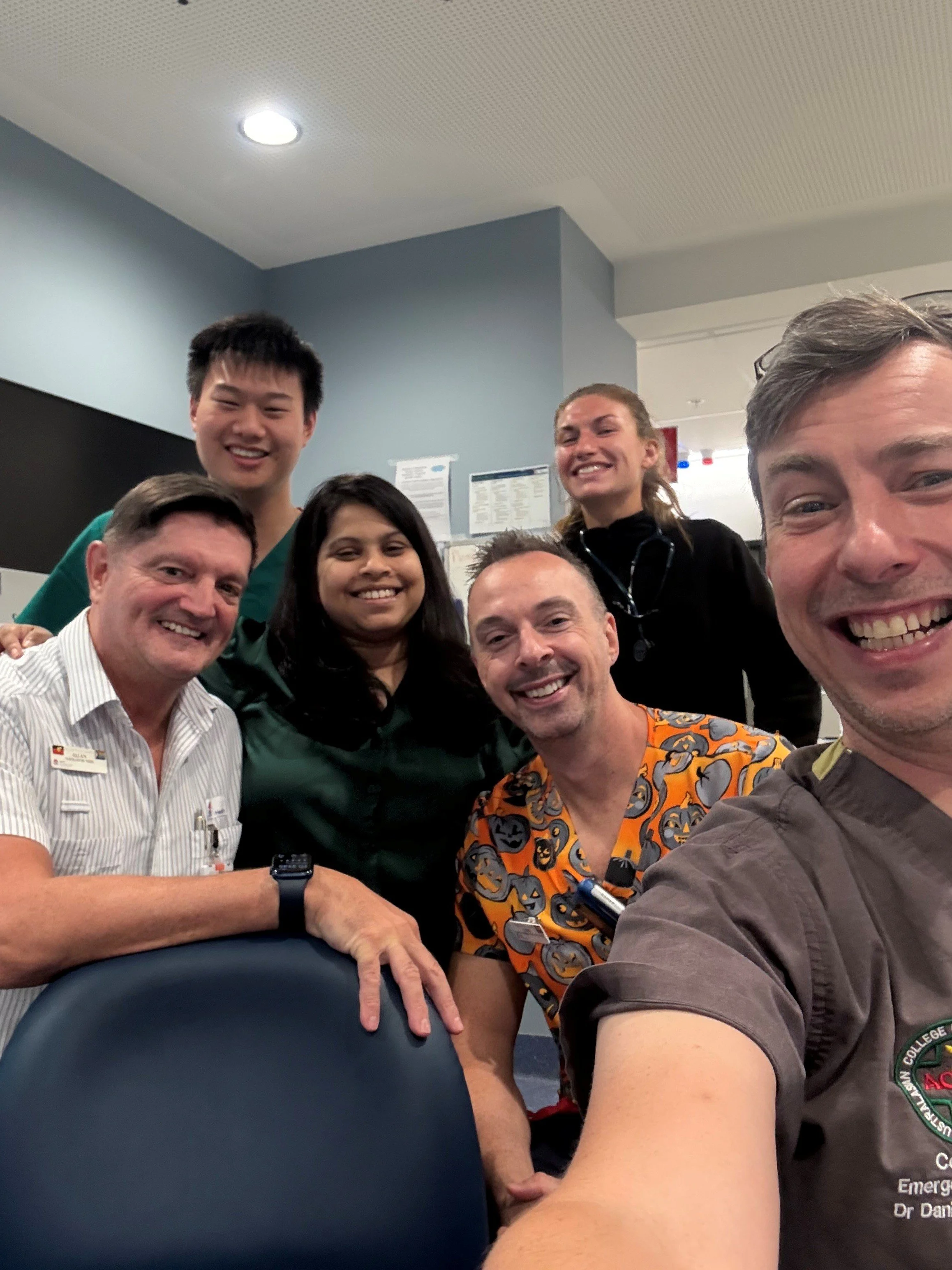
Allan Grimshaw, Patrick Han, Ayanthi Perera, Chris Ford, Megan Mather and Daniel Khamoudes from Prince of Wales ED.
Often the challenge is not a lack of information but ensuring that the right information reaches the right person at the right time. This is as much a systems challenge as it is a clinical one.
Understanding these interactions allows us to move beyond identifying errors and instead focusing on creating systems that support good decision-making. Too often, recommendations arising from adverse events rely on asking clinicians to remember more, learn more or comply with more rigid protocols and additional processes.
While education remains important, sustainable improvement often comes from designing environments that make the right thing the easy thing to do.
Sharing learning
At the same time, I believe we should pay as much attention to examples of excellent care as we do to adverse outcomes. If we can understand the conditions that enable success, we can replicate them more broadly.
Another idea reinforced through the committee meeting was that learning should not stop at the walls of our own department. Every emergency clinician encounters cases that contain valuable lessons, yet many of those lessons remain local. Learning systems allow those experiences to be shared, enabling one department's experience to inform practice across many others.
ACEM's mortality case summaries are one example. I was surprised to learn that they are available as a learning resource on the ACEM website and can contribute to CPD. Similarly, initiatives such as the Emergency Medicine Events Register (EMER) and the developing Australia and Aotearoa New Zealand Emergency Department Registry (AANZER) represent different but complementary approaches to learning. Together, they have the potential to provide both the stories and the data that drive meaningful change.
However, learning systems only work if clinicians trust and engage with them. One question I found myself reflecting on after the meeting was why some clinicians enthusiastically engage in quality and patient safety activities while others do not.
Identifying value
The more I thought about it, the more I realised that engagement is closely linked to perceived value. Clinicians are busy and understandably cautious about initiatives that appear to duplicate existing systems or add administrative burden without clear benefit. Concerns regarding governance, confidentiality and how information will ultimately be used are also valid.
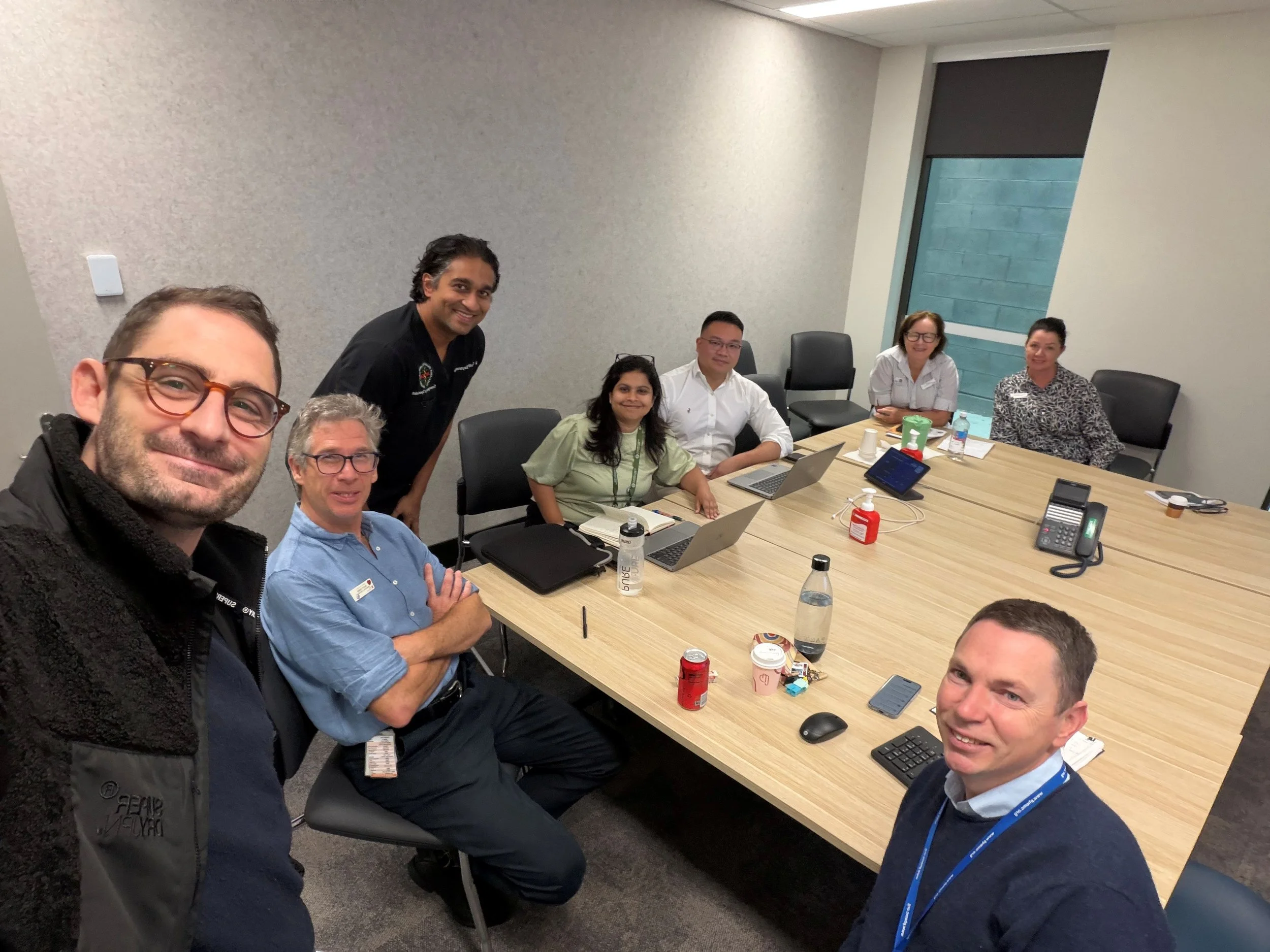
From left: Jack Marjot, Matthew Davis, Gavithra Dayananda, Ayanthi Perera, Jayden Leung, Kathryn Power, Donna Robertson and David Murphy at Prince of Wales ED Quality and Patient Safety meeting (absent: Catherine Costa).
For learning systems to succeed, clinicians need to see that their contributions lead to meaningful insights, tangible improvements and shared learning.
One realisation that changed my perspective was that quality improvement is one of the few areas of medicine where a single improvement can benefit hundreds or even thousands of future patients.
As clinicians, we improve care one patient at a time. Through quality improvement, we have the opportunity to improve the systems that care for every patient who comes after them.
Making a contribution
This shift in perspective also changed how I viewed quality and patient safety. Rather than seeing them as activities undertaken by a small group of governance experts, I began to see them as part of everyday clinical practice.
Every emergency clinician contributes to patient safety through the decisions they make, the systems they work within and the culture they help create.
For me, these ideas come together in a fairly simple way: understand the context in which care occurs, improve the systems that shape it, and share what we learn. We should strive to make the right thing the easy thing to do, and learn from success as readily as we learn from failure.
Gaining insight
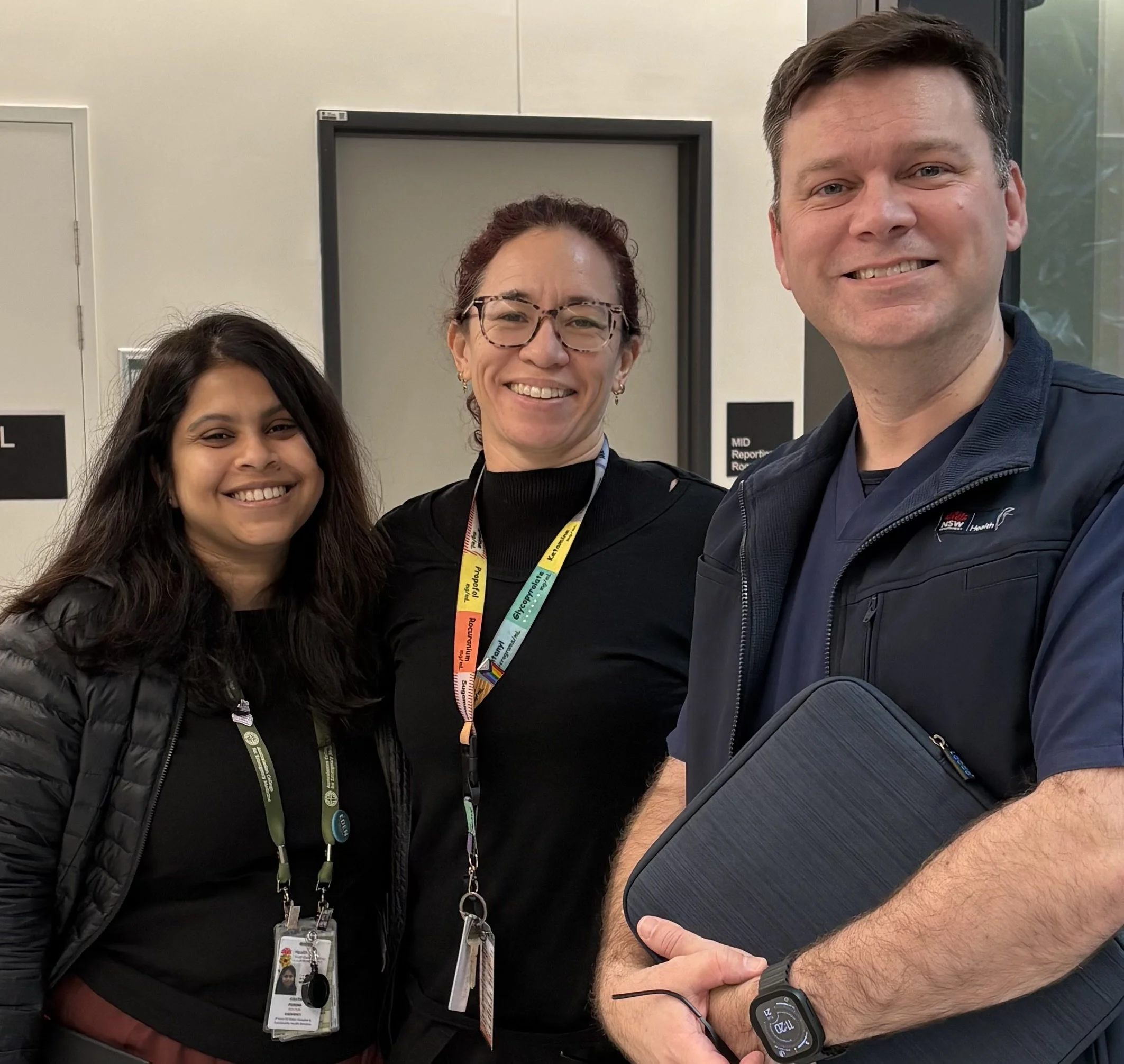
Ayanthi Perera, Angela Chiew and Wayne Varndell from the Prince of Wales ED Research Team 2026 (absent: Betty Chan, Tristan Withers).
The Committee Experience Program gave me insight into the work of QPSAC, but perhaps the most important lesson was a simpler one: quality and patient safety are fundamental responsibilities of every emergency clinician.
People who come to our EDs place their trust not only in individual clinicians, but also in systems they often cannot see, understand or evaluate.
This is not unique to healthcare. Passengers boarding an aircraft trust that countless systems, processes and safety checks are functioning as intended, despite having little visibility of them. Similarly, patients rely on healthcare professionals and healthcare organisations to ensure that the systems surrounding their care are safe, reliable and continually improving.
The more willing we are to reflect, share lessons, learn from both success and failure, and improve the systems in which we work, the safer our departments - and our patients- will be.
ACEM is running the 2026 Patient Safety Workshop online on World Patient Safety Day, Thursday, 17 September. The program will include presentations about Artificial Intelligence, care of older people, a Q&A session and panel discussions.
Register here