
Juvenile Arthritis – early diagnosis makes all the difference
Bumps, bruises and visits to the ED are part and parcel of raising kids, and long hours spent working in the ED can sometimes leave FACEMs at a loss when it comes to helping their own family members and loved ones. FACEM Dr Michael Lovegrove was glad he went to the ED when his daughter complained of pain and was eventually diagnosed with Juvenile Arthritis. Modern treatments mean the early identification and immediate treatment of this not uncommon condition can make the world of difference for a child.
Picture a situation. You come home from work at about one o’clock in the morning, about normal after an evening shift. But this time your four-year-old daughter is quietly waiting by the door. ‘I have pain in my back, Dad. It’s pretty bad.’
Your heart sinks. No trauma in the last few days, not even a decent jumping session on the trampoline. A quick hand on the forehead says no obvious fever. Inside you’re crushing down the diagnosis of cancer as a cause of atraumatic back pain. You check again about bumps, or falls, or lifting anything strange like your brother or your sister. Again, you squash down the malignancy question. ‘Let’s try some Panadol and some Nurofen and see if you can get back to sleep.’
My daughter’s pain is still there in the morning after a somewhat sleepless night for me. I make the decision to go to the hospital because she says it is still really quite sore. Memories of an osteomyelitis in the ankle from a few months ago are still fresh in my mind. However, there are delays to investigations as an MRI can’t be done over the weekend (this is back in the day) and bloods are non-specific.
“But still her pain persisted. They can’t find anything, so what is this pain? Is it just some sort of pain syndrome? Is it somatization? How is school going? Are you being bullied?”
Eventually the scan is done and it is also non-specific but at least rules out the large cancer that had been growing in my imagination, and the osteomyelitis that was chewing through the bones. But still her pain persisted. They can’t find anything, so what is this pain? Is it just some sort of pain syndrome? Is it somatization? How is school going? Are you being bullied?
The breakthrough
The orthopaedic team want a consult with the pain team. The paediatric rheumatologist strolled into the room quietly that afternoon and took one look at my daughter as she sat reading a book in bed. ‘How long has she had those knee effusions?’
The paediatric rheumatologist was curious about how long she had been struggling to run and do her dancing. My wife and I hadn’t noticed the effusions, and she had never stopped dancing. Our daughter had never complained of pain, and was a little slow in the morning, but aren’t they all?
“The diagnosis of Juvenile Idiopathic Arthritis (JIA) changed everything. Our daughter had never known that her knees were stiff and sore because that was how they had always been. They felt a lot better now that she was on the appropriate treatment and, in hindsight, she had always struggled a bit in the morning.”
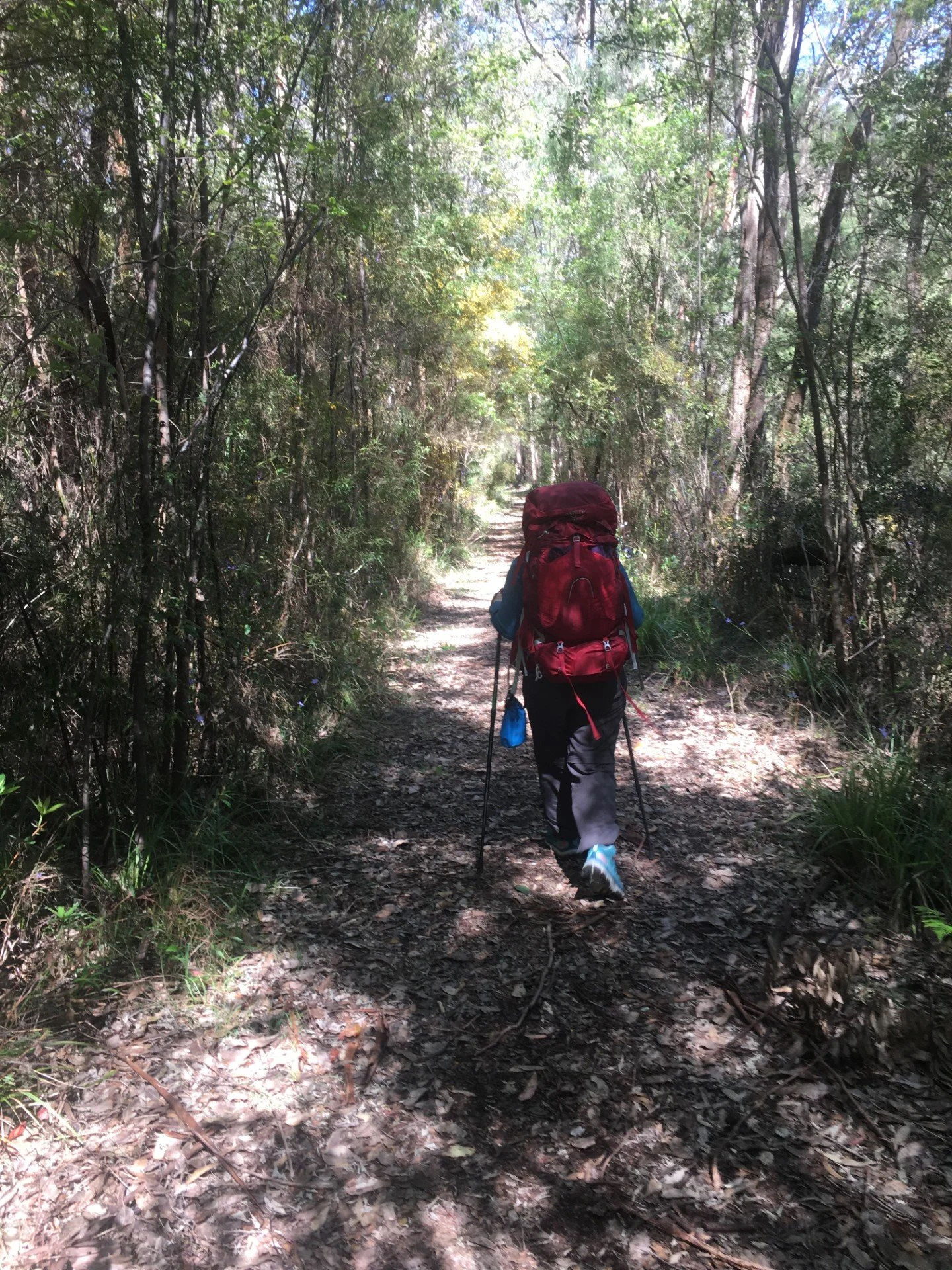
Fast forward a year and the diagnosis of Juvenile Idiopathic Arthritis (JIA) changed everything. Our daughter had never known that her knees were stiff and sore because that was how they had always been. They felt a lot better now that she was on the appropriate treatment and, in hindsight, she had always struggled a bit in the morning. But it had never been a reason to stop because that was just an excuse and we don’t use excuses to avoid doing things, do we? Fast forward another 15 years and our daughter still hasn’t stopped dancing and still doesn’t use excuses to avoid doing things. More than 100km of the Bibbulmun Track in the southwest of Western Australia have passed under our feet over the years.
Juvenile Idiopathic Arthritis
JIA is one of the most common chronic childhood diseases, with an incidence about the same as Type 1 diabetes, but with a lot less publicity. While there are endocrinologists available by the dozen, there are only a double handful of paediatric rheumatologists across Australia. There are none working in the Northern Territory or in Tasmania. There are very few who have the time to work outside the major metropolitan centres – they are flat out doing all they can where they are.
A few decades ago, JIA used to be a terrible disease. Children were frequently left with severe debilitation, as deformed joints left them unable to play and sometimes even walk or write comfortably. The disease burns out by adulthood but left its legacy with not much that could be done aside from pain relief and splints so at least the joints would deform into a usable shape.
Walking along the Bibbulmun Track in Western Australia
However, the world has changed with disease-modifying agents and today, with early recognition and management, a child can expect to get through with joints that work just fine, as long as the JIA is recognised early and managed well.
Today diagnosis is still slow, with the average time from onset of symptoms to diagnosis somewhere around 10-11 months. There is no critical moment where the body suddenly falls in a heap and ketoacidosis either kills you (very rarely nowadays) or makes it bloody obvious that you have diabetes. You don’t start struggling to breathe and wheezing when pollens roll in from the bush each September making it obvious that you have asthma. Every doctor and medical student in the vicinity will line up to listen to your heart for those murmurs that are obvious to confirm through an echocardiogram. Your rashes are obviously eczema and the joys of moisturising morning and night become a ritual.
Early diagnosis is crucial
Early diagnosis of JIA has never been more important, because there is so much that can be done today, particularly if it is picked early. Anti-inflammatories are just the start of the cornucopia of medicines that are now being developed (or repurposed from adult medicine) which dramatically change the prognosis for children and adolescents diagnosed with this condition. From good old methotrexate through to the latest ‘mabs’ and other disease-modifying agents, the expectation is that young people with this disease will progress through childhood and emerge from the other end with joints and eyeballs intact (iritis and uveitis are part of the multisystem disorder).
“You can’t start these medications if you don’t know what you are treating. Early recognition of JIA is still the key. If you don’t think about it, you can’t see it.”
But you can’t start these medications if you don’t know what you are treating. Early recognition of JIA is still the key. If you don’t think about it, you can’t see it. In the ED, where everything runs at a million miles an hour and you are time pressured from the moment you start your shift to the moment you leave an hour late, it is difficult to pick the unusual, the ‘not-quite fitting’.
Common things are common. Rare things happen rarely. But JIA is not that rare. The child with the sore legs for the last month. The youngster limping for no good reason. Sure, the first week may be an irritable hip, but when it goes on for the next two weeks, when do you think to ask the next question? When the family presents frustrated that school keeps sending their child home complaining of knee pain, but the X-rays are normal and their GP can’t find anything wrong and has referred them to the local child psychology team at the family’s insistence? The red eye which isn’t really infected but somebody has tried some drops anyway? A broad differential that includes JIA is sometimes incredibly lifechanging to get the child where they need to go for the next step in their diagnostic journey.
Raising awareness
Trying to raise JIA’s public profile and support the children and adolescents with the condition, as well as the staff who need to diagnose them and help them, is tricky. It is not an easily seen problem in comparison to many others and yet it is out there. The Juvenile Arthritis Foundation Australia (JAFA) is a relatively new organisation, set up in 2019 as a national voice representing and addressing the needs of children and adolescents with arthritis and related rheumatic diseases, as well as their families and carers.
ACEM, along with several other key organisations like the RACGP, RACP, Occupational Therapy Australia, Australian Physiotherapy Association and Arthritis Australia, has signed up to JAFA’s aim of decreasing time to diagnosis from 12 months to 12 weeks. This admirable aim will hopefully help hundreds of young people in the years to come and help them keep playing.
And sometimes just helping your daughter is where it starts.
Juvenile Arthritis Week runs in Australia from 16-22 March, with the 2026 theme being "Kids with Arthritis Can't Wait". Click here to find out how you can get involved.