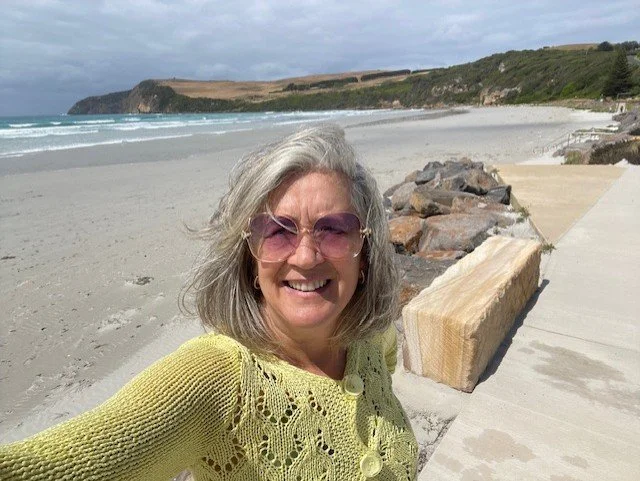
Reflections on retirement and treasuring the life you have
After spending a life balancing demanding clinical work with family responsibilities – including raising three boys – retired FACEM Dr Diana Badcock now finds fulfilment in treasuring what she calls the essentials: ‘silence, stillness and solitude.’
In an article for ACEM’s Retired Fellow Alumni newsletter written about a year after leaving the workforce, Diana described the four seasons of life and her long-held belief that winter begins at 60 – the age she had always imagined retiring.
While financial preparation was front of mind, she wrote that three other pillars deserve equal weight: socialisation — ‘interaction with like-minded souls’; structure — ‘to have something to do, someone to do it with, and something to look forward to’; and status — ‘how you add value to yourself and others.’
Nearly four years on, these foundations still resonate. However, Diana acknowledges that the retirement she once envisaged has evolved differently, with the ebb and flow of daily life and with unexpected events. In her case, this included her husband Rod’s illness and him dying in April last year.
‘Never in a million years did I think I’d be in early retirement without my husband,’ she said. ‘Six months after I retired, he was diagnosed with cancer. We then had two years where the focus was his healthcare alongside fitting in the things we still wanted to do, including travel to the Red Centre and Antarctica.
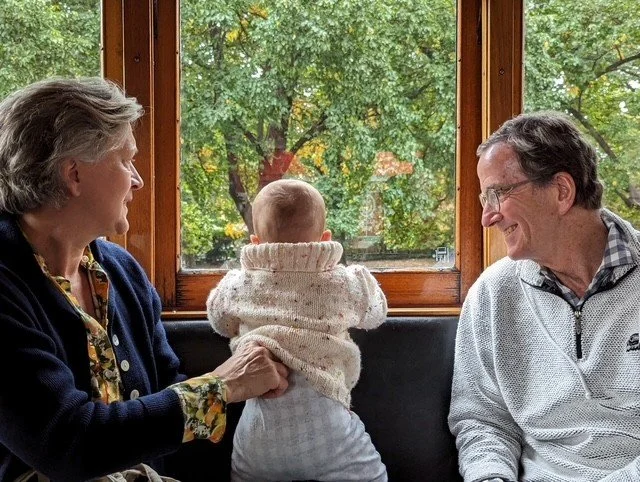
Diana with her husband Rod and grandchild
It was a precious time, because he was so much more available, allowing us special time to visit our boys and grandchildren who live in other parts of Australia.’
The path to retirement
A pivotal moment in Diana’s transition away from clinical work came when everyday simple work tasks became challenging. ‘One day I was unable to remove a foreign body from a patient’s eye. I couldn’t judge the depth perception and asked a younger colleague with much younger eyes and a steadier hand to do it,’ she recalled.
“Her advice to colleagues is to be honest about changing abilities and to explore non-clinical pathways such as teaching, research, management or College work. ‘There are so many areas where your expertise will be valued.’”
‘If you’re someone who naturally reflects on doing the best for patients, you become aware as you age that you may not be as competent as before. Being able to acknowledge that is the sign of a good doctor.’
She remembers a request from an older colleague during her time as an ED director: ‘Diana, you will tap me on the shoulder when you think I shouldn’t be doing clinical work anymore.’ The comment stayed with her. ‘You can’t always see it yourself,’ she said.
Her advice to colleagues is to be honest about changing abilities and to explore non-clinical pathways such as teaching, research, management or College work. ‘There are so many areas where your expertise will be valued.’
When she ultimately retired, Diana felt prepared. In the later years of her career she had already begun stepping back from clinical work, moving into IT and hospital leadership roles.
‘It was a staged pathway of letting go.’
She believes emergency physicians are well suited to hospital management. ‘As a profession, we’re well versed in many aspects of healthcare. Being trained in pattern recognition and rapid response does however require a reset as you move away from the emergency floor. Reacting on rapid fire is not always appreciated.’
This shift is not without challenges.
‘Hospital management means slowing down to speed up and being more strategic. You have to think differently. There’s a tension because in emergency medicine we’re trained to act and fix things — and if we can’t, we often see it as a personal failure.’
Although she made a valuable contribution, eventually her enthusiasm waned. A few months before her 60th birthday, clarity arrived.
‘I was sitting in a hospital management meeting and realised I had just lost the fight. It wasn’t one incident – it was cumulative, hospital politics – and I no longer had the energy. It was somebody else’s turn.’
Life in retirement — evolution and change
Diana’s thinking about retirement has continued to mature since leaving the workforce.
‘When you first retire, you feel you need to replace the busyness of work with an equally busy retirement. You want a schedule and purpose. I think I got that wrong. It’s okay just to be.’
Initially she enrolled in University of the Third Age programs, filling her week with activity, but her priorities soon shifted.
“‘Think of retirement as closing a chapter and rewiring your life, rather than replacing it like for like.’”
‘It’s okay to try something and then change your mind and drop it.’
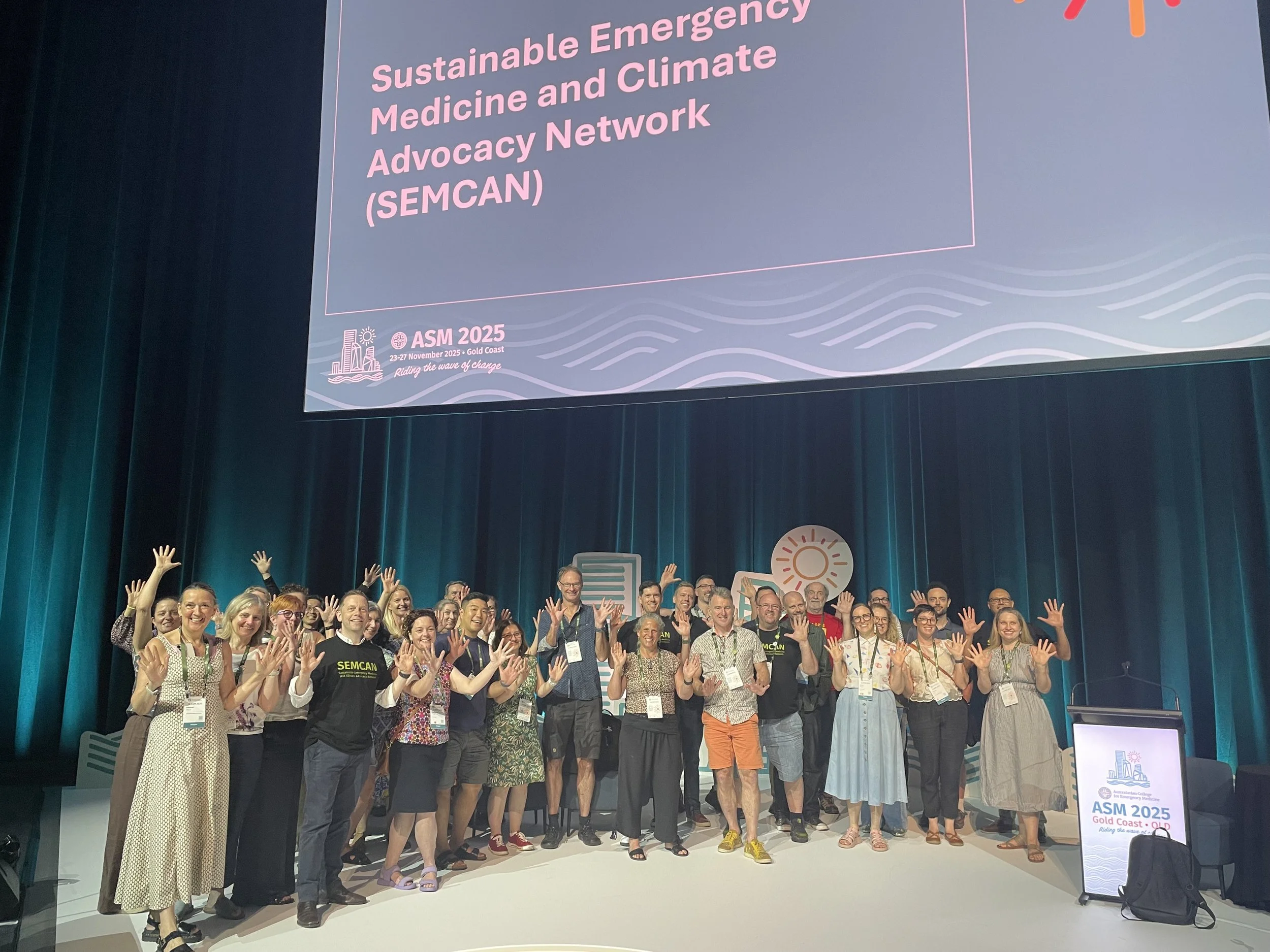
Speaking at a retirement workshop at the 2025 ACEM Annual Scientific Meeting, Diana encouraged colleagues to define retirement on their own terms rather than accept society’s often ageist framing.
‘Think of retirement as closing a chapter and rewiring your life, rather than replacing it like for like.’
Her own perspective has deepened.
‘Today I have a more sophisticated view of retirement – it’s about reclaiming yourself. Most of us have had our careers and families and made many compromises. Then you start to ask: if I peel back those layers, who am I and what do I really want?’
For Diana, the answer was contentment and less busyness.
She also reflects on identity after retirement. While acknowledging individual variation, she observes a gender disparity. ‘Some men clearly define themselves primarily through career, whereas women are much more likely to have held multiple roles simultaneously such as professional, partner, parent, carer, advisor and friend.
‘Being a FACEM is just one of many hats. And so, letting another one of them go just feels natural.’
Living life
Retirement for Diana includes writing and keeping a journal, time with children and grandchildren, walking, talking, stretching and swimming at the beach. She notes that others may pursue larger goals, such as learning an instrument or a language, but the key principle is personal value.
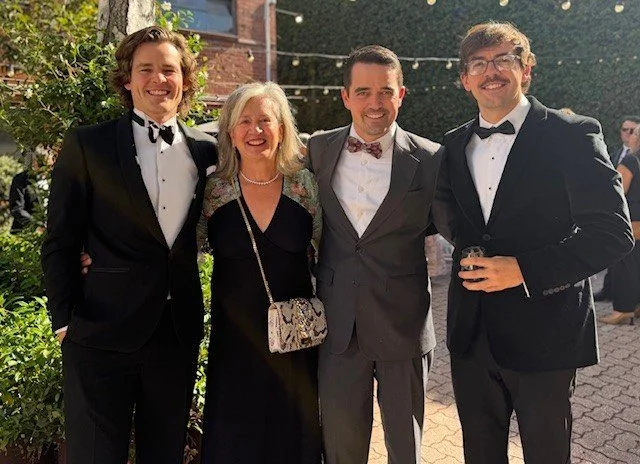
Diana with her three sons
‘Whatever you choose, it should genuinely interest you and bring you joy.’
A significant shift has been learning to prioritise herself after decades of caring for others. She recalls a story told by Joseph Epstein about the equal value of the person quietly observing the world from a park bench compared to the person rushing through an endless to-do list.
‘I think I now seek contentment in being the person sitting back and enjoying the simpler things.’
She said that slowing down can be particularly challenging for emergency physicians.
“‘We don’t naturally know how to relax. We’ve been driven by continual striving. Now it’s about looking, listening and being present in the world around you.’”
‘We don’t naturally know how to relax. We’ve been driven by continual striving. Now it’s about looking, listening and being present in the world around you.’
Asked which retirement activity has surprised her most, she answers without hesitation: decluttering.
‘The simplification and shedding of belongings.’
She even ran a stall at an antiques and collectibles centre.
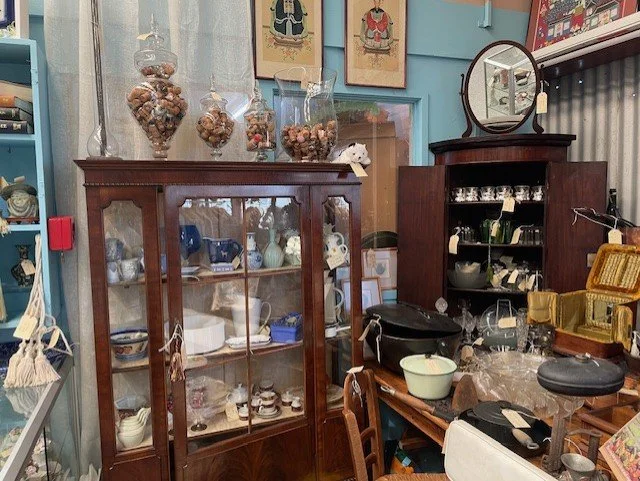
Diana’s stall at an antiques and collectibles centre enabled her to shed belongings and introduced her to a whole new culture and group of people.
‘I loved it — a whole new culture and group of people passionate about selling, wheeling and dealing, and getting rid of collectibles.’
Preparing for health and longevity
Diana emphasises the importance of building balanced habits earlier in life to support healthy ageing.
‘The younger generation – including my children in their 30s – still work hard but are more focused on balance than my generation was. They eat well, exercise and prioritise mental health. We often worked at a furious pace with little time for self.’
She notes that later-life limitations often arise from seemingly minor issues such as musculoskeletal pain.
‘Physio, stretching and regular exercise can make a significant difference to our physical capacity as we age into in our 70s and 80s.’
Her final advice is not to assume unlimited healthy years in retirement.
‘People assume they will stay well but working until 70 may be pushing your luck a little. My husband died just before his 72nd birthday, and my father also at 72. Not everyone will have 20 years of retirement. Retire as soon as you can.’