ACEM at the cutting edge of EM research
Emergency medicine (EM) has always been at the forefront of medical research. Whether resuscitation and trauma, acute care, toxicology, or even pain management, FACEMs readily adopt improved, upgraded clinical techniques or technology in the never-ending pursuit of providing even better levels of patient care.
ACEM supports the cutting edge of EM research through its Clinical Trials Network (CTN), which facilitates and promotes investigator-initiated, collaborative, multicentre clinical research in EM throughout Australia and Aotearoa New Zealand.
The CTN is available to assist ACEM members to set up and run research programs and trials. FACEM Dr Elyssia Bourke is a recent recipient of this support and ran a clinical trial of medication (PEAChY-O) to determine whether oral olanzapine is more effective than oral diazepam for the management of acute severe behavioural disturbance (ASBD) in children and adolescents presenting to emergency departments (EDs).
“The CTN is available to assist ACEM members to set up and run research programs and trials. ”
‘Until now, although we've used medications to assist young people to gain control over their behaviour, there's been no work that has really compared how well the medications work, which works better, or the safety of these medications,’ Elyssia said.
‘Behavioural disturbance is a bit like pain. It's really a manifestation of an underlying condition. So [the young people] might be really, really agitated, but there's usually a reason that they're agitated.
‘We want to get to a point where we can chat to them and understand what it was that led them to become really agitated in the first instance. Providing medication assists them in achieving a state of calm so that we can safely engage with them and progress their care.’
The CTN aims to bring together Australasian researchers with an interest in clinical research to facilitate conducting high-quality multicentre trials. It assists with answering research questions that are important to ED patients and unites EM researchers in further raising the profile of ED-based research, increasing the share of competitive funding that it attracts and, most importantly, improving outcomes for patients by answering those research questions that are most relevant to the quality of their care.
Wide-ranging research benefits
Elyssia, now Chair of ACEM’s CTN, said the network made a valuable contribution to the outcome of her PEAChY-O research trial.
‘To be honest, I've been amazed at the uptake from the clinicians who really helped us to ensure that this study was completed,’ Elyssia said.
“‘[The CTN] has allowed me to present PEAChY-O at lots of different forums like the Research Symposium, as an example. It builds your brand as a researcher within the College, but also more broadly within emergency care,’”
‘One of the biggest benefits for PEAChY-O was it allowed us to leverage the sites that were involved. We had two Queensland sites already involved in the study, quite large metropolitan sites, but [ACEM’s CTN] allowed us to involve an additional site, the Sunshine Coast University Hospital (SCUH).
‘This was mutually beneficial because at the time, SCUH were building their research arm in their emergency department. I think they got a lot out of being involved in the multicentre study, but it [also] provided us with more participants and the additional perspective of a different site and geographical area as well, which was really useful.’
Scientific integrity
Elyssia said there were many benefits that researchers could enjoy by engaging with the CTN.
‘It’s always a challenge with these really large research projects to make sure that the results represent the places that we deliver care within, particularly incorporating all states or territories or regional and rural sites, and allowing different places the opportunity to get involved.’
‘The CTN Executive reviews [your project] for scientific integrity, and to provide endorsement to promote your research, to keep it on ACEM’s agenda so to speak, so that you can present in various forums and also link in with new sites.’
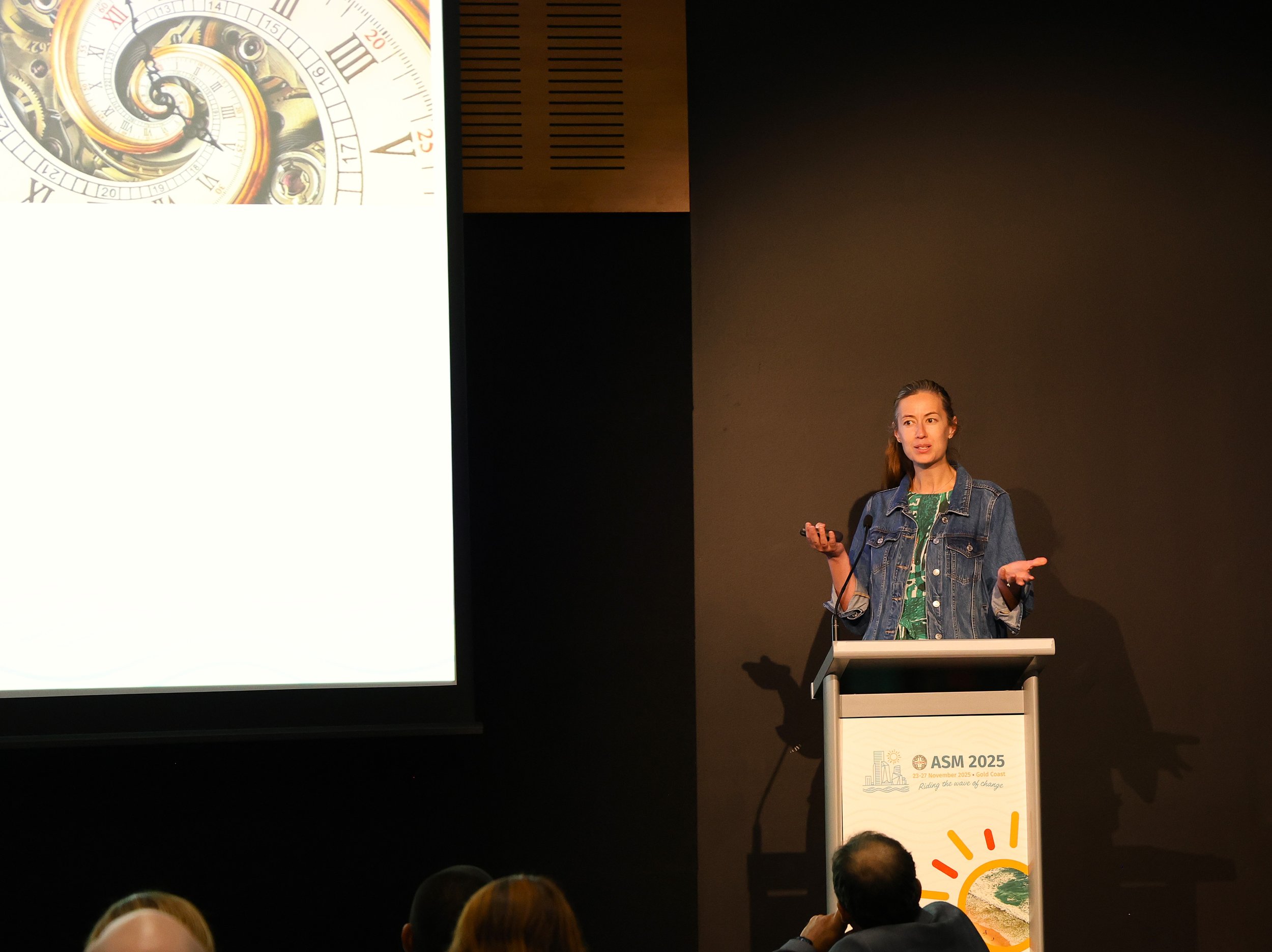
FACEM Dr Elyssia Bourke presenting at ACEM’s 2025 ASM
Elyssia said that working with the CTN had taught her a lot about running a research program, and that the professional benefits of engaging with the network were substantial.
‘[The CTN] has allowed me to present PEAChY-O at lots of different forums like the Research Symposium, as an example. It builds your brand as a researcher within the College, but also more broadly within emergency care,’ Elyssia said.
Research as a team sport
Elyssia said it had also opened new research and career opportunities that may not have otherwise become available.
“‘It just really helps to build the collaborative relationships across the ACEM network. That’s led to lots of other future collaborations that, if I hadn’t presented PEAChY-O, then I probably wouldn’t have been afforded those opportunities. So that all comes from that CTN endorsement process.’”
‘Research is very much a collaborative team sport. I've been involved in lots of other work now because people are like, “OK, she has the skills. I can see that she could translate the skills that she has learned from PEAChY-O into something else, so I'm going to involve her in my work”, Elyssia said.
‘So, it's been much more broadly beneficial than just PEAChY-O. And it just really helps to build the collaborative relationships across the ACEM network. That's led to lots of other future collaborations that, if I hadn't presented PEAChY-O, then I probably wouldn't have been afforded those opportunities. So that all comes from that CTN endorsement process.’
Reach out to the CTN
Elyssia encouraged other FACEMs to reach out to see what the CTN could offer them. She said that no previous research experience was required to submit a proposal to the Executive, and the process was relatively quick and easy.
“‘It doesn’t matter how little or how much research experience you have. Don’t be afraid to reach out and join the CTN as a network member or even consider joining the executive, we’re a very open welcoming group,’”
‘It doesn't matter how little or how much research experience you have. Don't be afraid to reach out and join the CTN as a network member or even consider joining the executive, we're a very open welcoming group,’ Elyssia said.
‘Research is 100 per cent about network and collaboration, and you can't do it alone. If you put your hand up and get involved, the CTN can support you and help you build your research capability and capacity.’
‘We really want to make the CTN a place that people can come and we can support them even really early or as emerging researchers. If you're at all interested, then you should sign up so that we can keep you in the loop about what we're up to and support you.’
Click here to join ACEM’s Clinical Trials Network, and select the ‘Become a member’ option.
Click here to find out more about the ACEM/EMF Research Symposium being held in Brisbane on 11 - 12 March 2026. This year’s theme, Emergency Medicine Research – Past, Present and Future, celebrates the remarkable progress of research in emergency medicine and looks ahead to the innovations shaping the field for years to come.
Register here to see Elyssia present ‘Balancing workloads and career: Women in research’ in the Advancing Women in Emergency (AWE) Medicine Network’s International Women’s Day annual webinar, on 4 March 4, 11am-12.30pm AEDT.