
The burden of not knowing - a personal story
A precautionary MRI for an aching hip gave FACEM Dr Tariq Nehvi a new appreciation for what patients experience when facing the unknown.
“I’m not looking forward to my overseas travel, mate.”
I said it to a colleague and good friend as we walked out to the car park after a busy, resuscitation-heavy ED shift in mid-December 2025. It had been one of those days that demands hours of standing and moving, made harder by a persistent ache in my lower back and right hip that I was finding increasingly difficult to dismiss. Sometimes it was a dull grind. At other times it throbbed, insistently, as if reminding me that denial has a shelf life.
He knew me and my history; me in my mid-50s with the catalogue of medical detours and misadventures that had punctuated my life more than once. With half a smile, joking, or perhaps not entirely joking, he said, “I reckon this hip pain of yours is going to turn out to be some rare, weird condition. You do seem to attract those.”
“The real possibility that a stumble, an awkward transfer, or a sudden jolt could turn a painful problem into something catastrophic while in transit.”
At the time, neither of us knew how uncomfortably close to the truth that remark might come.
An MRI done days earlier, obtained in the hope of reassurance, had done the opposite. The report described an insufficiency fracture involving the femoral head and neck, extending to the intertrochanteric region, with extensive bone marrow oedema. It was language I knew well: the kind that quietly carries weight. In my mind it translated into fragility, compromised bone, altered load transmission, and the real possibility that a stumble, an awkward transfer, or a sudden jolt could turn a painful problem into something catastrophic while in transit.
That knowledge travelled with me. Every transfer into a wheelchair, every bump over a threshold, every moment of imbalance carried an undercurrent of dread. The journey ahead no longer felt merely inconvenient. It felt hazardous.
Emergency departments are for emergencies only
Back home. Safe. Uncertain. For a moment, I considered going straight to the nearest ED. The impulse felt almost automatic. I had just returned from an overseas trip with a significant health issue. I had seen this countless times before – patients checking in directly from the airport after an illness, an injury, a scare that couldn’t wait until the next morning.
I knew the script. I had written it myself, many times before. But then another voice intervened, the one shaped by years of practising emergency medicine.
Emergency department is for emergencies only.
And so, the question began to loop in my mind: Was this really an emergency? I struggled to dismiss it on the one hand. An insufficiency fracture located on the tension side of the femoral head and neck, vulnerable to collapse with a misstep or awkward movement – if that didn’t qualify as an emergency, then what did? The risk felt real, immediate and deeply personal.

FACEM Dr Tariq Nehvi
On the other hand, I interrogated the situation the way I would for any patient. Did I need an emergency intervention in the next 12-24 hours? Was there an imminent, time-critical intervention that would alter the outcome or prevent serious harm? Would waiting overnight or even the next day or two materially change my prognosis?
That was the threshold that I had spent my career applying.
The answer I arrived at was an uncomfortable one. This was not an emergency in the truest sense. The risk was real, but not immediate. I also had private health insurance: perhaps I could get to see a private specialist in the next few days if I wanted?
And so, we went home. The internal debate however, stayed with me. It made me realise how subjective the concept of an ‘emergency’ is.
“Seen through that lens, the decision to come to an ED is not reckless or entitled. It is rational. It is protective. It is human.”
People who present to an emergency department almost always believe that they need to be seen there and seen urgently. Fear, pain, uncertainty, lack of social support systems, and the dread of delay all shape that decision. Most understand, implicitly or explicitly, the gaps in the systems designed to support problems deemed ‘non-urgent’.
They know how easily they can fall between services, advice lines, clinic referrals and appointments that are days, weeks away. Seen through that lens, the decision to come to an ED is not reckless or entitled. It is rational. It is protective. It is human.
Psychological burden
Illness has given me a renewed appreciation of the truth – and a deeper respect for the courage it takes to seek help when certainty is absent.
Being non-weight bearing at home demands a new kind of vigilance. There was also the part I hadn’t fully understood until I lived it: how psychologically heavy ‘non-weight bearing’ really is. We discharge patients from ED with those words all the time, as if they are simply instructions. Now I knew what they mean in real life. Even if you are otherwise young and fit, it is disruptive, exhausting, demoralising. It felt like torture just to hop from the couch to the bed. I found myself wondering how long I could realistically sustain it. Hopelessness began to creep in.
“Illness has given me a renewed appreciation of the truth – and a deeper respect for the courage it takes to seek help when certainty is absent.”
It was my son, now a third-year medical student, who offered an unexpectedly simple solution. ‘Why don’t you get an electric wheelchair?’
The relief was immediate and profound. With the electric wheelchair, it felt as though I had my legs back and my arms returned to me. I could carry things again. Hold things. Move around the house without the constant fear of tripping. The vigilance eased. Independence, so abruptly lost, was partially restored. It didn’t fix the uncertainty. It didn’t change the diagnostic possibilities. But it changed how I lived alongside both.
The support was incredible. Colleagues reached out with concern and encouragement. Some visited. Work management were unfailingly supportive, generous with time and flexibility, removing pressures I hadn’t realised I was carrying. I felt held by a professional community that understood, better than most, how suddenly health can shift, how vulnerable even the most functional among us can become.
Confusing picture
Returning to the hip; the divided opinions and ambiguity took hold. Clinically, the picture was confusing. The pain had crept in insidiously, then escalated over two to four weeks until it began intruding into everything: rest, sleep, mood. Weight-bearing was unpredictable, not reliably worse, not consistently better. Rest offered no refuge. Night pain was unsettling, both for its intensity and for what it implied.
The early tests offered false simplicity. Plain X-rays and a CT scan of the hip and pelvis were entirely normal. Blood tests were unremarkable, apart from moderately low vitamin D. Inflammatory markers were normal. I had no fever, no systemic symptoms, and no history of trauma.
And yet the MRI told a different story. The first MRI, done overseas, demonstrated extensive bone marrow oedema of the right femoral head and neck, extending into the intertrochanteric region. The report described an insufficiency fracture beginning in the lateral aspect of the femoral head and tracking along the lateral femoral neck down toward the intertrochanteric area.
“What troubled me most was not simply the presence of a fracture line. It was its implied mechanics: tension-side stress in a weight-bearing region, where bone does not fail gently. In that context, collapse can be sudden and irreversible.”
What troubled me most was not simply the presence of a fracture line. It was its implied mechanics: tension-side stress in a weight-bearing region, where bone does not fail gently. In that context, collapse can be sudden and irreversible. The extent of marrow oedema added another layer of unease, suggesting congestion, raised intraosseous pressures, and a threat to the vascular integrity of the femoral head. Avascular necrosis hovered as a possibility not proven, not inevitable, but difficult to ignore.
This was just before the Christmas period, in an unfamiliar health system, and urgent specialist review felt out of reach. I messaged an orthopaedic colleague in Adelaide. He was immediately supportive and reassuring. Based on a normal CT (no obvious cortical compromise), he felt that careful travel, with minimal weight-bearing and maximal caution, was reasonable. He anticipated that internal fixation with a dynamic hip screw (DHS) might stabilise the fracture and potentially decompress the oedematous bone.
At the time, that plan gave me something I badly needed: a direction.
Diverging advice
Back in Adelaide we repeated the MRI, this time with a 3-Tesla scanner, higher resolution, greater detail. I sought review, with permission, from multiple radiologists. The diversity of interpretations was sobering. Some felt the MRI changes could be explained by insufficiency fracture alone, stable in some eyes, borderline or unstable in others. Some raised concern about avascular necrosis without identifying definitive features. Others favoured transient bone marrow oedema syndrome, also termed transient osteoporosis of the hip in older literature. Dramatic on MRI yet self-limiting and benign.
“As the pain escalated and began intruding relentlessly into rest and sleep, my tolerance for uncertainty thinned. Nights became something I dreaded. ”
Orthopaedic opinions diverged even further. One surgeon was convinced this was avascular necrosis in evolution, with the marrow oedema an effect rather than the cause. He recommended primary total hip replacement and was prepared to proceed as soon as I consented. Another offered a joint-preserving strategy - fixation and/or core decompression - to intervene early in the hope of preventing progression. A third advised restraint: to wait for clearer evolution on imaging or symptoms, arguing that intervention without definitive progression could cause more harm than good.
The decision point: intervening versus waiting. As the pain escalated and began intruding relentlessly into rest and sleep, my tolerance for uncertainty thinned. Nights became something I dreaded. Despite combinations of analgesia, opioids, NSAIDs and paracetamol, rest still felt contaminated by pain. The feeling of being trapped within my own body grew increasingly oppressive.
In that context, core decompression began to feel not only reasonable but necessary. In an attempt to intervene before the situation worsened further, I agreed to proceed.
Then, two days before the scheduled procedure, something shifted.
Cautious hope
In the end I went with my intuition. I chose to wait. It was not a rejection of advice, nor a denial of risk. It was a decision shaped by the trajectory of my symptoms, by years of clinical experience, and by a cautious hope that this story might still unfold without irreversible intervention.
The latest MRI, performed six weeks after the previous scan, was reassuring. Although bone marrow oedema persists, there is no evidence of insufficiency fractures or avascular necrosis, and some areas of the oedema have in fact improved. Coupled with the very significant clinical improvement I have experienced, this feels like clear evidence that things are moving in the right direction.
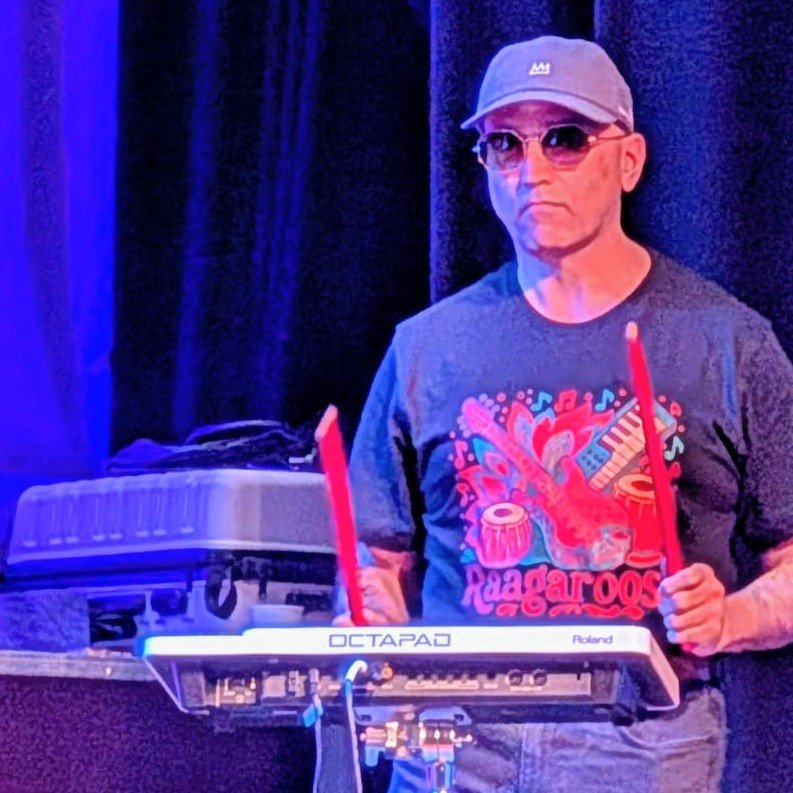
FACEM Dr Tariq Nehvi before his diagnosis
I have now been allowed to progress from protected weight bearing to weight bearing as tolerated. That has brought enormous relief, both physically and mentally. Listening to my own body and symptoms, while being guided by my orthopaedician’s sensible advice and supported by the almost magical effects of physiotherapy and hydrotherapy, I feel I may have made the right decision.
For now, I am learning that sometimes the hardest decision in medicine is not what to do, or when to do it, but when to pause.
Capacity to adapt
I now wait for the next follow-up MRI in two months’ time, carrying both hope and lingering anxiety, knowing that its findings may shape the next chapter. But I also know now that it may not define it entirely. The scan may offer information, perhaps final clarity, perhaps continued ambiguity, or worse still, bad news. What it cannot fully resolve is the deeper work: learning how to live alongside uncertainty.
Medicine does not always offer neat conclusions. Life continues regardless. For now, I am learning to carry uncertainty rather than try to conquer it while holding onto what has remained unchanged: connection, purpose, optimism, and the capacity to adapt. That, perhaps, is enough to begin with.
I pursued further answers not because the tests demanded it, but because my body did. I listened to that internal disquiet. The sense that the story didn’t fit. And this is me – an experienced emergency physician. Someone trained to live with and accept some uncertainty. To manage the undifferentiated presentations, to tolerate some ambiguity.
“It forced an uncomfortable reflection on my own practice. How many times have I discharged a patient with acute or sub-acute joint pain, or abdominal, pelvic or back pain, after reassuring blood results and unremarkable imaging? How often have I falsely reassured someone? When do we decide we have done enough?”
It forced an uncomfortable reflection on my own practice. How many times have I discharged a patient with acute or sub-acute joint pain, or abdominal, pelvic or back pain, after reassuring blood results and unremarkable imaging? How often have I falsely reassured someone? When do we decide we have done enough?
Illness has humbled me into a simple truth: patients, and their caregivers, often know. They may not know the diagnosis, but they know when something is not right. When concern is genuine and persistent, it deserves respect. It deserves pause. If they genuinely are worried, we should be too.
Sometimes, that means seeking another opinion, calling a colleague. Looking again. Or simply sitting longer with uncertainty. Not because we are failing. But because we are listening.