The fourth pillar: establishing sustainability across emergency medicine
In October 2025, the ACEM Foundation formally established its fourth pillar: Sustainable Emergency Medicine and Climate Health. This is more than a symbolic addition. It signals that the College will “encourage, support and promote practice, research and education of sustainable emergency medicine and climate health”.
The Australasian College for Emergency Medicine (ACEM) Foundation was formed in 2012 to advance issues pivotal to emergency medicine, clinicians and community advocacy. Its original three pillars of Indigenous Health, Research, and Global Emergency Medicine reflected long-term commitments to equity, scientific evidence and international engagement. The fourth pillar recognises that without a sustainable health system and a stable climate, progress across all three is at risk.
Sustainability is defined as ‘the ability to meet the needs of the present without compromising the ability of future generations to meet their own needs’.
“The World Health Organization has called climate change the “single biggest health threat facing humanity”. It will not only cause severe adverse health impacts but also cause disruption in the social determinants of health such as housing, energy and water and food shortage, and these effects will disproportionately affect the most vulnerable groups of people such as older people, people experiencing homelessness or insecure housing, First Nations people and people living in poverty.”
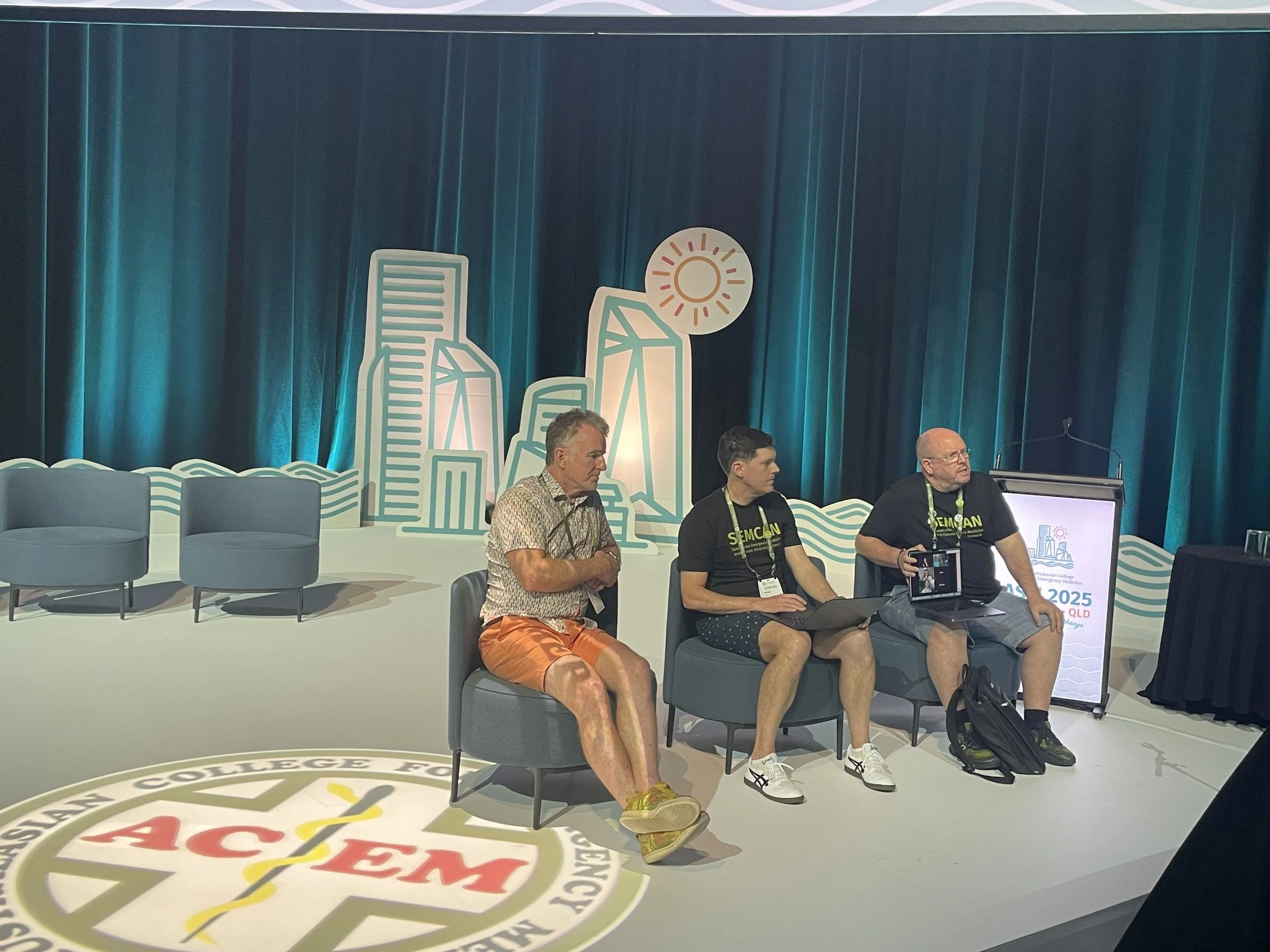
sEMCAN member and ACEM Past President Dr John Bonning, sEMCAN Chair Dr Matthew Knox and sEMCAN member and ACEM Past President Dr Simon Judkins at the ASM 2025.
Why this matters now
Climate change is the public health issue of our times, with climate affecting healthcare and healthcare affecting climate. We are living in a world that is noticeably warming, with climate disasters becoming more frequent and devastating.
Emergency physicians are already seeing the consequences of climate change at the front door of our hospitals.
According to the National Climate Risk Assessment released by the Australian Government in 2025, an increase in temperatures will lead to more frequent and severe heatwaves, bushfires, storms and floods. These events increase respiratory, cardiovascular and mental health presentations, disrupt primary care access, and strain already stretched emergency departments (EDs).
ACEM research conducted with the NSW Environmental Protection Authority (EPA) identified a 25 per cent rise in all-cause respiratory diagnoses in affected regions during the 2019-20 Black Summer bushfires. Asthma diagnoses increased by 42 per cent and chronic obstructive pulmonary disease (COPD) by 40 per cent. During the heatwave, there was an increase in the diagnosis of heatstroke-related conditions by 133 per cent and dehydration by 63 per cent in NSW EDs.
At the same time, healthcare itself contributes significantly to emissions, which are estimated at up to seven per cent of total CO₂ emissions in Australia, Aotearoa New Zealand and worldwide. EDs are energy-intensive, resource-intensive environments. If we are to advocate credibly for climate health, we must also address our own footprint.
“Sustainable healthcare is high value and equitable care that addresses the needs of patients today without compromising the health of future generations.”
Embedding sustainability within the Foundation recognises this dual responsibility: to respond to climate-related health impacts, and to reduce the climate impact of healthcare.
From advocacy to integration
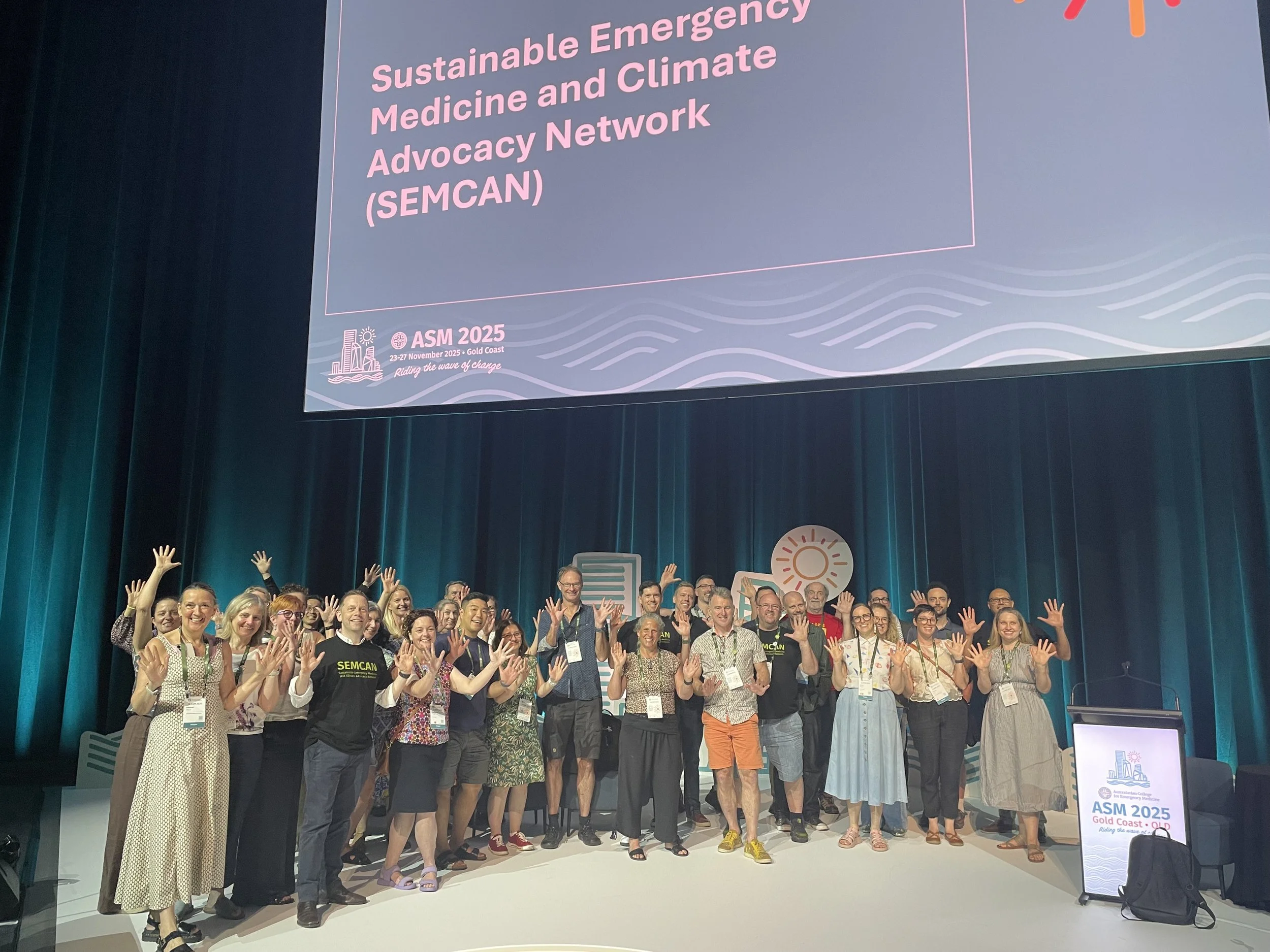
The Sustainable Emergency Medicine and Climate Advocacy Network (sEMCAN) was established in 2023 to connect members committed to this work. The creation of the fourth pillar ensures that sustainability is not confined to a network or special interest group but rather it is integrated into the College’s mainstream activity.
The fourth pillar is a necessary evolution.
Emergency departments sit at the frontline of climate impacts, from heat stress and bushfire smoke to disaster-related disruption of care. Encouraging, supporting and promoting the practice, research and education of sustainable emergency medicine and climate health ensures we are not only responding to these pressures, but actively shaping a health system that is resilient, equitable and fit for the future.
What sustainability looks like for ACEM
Sustainability across College activity means supporting trainees and Fellows to understand resource stewardship, equity in healthcare delivery and low-value care, and seeing how climate health and sustainable practice could be incorporated into curricula, examinations and continuing professional development.
“It is so important to go across all aspects of the College and who we are, the way we educate, the way we do research, the way we practice. This is sustainable emergency healthcare, health equity, resource stewardship, and climate health.”
Regarding standards and policy, this means integrating sustainability principles into ACEM’s guidelines, policies and position statements, and advocating for infrastructure and system design that supports low-carbon, climate-resilient EDs in providing rational and equitable healthcare.
ACEM has also endorsed the Australian Commission on Safety and Quality in Health Care’s Framework for Collaborative Action on Climate and Health, which represents a shared commitment to addressing the health impacts of climate change.
This year the College will introduce the new ACEM Foundation Sustainability Award, which recognises individuals and teams for initiatives that demonstrate leadership and innovation in advancing socially responsible, sustainable and environmentally conscious practice within emergency medicine.
By recognising excellence in this area, the award seeks to encourage ongoing action, innovation, and cultural change towards a more sustainable healthcare system, both now and into the future. Nominations open in in mid-late May.
“It is a great step for ACEM to include sustainability, climate advocacy and healthcare as the fourth pillar of the Foundation. This ensures these enormous challenges become an integral part of the way ACEM operates, educates and advocates. It will make a significant difference.”
Building partnerships with local advocacy organisations and colleagues internationally is also important. The launch of the ‘Gloves off’ campaign at the 2025 Emergency Medicine Annual Symposium in Kuala Lumpur, Malaysia, is an example of including international emergency physicians in our representation to deliver presentations at international meetings encouraging global collaboration.
ACEM recently collaborated with the Royal College of Emergency Medicine (RCEM) on the launch of GreenED International, an expansion of RCEM’s GreenED. Since its inception in 2023, this program has supported EDs across the UK and Ireland to implement a range of environmentally sustainable practices.
Nine EDs across New South Wales successfully piloted the program over 12 months and have achieved a Bronze accreditation. Learn more here.

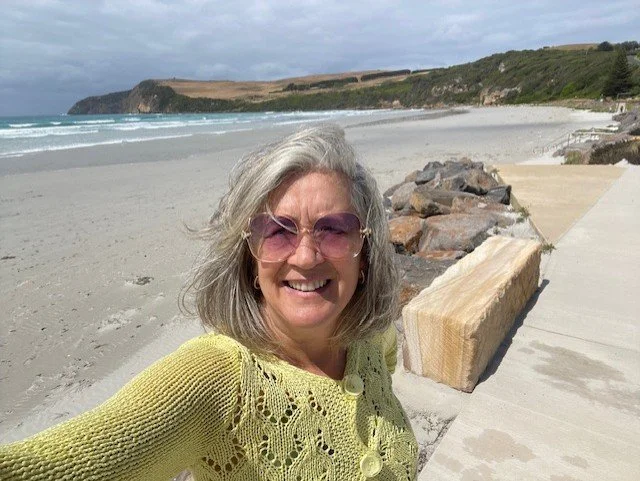
sEMCAN member Dr Lai Heng Foong
sEMCAN is also partnering with universities to encourage research about the impacts of climate change on health workers, on communities and disease.
Promoting equitable, rational resource stewardship as a professional norm is central to this shift: choosing investigations and treatments carefully and reducing low-value or harmful care improves patient outcomes, cuts waste and lowers emissions.
This includes reviewing procurement, patient transport and power supplies to reduce healthcare’s carbon footprint and aligns with a “triple bottom line” approach: people (equity and outcomes), profit (efficient use of resources), and planet (environmental sustainability).
Preparing for what is coming
Climate change is also a workforce and systems issue.
Floods in northern NSW in 2022 temporarily closed approximately 64 primary healthcare services, affecting an estimated 200,000 people. EDs absorb this surge when community services fail.
Without planning and mitigation this will worsen overcrowding and bed block, with downstream effects on patient morbidity and clinician wellbeing.
During the Queensland floods in 2025 we saw the rise of previously little-seen diseases such as melioidosis, increases in other respiratory conditions, and communities losing access to services due to power failures.
Extreme weather events disrupt dialysis, non-invasive ventilation and other essential supports, while rising temperatures disproportionately affect older people and those with chronic cardiovascular, respiratory and renal conditions.
The fourth pillar provides a framework for coordinated action - not only mitigation (reducing emissions), but adaptation (ensuring EDs are prepared for increasing demand and infrastructure stress).
A practical call to action
sEMCAN hopes to see emergency physicians join with other ED workers (such as nurses, physiotherapists and pharmacists) and other colleges and groups to address climate issues on several fronts and create a healthcare wave of change.
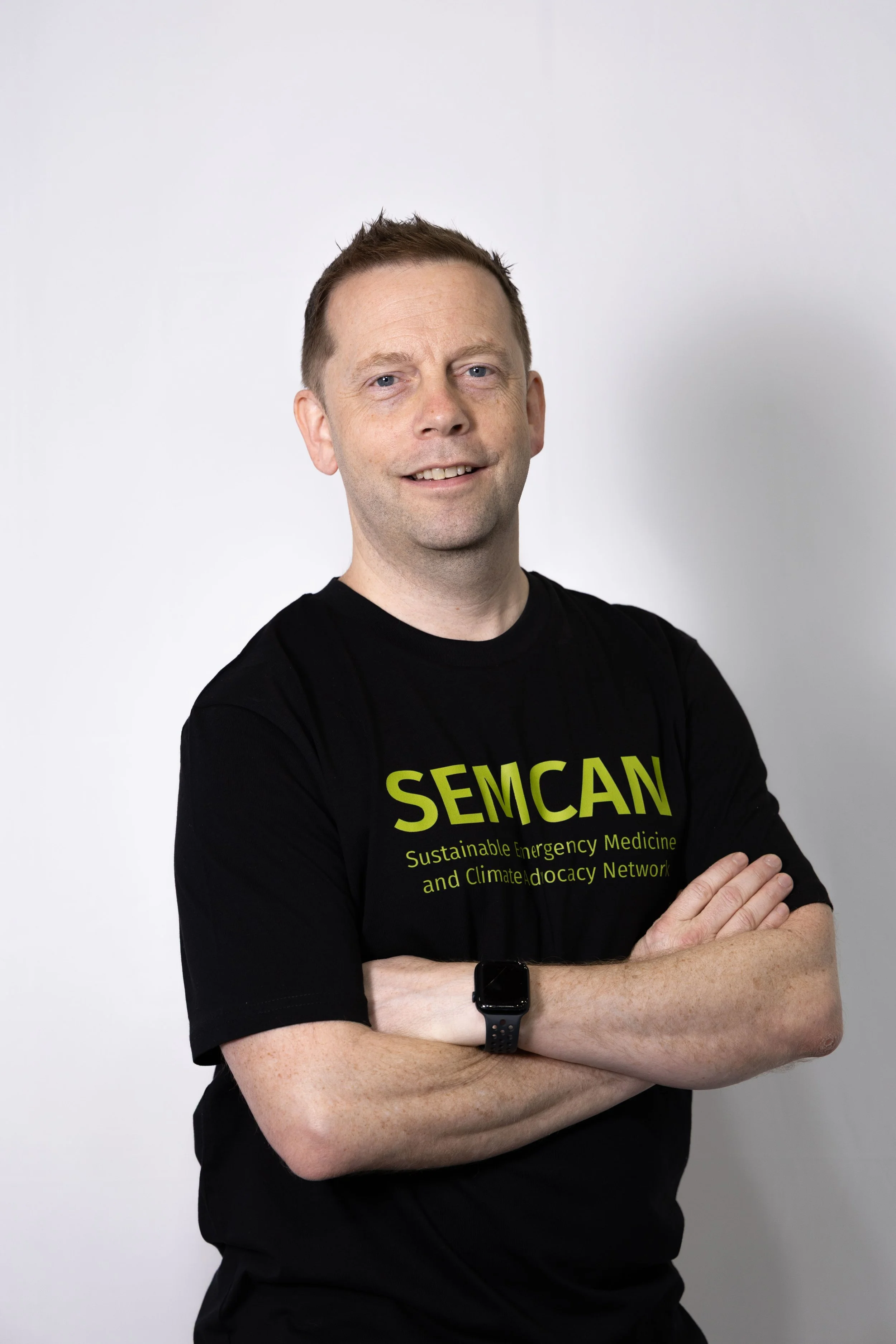
Sustainability does not begin with sweeping reform. It starts locally with simple projects such as reviewing waste streams, rationalising single-use equipment, improving energy practices, or auditing unnecessary testing. Small, measurable projects build momentum and institutional support.
At a College level, the commitment is clear. We publicly nailed our colours to the mast in November 2019 when we marched in the streets of Hobart at ASM2019 and declared a climate emergency.
“Get one small project, get two colleagues, and take three months.”
That day we stated: ‘The evidence is clear. Projections show that climate change will cause a significant rise in the number of overall ED presentations, an increase in the complexity of presentations, as well as surges resulting from climate disasters. With the research also showing that climate change will exacerbate existing health inequities, we have an obligation and responsibility as emergency doctors to speak up, take action ourselves and demand action from government.’
By establishing Sustainable Emergency Medicine and Climate Health as the fourth Foundation pillar, the task now is implementation.
Emergency physicians are accustomed to managing risk at the point of crisis. The fourth pillar recognises that climate change is not a future problem; it is a present and escalating one. Establishing sustainability across the College ensures we respond not only to today’s emergencies, but to the conditions that shape tomorrow’s health.
SEMCAN is hosting a webinar on 6 May exploring local and international actions in sustainable emergency medicine and how FACEMs are co-ordinating and amplifying the response to the climate crisis. This activity will meet 1.5 ACEM CPD hours. To attend, register here.