Riding the wave at the Annual Scientific Meeting
“Bringing everyone together for the gift of the circle, the gift of exchanging and sharing knowledge and sharing yourself.”
Trainee Dr Blair Burke couldn’t decide which specialty she liked the most until a mentor asked her: “If you were at a party, what group of people would you want to hang out with?” She chose emergency medicine (EM), and the Australasian College for Emergency Medicine’s (ACEM) 40th Annual Scientific Meeting (ASM) confirmed her choice was a good one.
The EM community gathered on the Gold Coast in late November 2025 from across Australia, Aotearoa New Zealand and around the world to celebrate their specialty, share knowledge and new research, and connect with colleagues.
Warm welcome
Traditional owner and Kombumerri man Lann Levinge delivered a warm Welcome to Country, ‘bringing everyone together for the gift of the circle, the gift of exchanging and sharing knowledge and sharing yourself.’
He also introduced an engaging local student dance troupe, with the youngest member, only two years of age, easily stealing the show.
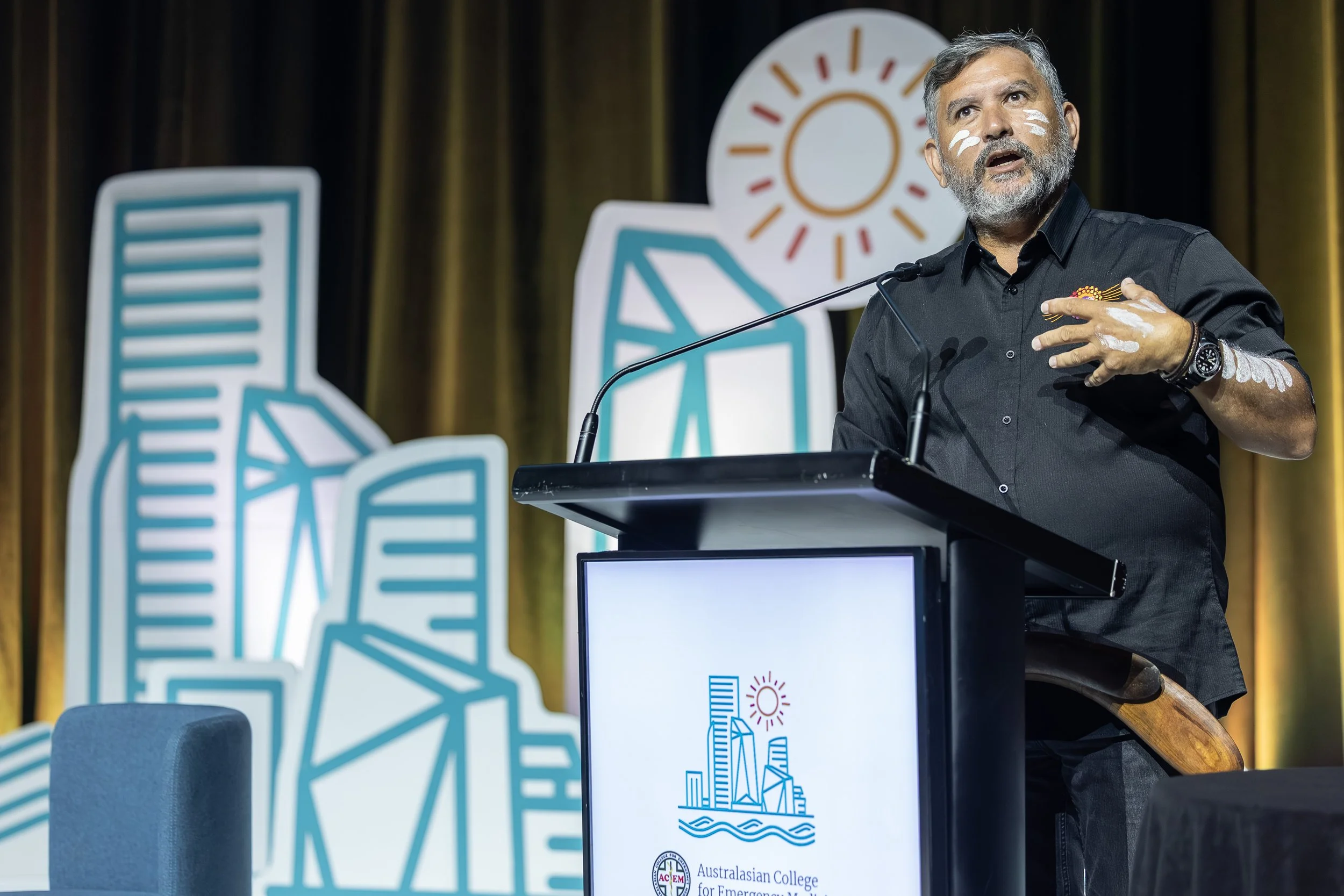
Traditional owner and Kombumerri man Lann Levinge delivered the Welcome to Country
Queensland Health Minister The Honourable Tim Nicholls opened the conference. He thanked the EM community for its expert care and acknowledged the devastating impact of bed block on delivering care.
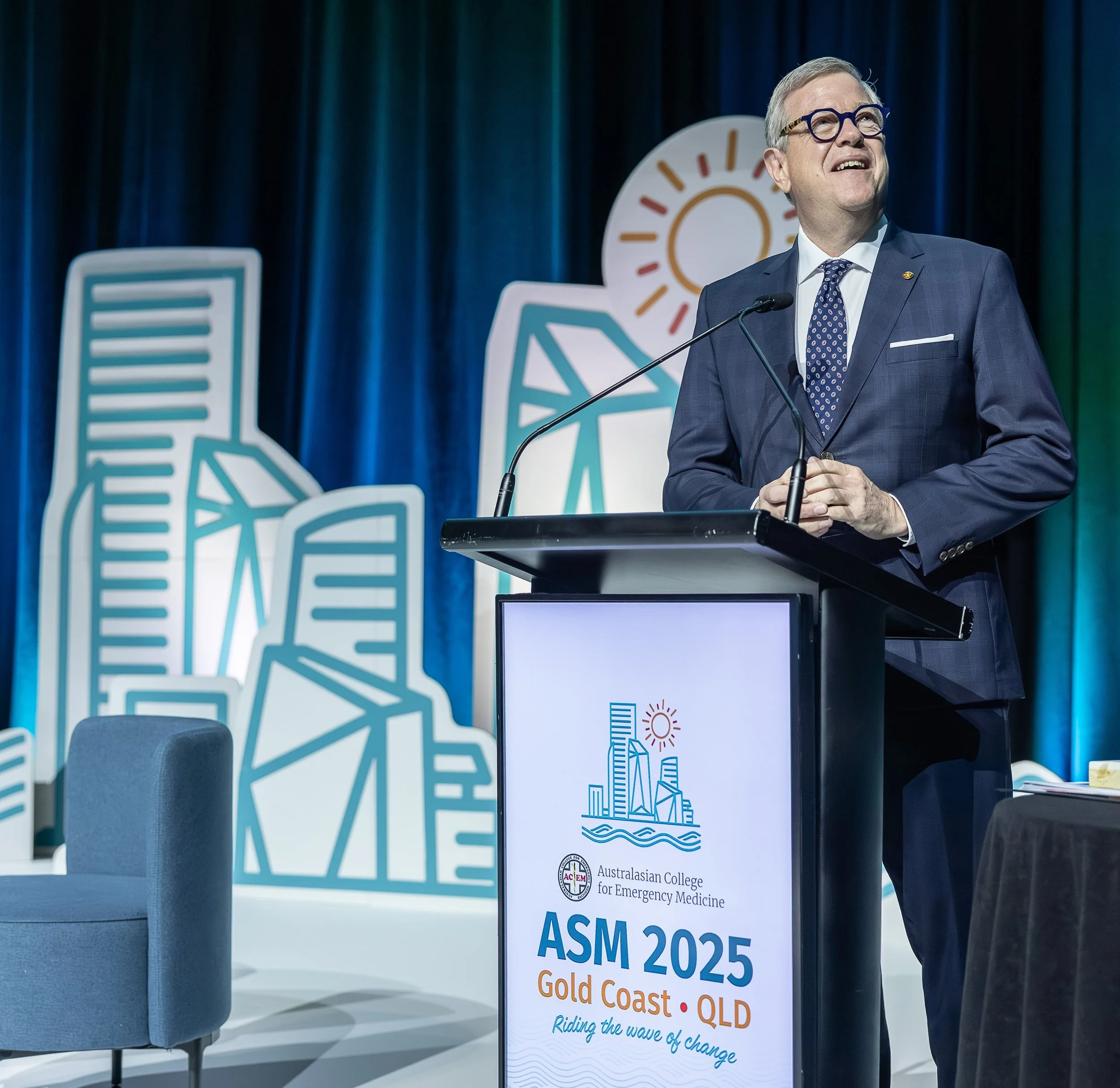
Queensland Health Minister Tim Nicholls said bed block is a system-wide issue
“What I repeatedly hear, and what I consistently observe, is that bed block is the key contributor to the ramping crisis impacting our hospitals, not just in Queensland, but across Australia, and it is getting in the way of the great work that clinicians in our emergency departments are trying to provide,” he said.
‘This is not a Queensland-based problem. It's Australia wide. I speak to my fellow health ministers across the political divide, and we are all concerned about it. I just want to reassure those who work in emergency departments … that we understand this is not solely nor even mainly, an issue constrained to emergency departments. It is a system-wide issue.’
Minister Nicholls also thanked ACEM for sharing the Breaking Point report on occupational violence, adding: ‘There is no place for aggression or violence towards the hardworking staff in our health facilities.’
Packed program
“You want to create something people remember, that people come in and enjoy and feel they are welcome and valued for what they bring”
ASM Convener FACEM Dr Nemat Alsaba (Gold Coast University Hospital and Bond University) said it was a joy to be involved in curating the program, along with ASM working group members FACEM Dr Victoria Barbour (Redcliffe Hospital/QEII Hospital, Brisbane), FACEM Dr Gerben Keijzers (Gold Coast Hospital and Health Service), FACEM Dr Nivedha Nirainjanan (Queensland Health), FACEM Dr Richard Pellatt, FACEM Trainee Dr Alireza Baratloo (Gold Coast Hospital and Health Service), and Mr Colin Mak (Gold Coast Health).
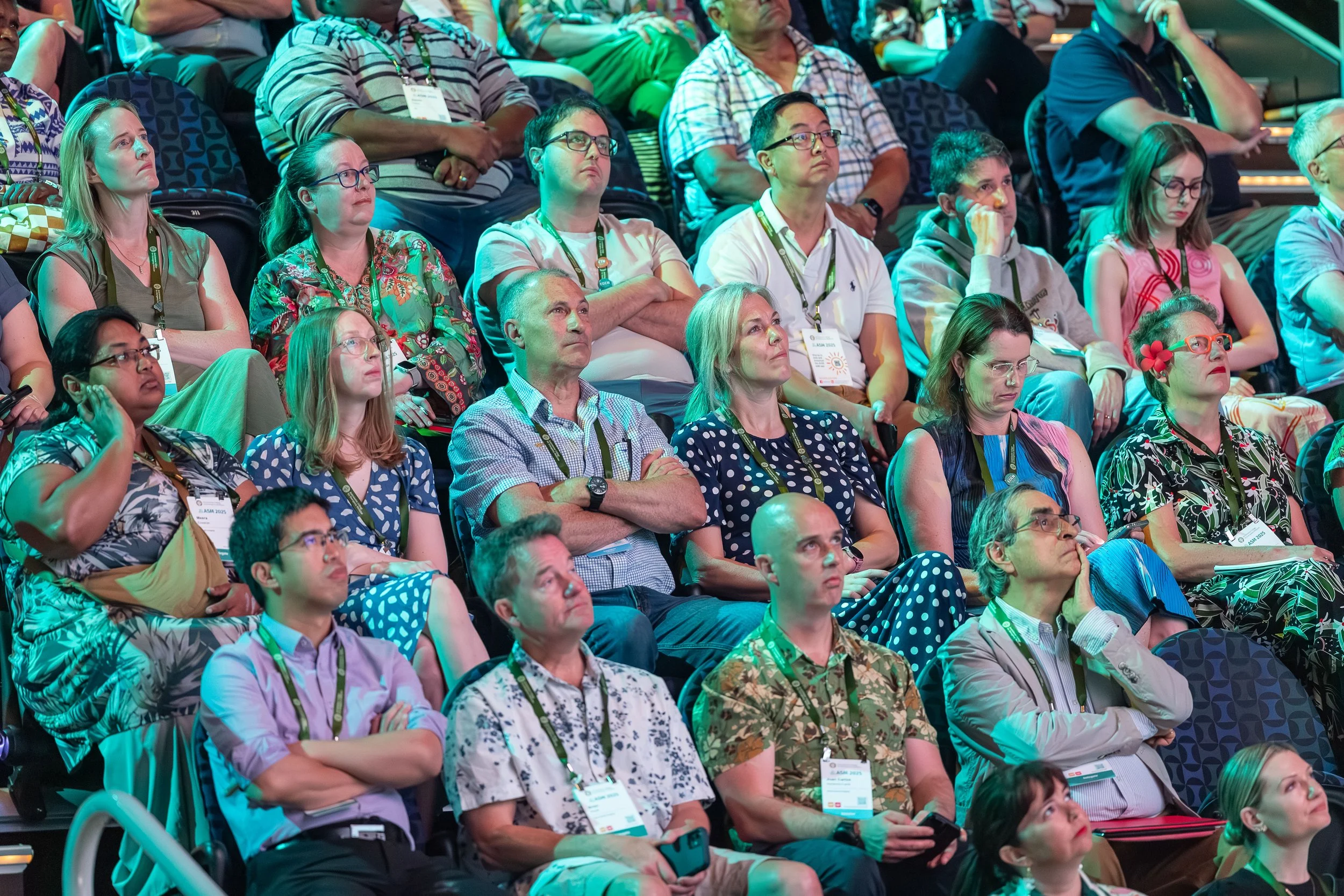
The Queensland-based group’s goal was to foster a community of practice dedicated to ‘caring for EM as a profession, the people we serve, the clinicians and trainees we mentor and support,’ emphasising the collective effort behind the event's success.
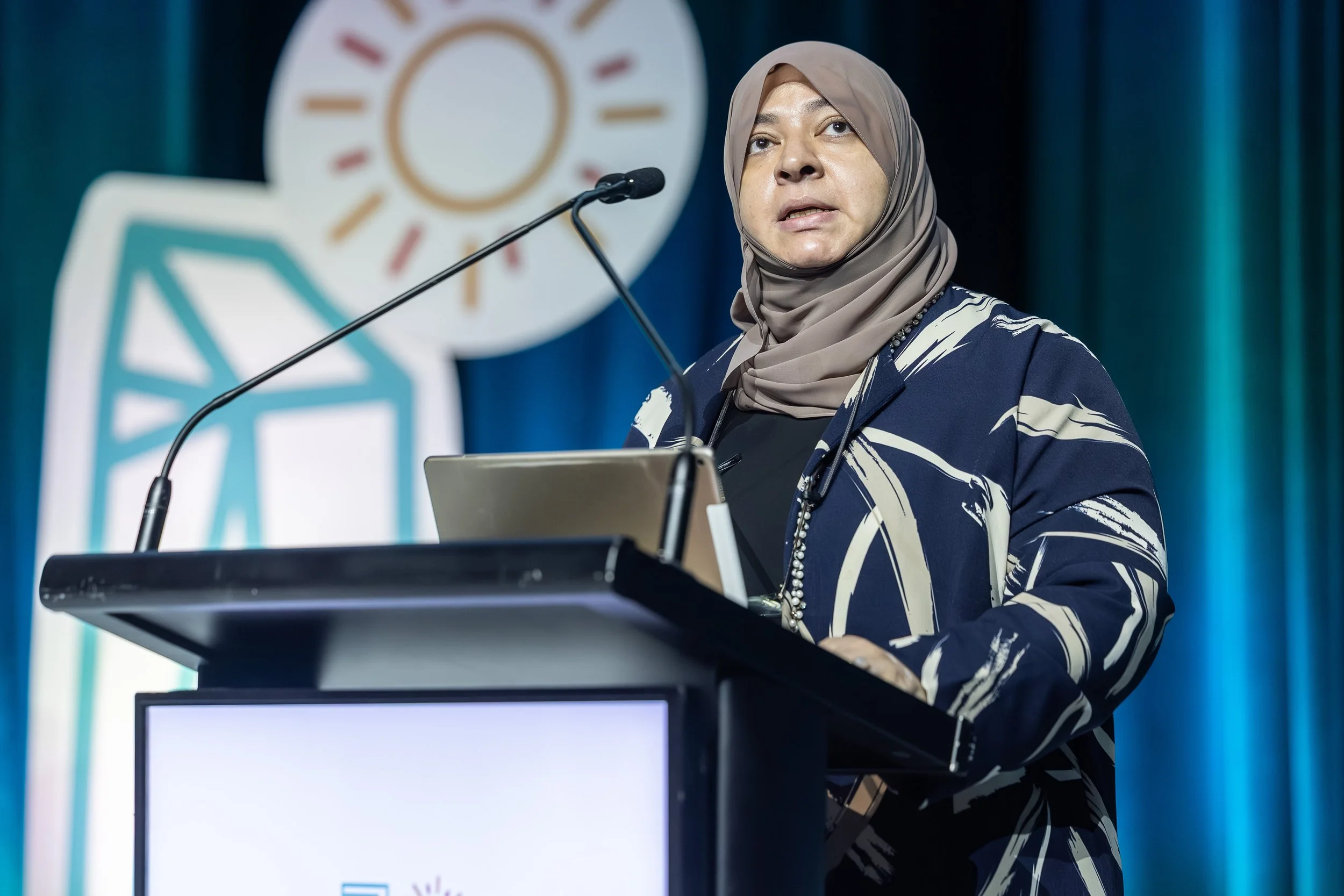
ASM Convener FACEM Dr Nemat Alsaba
‘The ASM is one of the biggest scientific meetings in the country, supported by one of the most prestigious colleges in the country as well. So the standards are already high, and you have to match that and put your heart and soul into it to make sure that you are meeting that expectation,’ she said of the year-long planning for the highly successful event.
'You want to create something people remember, that people come in and enjoy and feel they are welcome and valued for what they bring, whether they are speakers, chairpersons, delegates, volunteers or faculty in a workshop.’
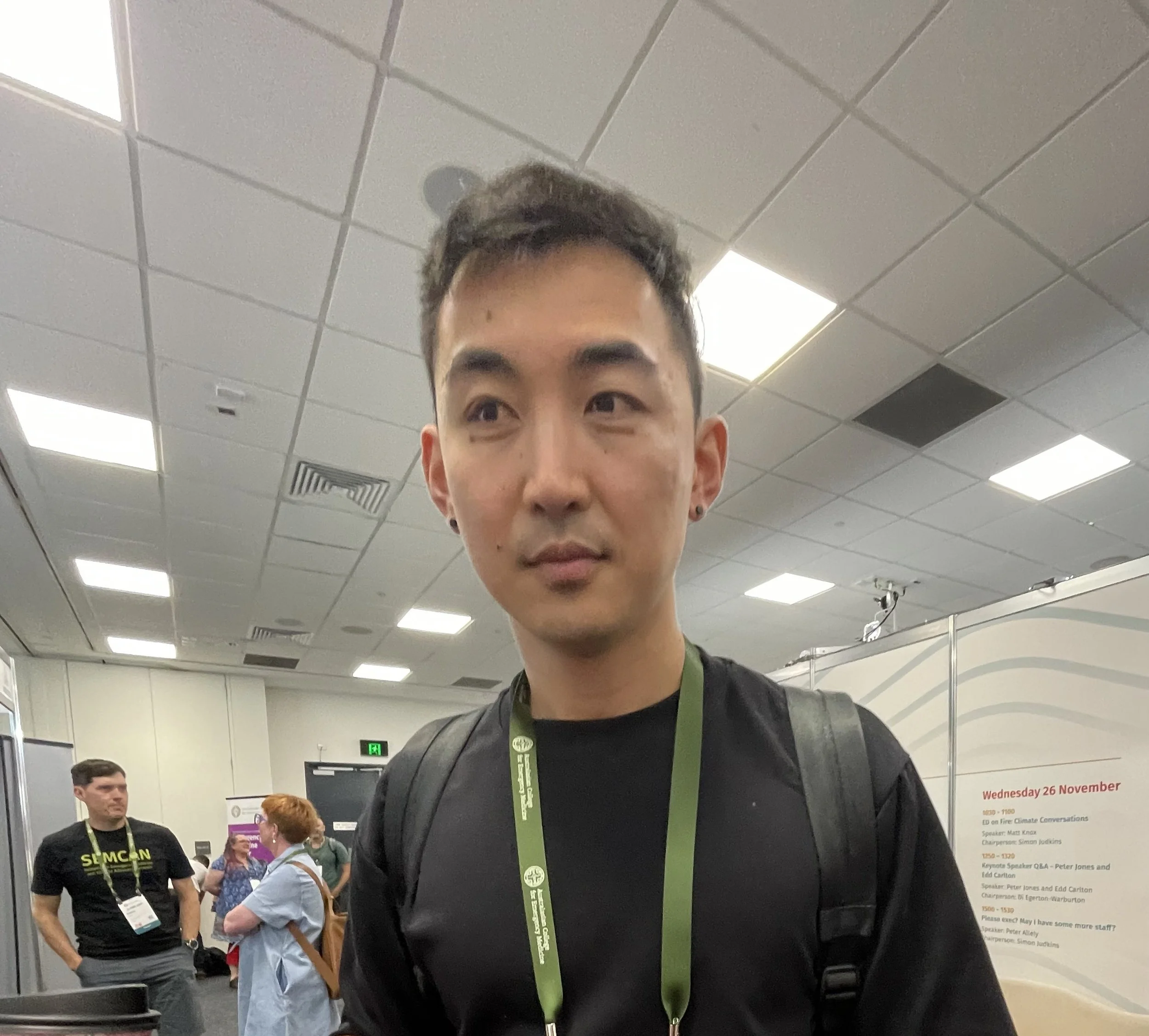
FACEM Dr Jiaqi Cai was interested in AI, research and the future of medicine
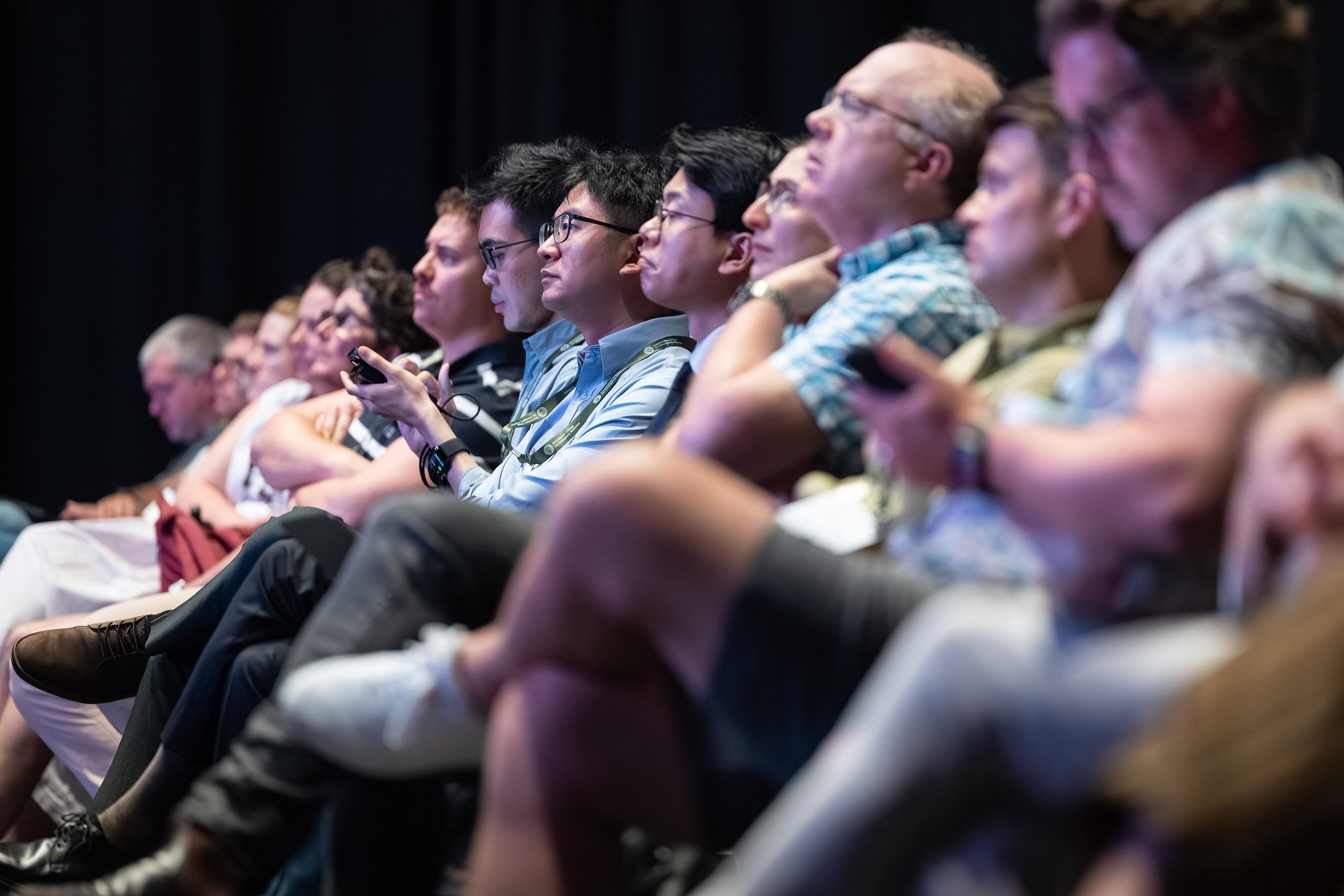
In total there were 172 presentations, 20 workshops with 644 attendees, and 1119 delegates from 29 countries at the 23-27 November conference - including FACEMs, Trainees, other specialists, nurses, paramedics, allied health professionals and more - with 407 first-time attendees.
Social events included Rural EM networking, the Global Emergency Care dinner, and the Queer EM networking event Free to Be You and Me, with tickets to the Gala Event in hot demand.
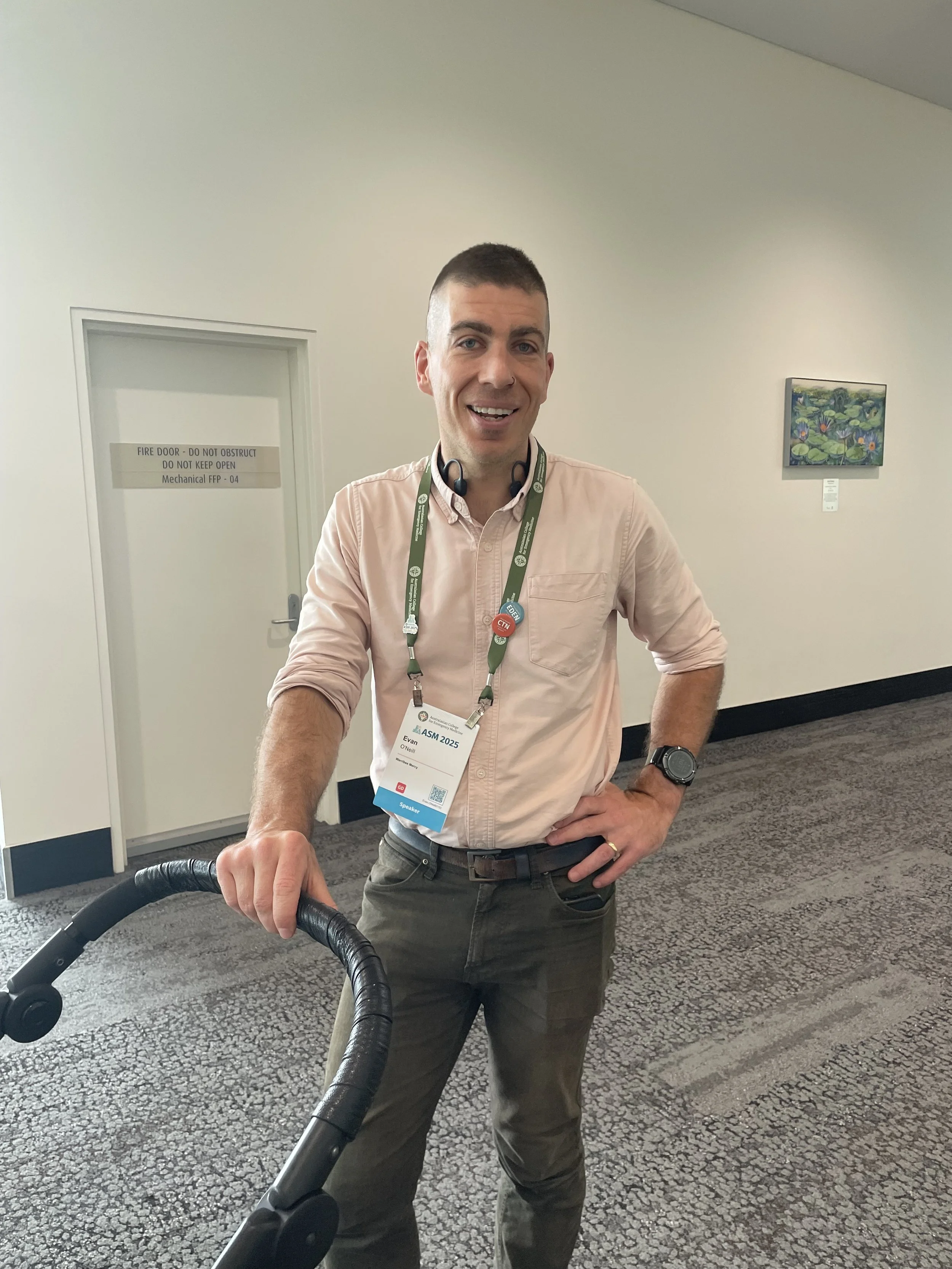
FACEM and PEM specialist Dr Evan O’Neill appreciated the amenities for families
FACEM Dr Jiaqi Cai, from St George Hospital in Sydney, said he enjoyed networking amid the beautiful location and lovely beaches. ‘I'm particularly interested in the future of ED, talks about AI and the future of medicine, and hearing about the latest research.’
FACEM and PEM specialist Dr Evan O’Neill, from The Royal Children’s Hospital Melbourne and The Royal Melbourne Hospital, said the ASM catered well for families. ‘It’s been terrific, a good program. The parents’ room has lots of gear for little ones and it’s nice to bump into so many cool people from near and far. And beautiful spot too.’
There was a broad range of workshops including New Fellows, Emergency obstetrics: Critical skills when birth can’t wait, Progress POCUS, ‘FACEM as Educator: Our SIMGs – supporting our colleagues on their pathway to Fellowship, Later Careers, GEM Trauma’ First Nations Cultural Capability Training, and Surf Medicine (pictured below).
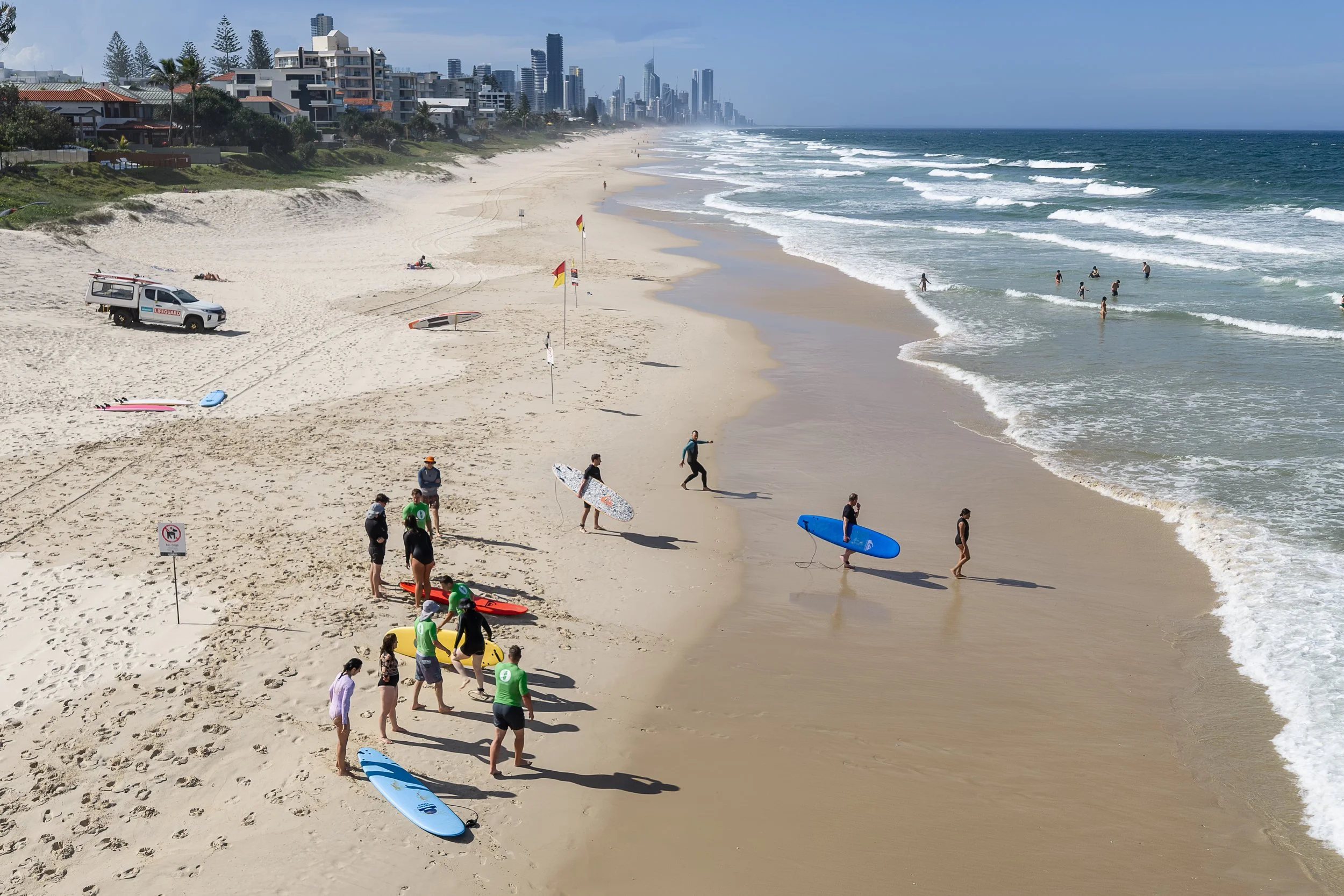
‘Positive deviance’
A highlight for many was the keynote presentation ‘Navigating the Rip: Strategies for High-Performing Teams in a Sea of Toxic Tribalism’ delivered by FACEM Dr Victoria Brazil (Professor of Emergency Medicine and Director, Translational Simulation Collaborative, Bond University), which included entertaining and informative simulations.
She also outlined the highly relevant social sciences concept of ‘positive deviance’ to delegates, which involves learning from those who find unique solutions to common problems despite facing the same constraints as others.
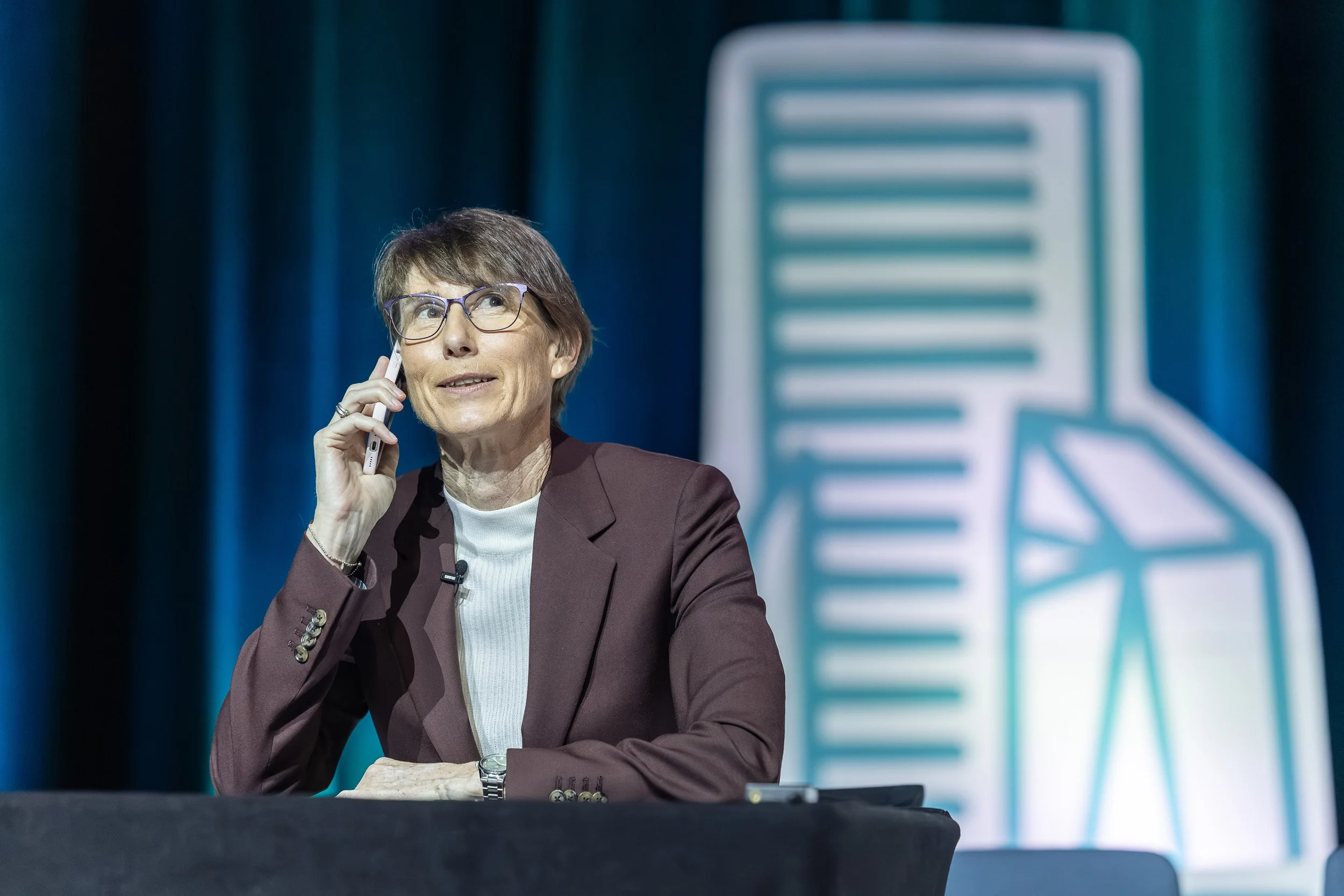
FACEM Dr Victoria Brazil’s simulations and discussion on the concept of ‘positive deviance’ were a highlight
‘The core principle is that we probably have what we need in terms of knowledge and wisdom within our own resources to deal with many of the challenges that we have,’ Dr Brazil said.
Speakers included FACEM Dr Shahina Braganza, FACEM Professor Diana Egerton-Warburton, FACEM Professor Daniel Fatovich, FACEM Dr Elyssia Bourke, FACEM Dr Ellen Burkett, Dr Barb West, FACEM Dr Emma West, FACEM Dr Kim Yates, Clinical Nurse Coordinator Emergency Department Piki Mathieson and FACEM Dr Michelle Davison. A diverse range of topics was explored, including research, aged care, trauma care, climate change, global emergency care, cultural safety, mental health, neurology, equity and inclusion and more.
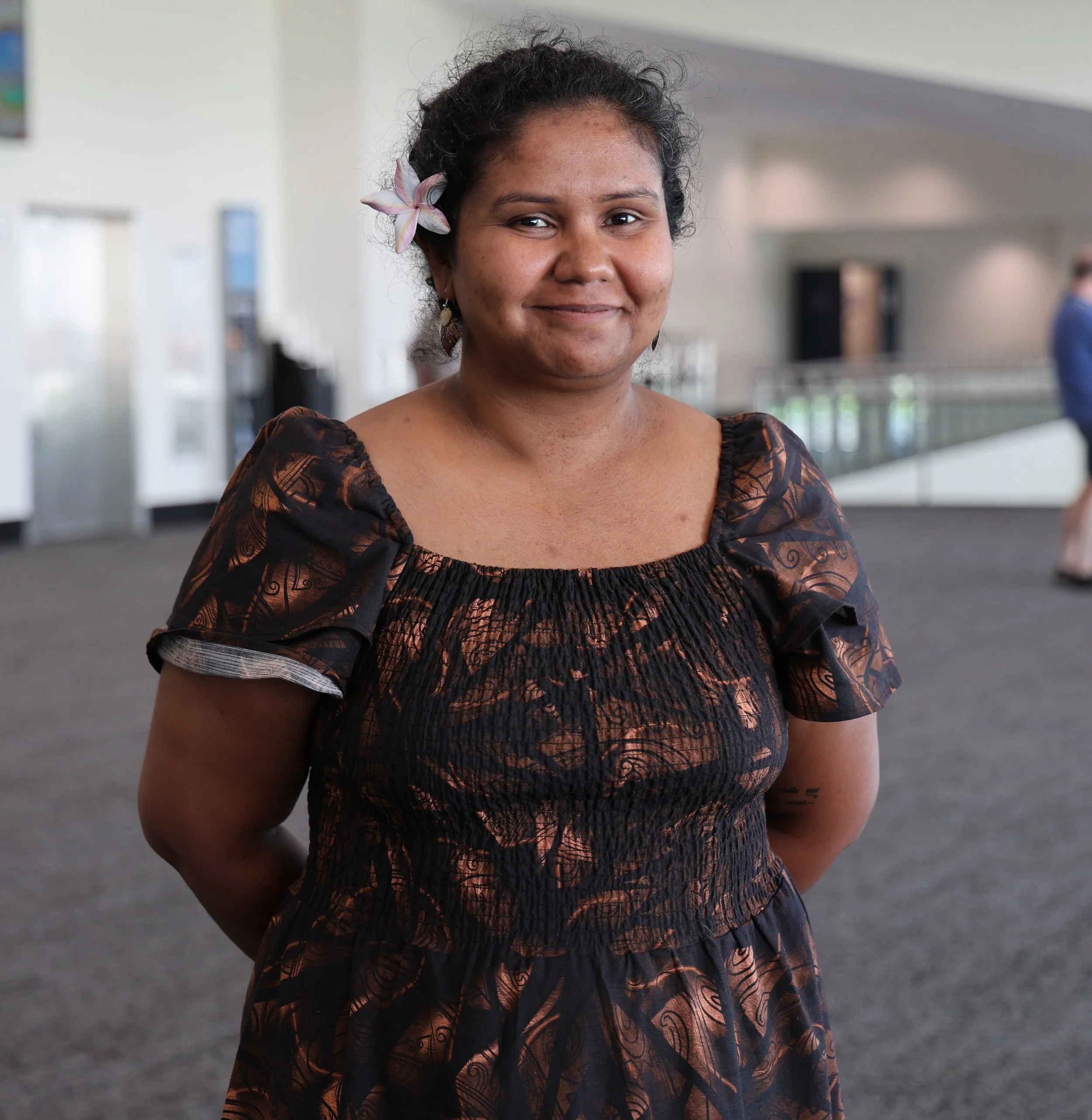
The Joseph Epstein Lecture was valuable for 2025 GEC Scholar Dr Manisha Shankar of Fiji
Journalist and educator Jess Hill (University of Technology, Sydney), author of See What You Made Me Do: Power, Control and Domestic Abuse, delivered the challenging and thought-provoking Joseph Epstein Lecture, ‘Mobilising the Health System to End Gender-Based Violence.’
For 2025 GEC Scholar Dr Manisha Shankar of Fiji, who also received the 2025 ACEM GEC Research Award at the ASM, the lecture was particularly impactful.
‘I've enjoyed all the sessions that I've seen,’ she said.
‘The best one would be the healthcare response to gender-based violence, because that's the space that I'm working in in my country and we've been working on this for the last three years. It was so validating to hear that Australia is speaking the same language. That's where we want our healthcare space to be, so we are able to respond to gender-based violence.’
Championing networks
Delegates flocked to the Exhibition Hall to listen to cosy Fireside Chats with speakers, view posters, visit stalls and join networks such as Advancing Women in Emergency (AWE) and Sustainable Emergency Medicine and Climate Advocacy Network (sEMCAN). Many also took advantage of the opportunity to have professional headshots taken by ACEM’s in-house photographer.
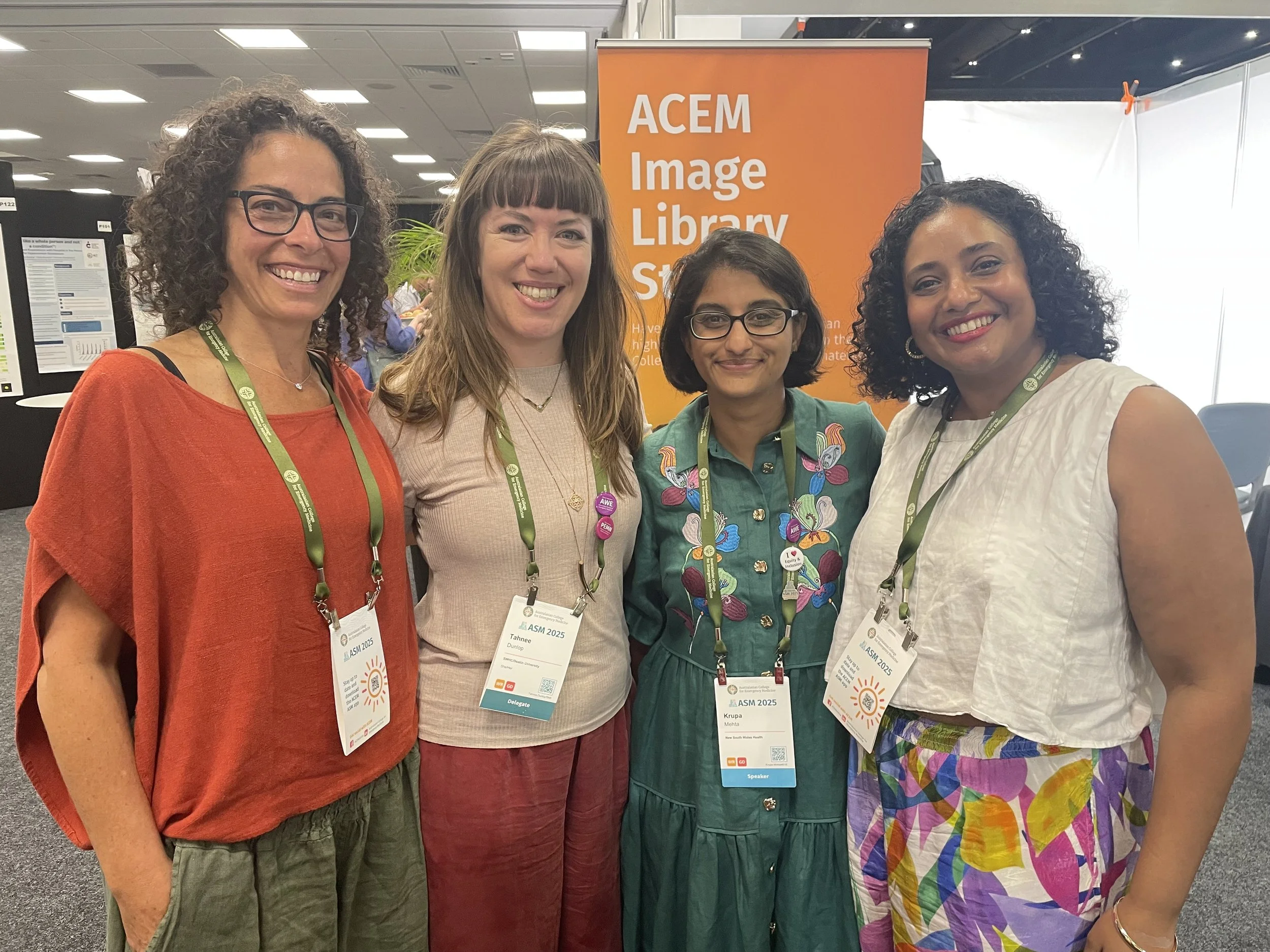
AWE’s Dr Erica Kreismann, Dr Tahnee Dunlop, Chair Dr Krupa Mehta, and Deputy Chair Dr Shantha Raghwan
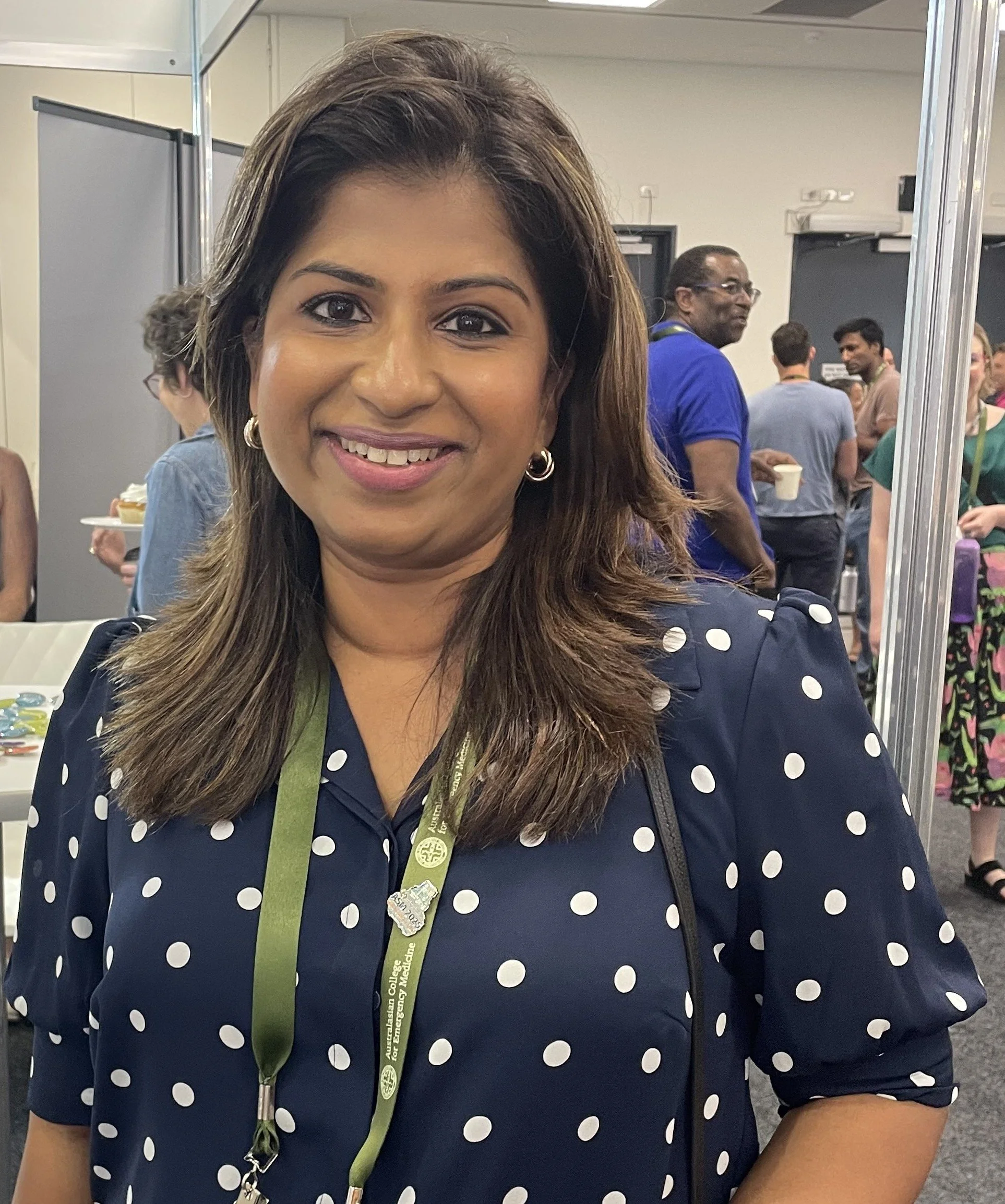
FACEM Dr Shalina Navaratnam
FACEM Dr Shalina Navaratnam said her first ASM experience was in Adelaide in 2024. ‘I really enjoyed the content, and the social events as well. The workshops are really, really good. Based on my experience last year, I was inspired to return again this year.
“It's a good place to network and meet other emergency physicians from other networks across Australasia; to discuss work, see how they cope with work and what they do outside of work.’
She also took the opportunity to explore ACEM’s networks, including AWE, and attend sessions such as the plenary with Prof Egerton-Warburton. ‘I really enjoyed that simulation, the role play they showcased to pass on to colleagues.’
New wave
With its theme of ‘Riding the wave of change’, the ASM also marked the official handover of the ACEM Presidency from Dr Stephen Gourley to Dr Peter Allely.
‘It feels like coming full circle because I actually grew up on the Gold Coast. For me, coming to the end of my Presidency, it seems fitting to be here. I feel incredibly privileged and grateful,’ Dr Gourley said at the official opening day welcome.
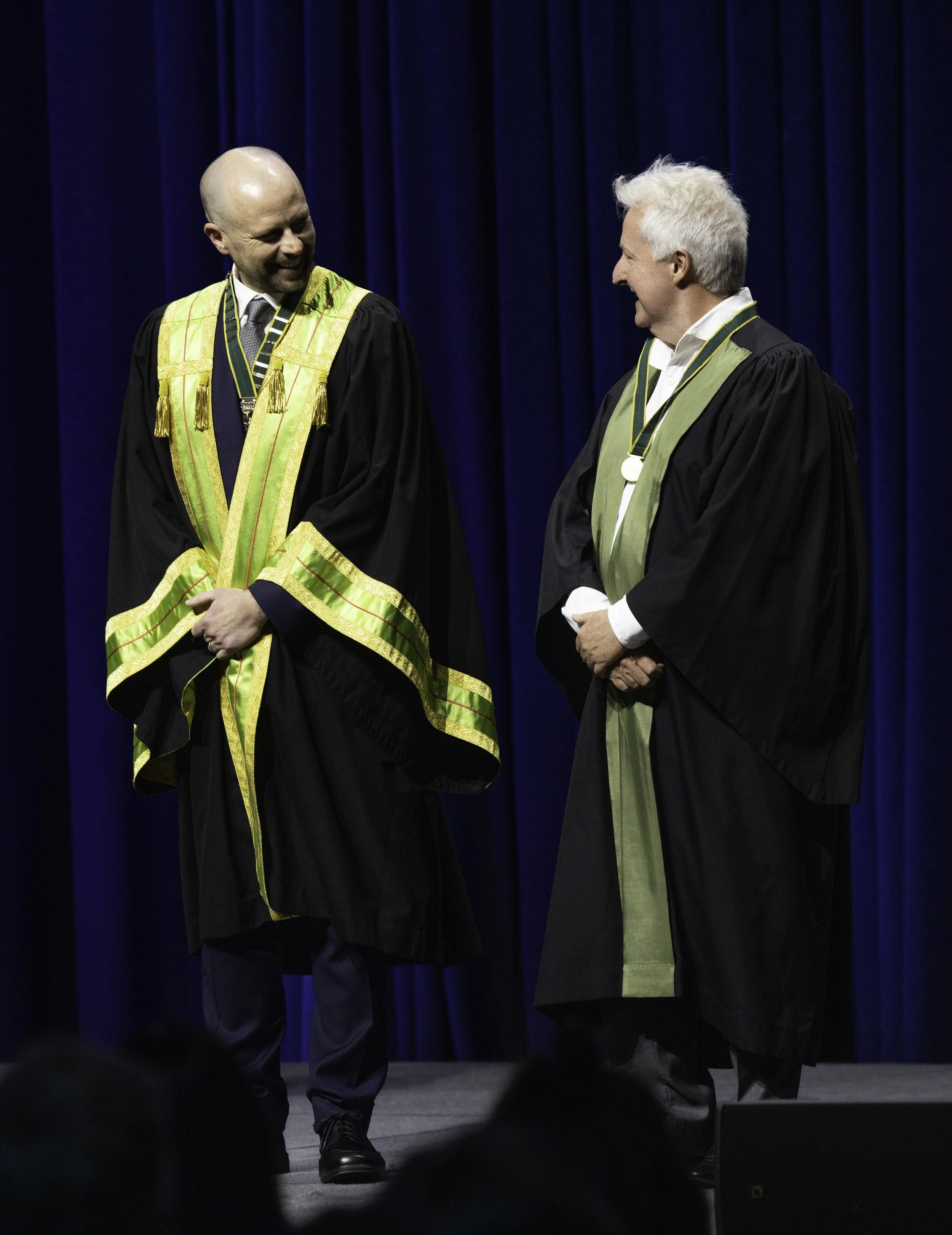
Dr Peter Allely at his inauguration as the new ACEM President with Immediate Past President Dr Stephen Gourley
‘I'm excited. It's going to be a wild ride,’ Dr Allely said. ‘It's been lovely to become embedded in the ACEM extended family. I was absolutely blown away by the sense of collegiality at the conference.’
New FACEMs were welcomed to the ACEM family at the College Ceremony on 22 November, and awards were also presented.
For his role in saving the life of a Lithuanian tourist trapped in the Franklin River rapids in 2024, FACEM Dr Jorian Kippax received the Presidential Citation and on the same weekend was announced as Tasmania’s Australian of the Year for 2026.
ACEM also welcomed several of the 2025 GEC Scholars - Dr Manisha Shankar (Fiji), Dr Bibek Rajbhandari (Nepal), Dr Josefa Tokon (Vanuatu) and Nurse Wilma Sebby (PNG). As part of their scholarship, emergency care health professionals from low and middle-income countries are given the opportunity to attend and present at the ACEM ASM. (Nominations are open for the 2026 ACEM Foundation Global Emergency Care Scholarship until 2 March here.)
Foundation’s fourth pillar
Thanks to sEMCAN’s tireless work, the ASM also officially launched Sustainability and Climate Health as the fourth pillar of the ACEM Foundation, alongside Indigenous Health, Research and Global Emergency Medicine.
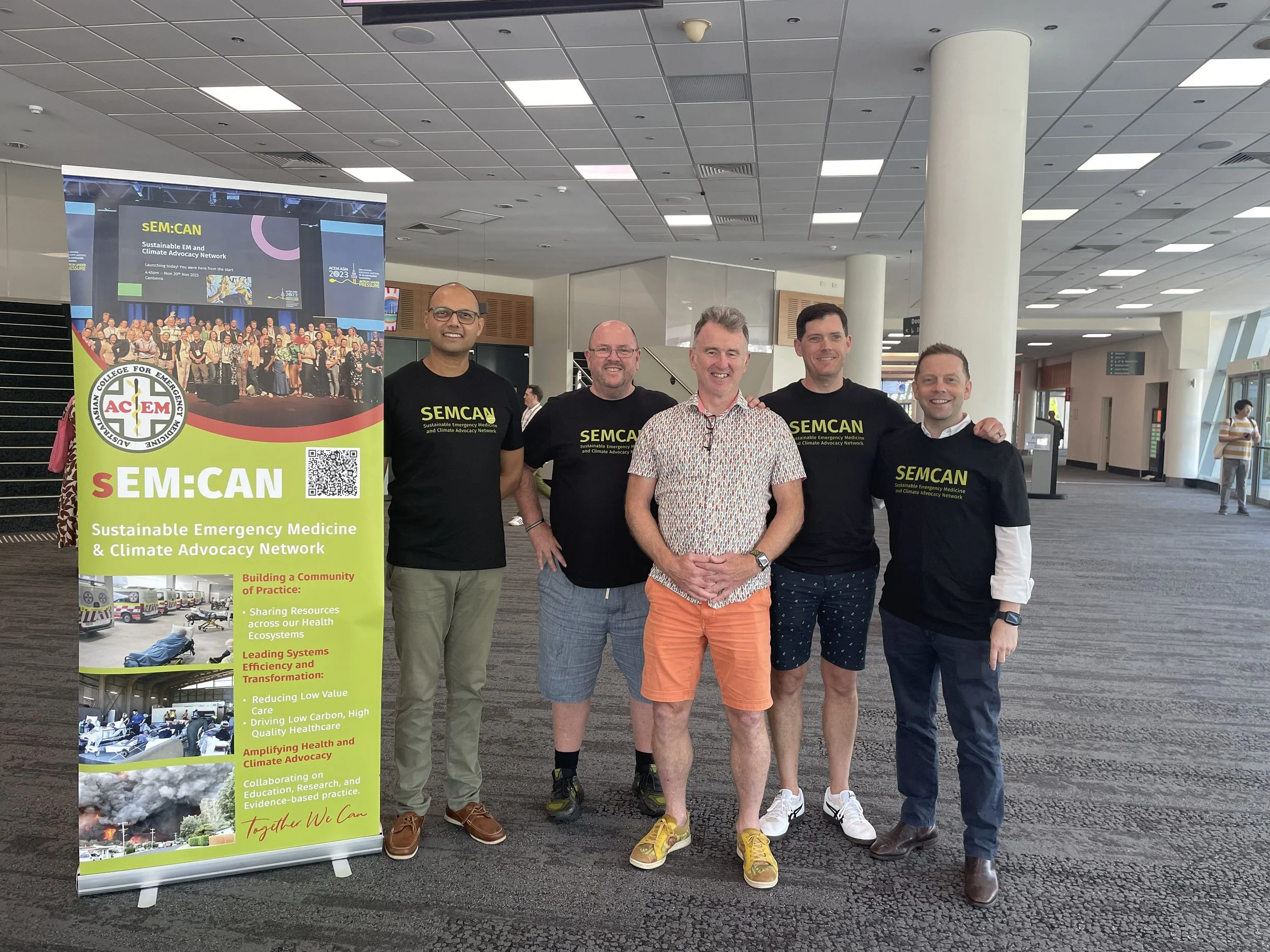
sEMCAN’s Dr Mark de Souza, Chair Dr Simon Judkins, Dr John Bonning, Deputy Chairs Dr Matthew Knox and Dr Brian O'Connell launched Sustainability and Climate Health as the fourth pillar of the ACEM Foundation
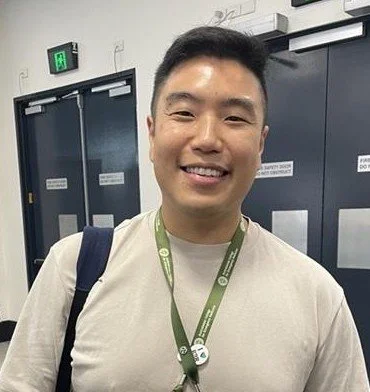
FACEM Dr Johnathan Mah
‘This will become business as usual for ACEM and EDs,’ sEMCAN Chair and ACEM Past President Dr Simon Judkins said, a sentiment echoed by fellow Past President and network member Dr John Bonning.
‘We’ve been so pleased about the decision to build Sustainability and Climate Health and have that embedded in the Foundation, because that just becomes part of who we are, one of our core principles,’ Dr Bonning said.
“Knowing that the College is doing something from a sustainable perspective is really encouraging”
‘We are now on our second sEMCAN birthday and it’s gone from a small ripple to a pretty large wave with our new pillar,’ the network’s Deputy Chair, FACEM Dr Brian O’Connell, said.
FACEM Dr Johnathan Mah of Queensland Health, who attended the group’s fireside chat, was pleased with the new addition.
‘Knowing that the College is doing something from a sustainable perspective is really encouraging,’ he said.

Wave of inclusivity
The ASM also marked the introduction of the ACEM Equity and Inclusion Action Plan 2026-2028, presented by Dr Gourley and Dr Barb West (ACEM Lead, Equity and Inclusion) which comes after years of work.
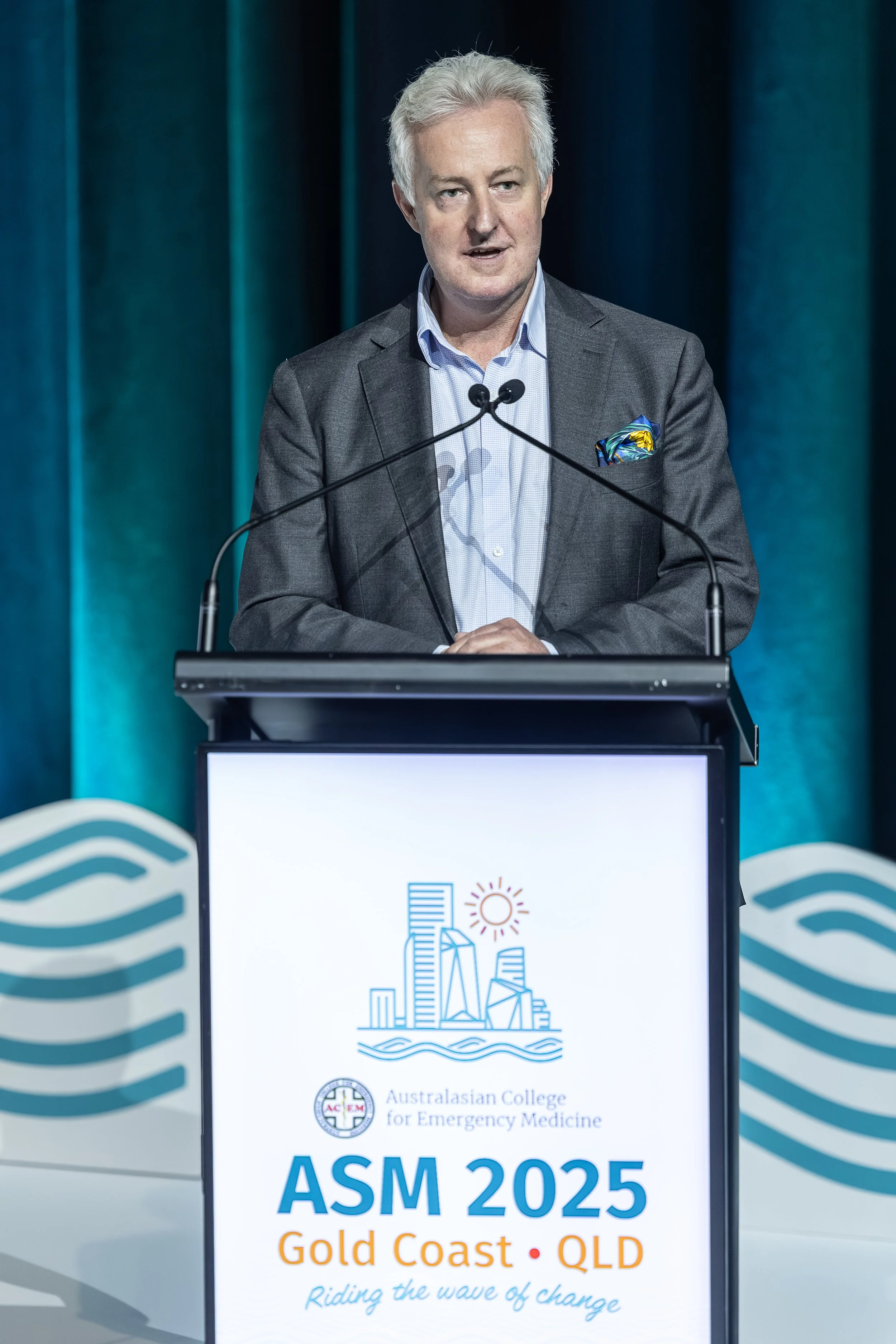
Dr Gourley encouraged members to join the Equity Champions Network
Dr Gourley encouraged acceptance and called for members to join the Equity Champions Network. ‘Do everything you can to make it work,’ Dr Gourley said.
’It will be good for you, good for your departments and good for everyone.’
Speaking on the topic of neurodivergence in emergency medicine at the ‘Wave of Inclusivity – Advocating for Equity and Inclusion’ session, Trainee Dr Nadja Mathewson, who works on the Gold Coast, said that wearing a ‘professional mask’ was different to masking and neurodiversity.
‘Something that would have helped me when I was going through earlier is making the workplace a lot friendlier for the unmasking process, especially for those who are late-diagnosed trainees,’ she said.
‘Having a diverse department is incredibly beneficial to everyone.’
‘Mentorship is important,’ she added. ‘And ACEM does a really good job at that.’
“Decades of research shows that diverse teams consistently outperform on accuracy, innovation, and financial results. We must acknowledge that we care for a diverse population and that our teams need to reflect the people that we are charged to be providing care for.”
‘We're all aware that we don't know everything, but that doesn't mean that we shouldn't be listening to questions or approach with that curiosity and kindness.’
Dr Mathewson also advocated for recognising barriers in the workplace and finished with the advice: ’Be more inclusive.’
At the same session, FACEM Dr Emma West spoke about merit and gendered expectation of humility.
’Men list their achievements, and women are judged for announcing them, and that's why we need to talk about merit,’ she said.
‘If merit were truly objective and free from bias, then demographics of leadership would reflect the workforce, but they don't.
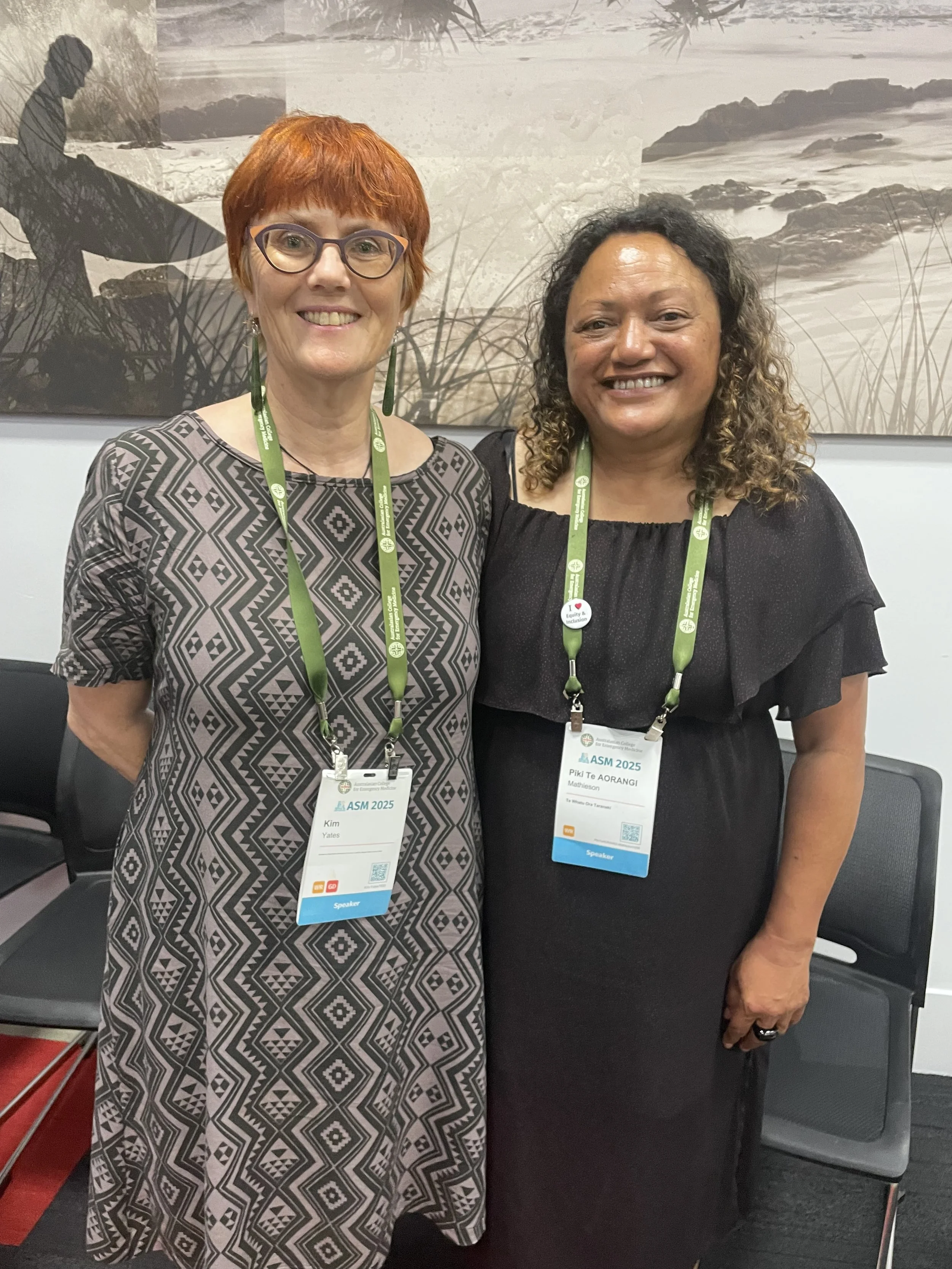
Co-presenters Dr Kim Yates and Piki Mathieson
‘Decades of research shows that diverse teams consistently outperform on accuracy, innovation, and financial results.
‘We must acknowledge that we care for a diverse population, and that our teams need to reflect the people that we are charged to be providing care for.’
Dr Kim Yates discussed equity and excellence and emergency care for Māori, the ED inequities in Aotearoa New Zealand, the role of Manaaki Mana, outlining health equity goals, examples of work to improve equity in EDs, and how to measure success.
‘We view equity as a collective responsibility,’ Pou Matanga (CNS) Manaaki Mana, Clinical Nurse Coordinator Emergency Department and Co-Chair Manaaki Mana Advisory Group Piki Mathieson said, noting that the presence of a Māori clinical specialist in the ED significantly decreases length of stay.
‘Australasian EDs must provide culturally safe, equitable care for Indigenous peoples.’
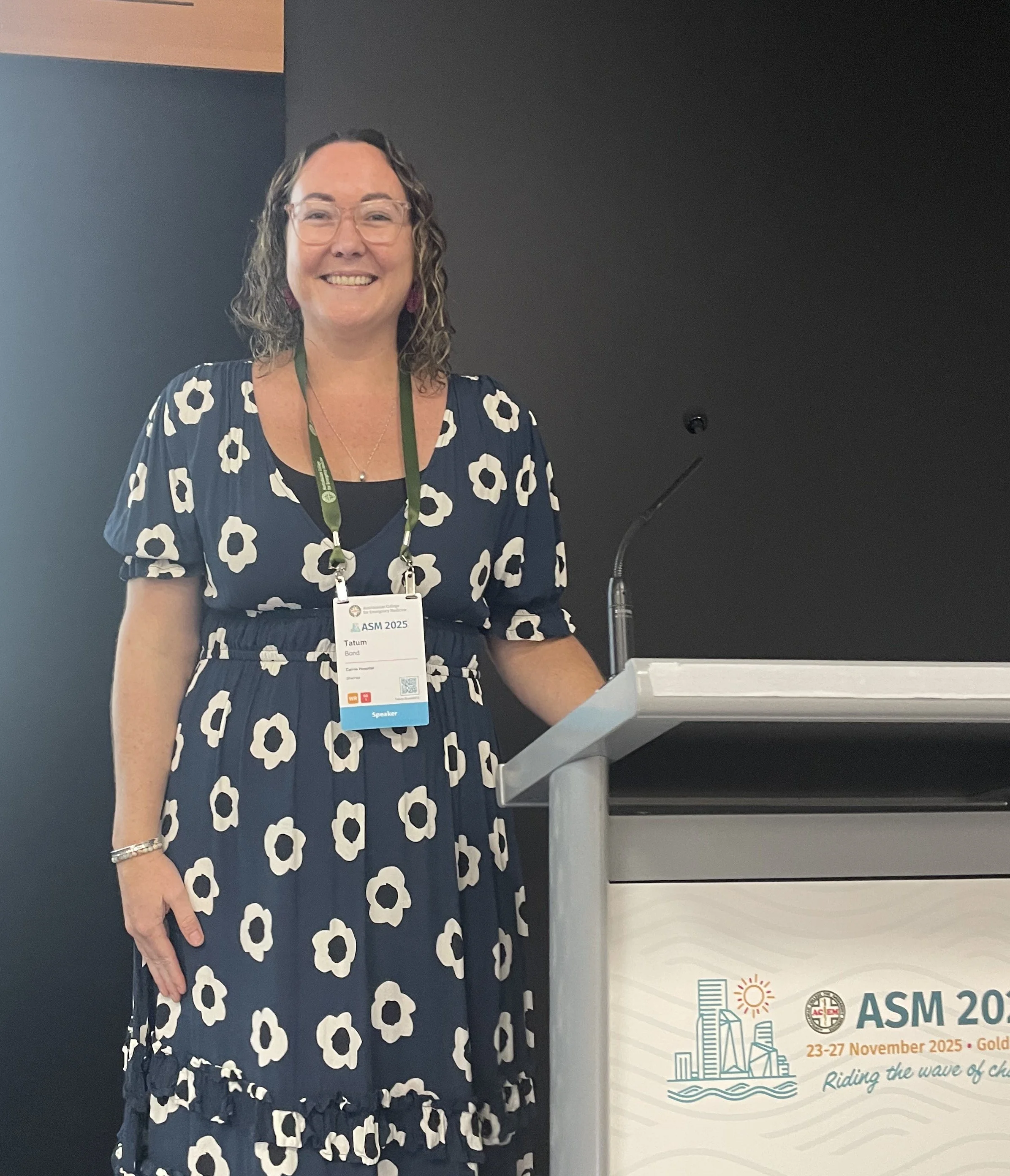
FACEM Dr Tatum Bond introduced the yarning circle
Several sessions on cultural safety were on the program, including ‘Building a Culturally Safe EM Workforce through Te Ara ki te Haumanu – A Kaupapa Māori Student Pathway’ – presented by medical student Maia Lockyer.
Delegates took part in yarning circles during the ‘Ebbs and flows of cultural safety as clinical safety across Australia and Aotearoa’ session chaired by FACEM Dr Tatum Bond.
‘A yarning circle is a little bit about learning, sharing, and building respectful relationships. It's about passing on knowledge through narrative and coming together as a community,’ the proud Ngajanji woman and DEMT at Cairns Base Hospital said.
Starting conversations
Keynote speaker and Emergency Physician Dr Braganza (Riding the Swell: Thriving Through the Tides of an Emergency Medicine Career) said of the ASM: ‘I have been just taken aback by the opportunity to hear about what's going on in the space of emergency medicine, across the country and elsewhere. I'm genuinely in awe of all of us, as a profession.
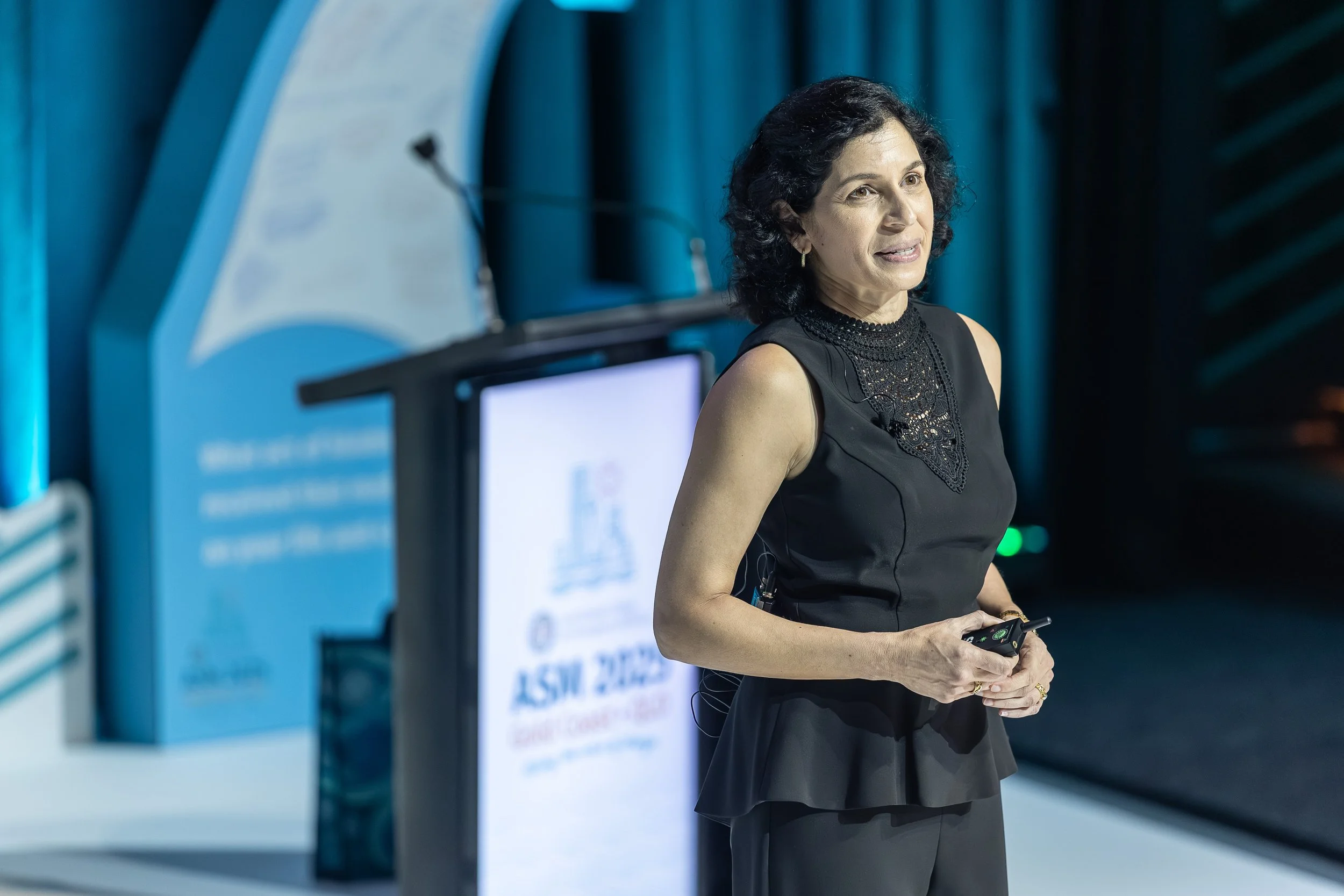
Dr Shahina Braganza
‘But equally I hugely appreciated the opportunity just to connect with people, some of whom I know but haven't seen for maybe a couple of decades, my colleagues, whom I do work with every day, but also people that I have never met before.
“I’m genuinely in awe of all of us, as a profession”
‘I think the best part about having the opportunity to do the keynote was not just to share something I'm really passionate about, but the way that it has invited conversations.
‘A lot of people I didn't know came up to me to tell me about their frames and perspective and, importantly, the work that they are doing within their departments, and that's been truly energising.’
She also took the opportunity to explore ACEM’s networks, including AWE, and attend sessions such as the plenary with Prof Egerton-Warburton. ‘I really enjoyed that simulation, the role plays that they put out, to pass on to colleagues.’
Catching up
New FACEM Dr Zac Kesby, consultant at the Royal Adelaide Hospital and Queen Elizabeth in Adelaide, first attended the ASM as a resident in his first year and has been coming for years. ’It's amazing the connections you get to make.
“It’s amazing the connections you get to make”
‘You see people you haven't seen in years, we get to catch up with them, and the connections we make really do build our ongoing career progression. I’ve directly received jobs from people I've met from here.’
He also enjoyed the cutting-edge presentations and the added bonus of learning about areas to which he wouldn't usually be exposed..
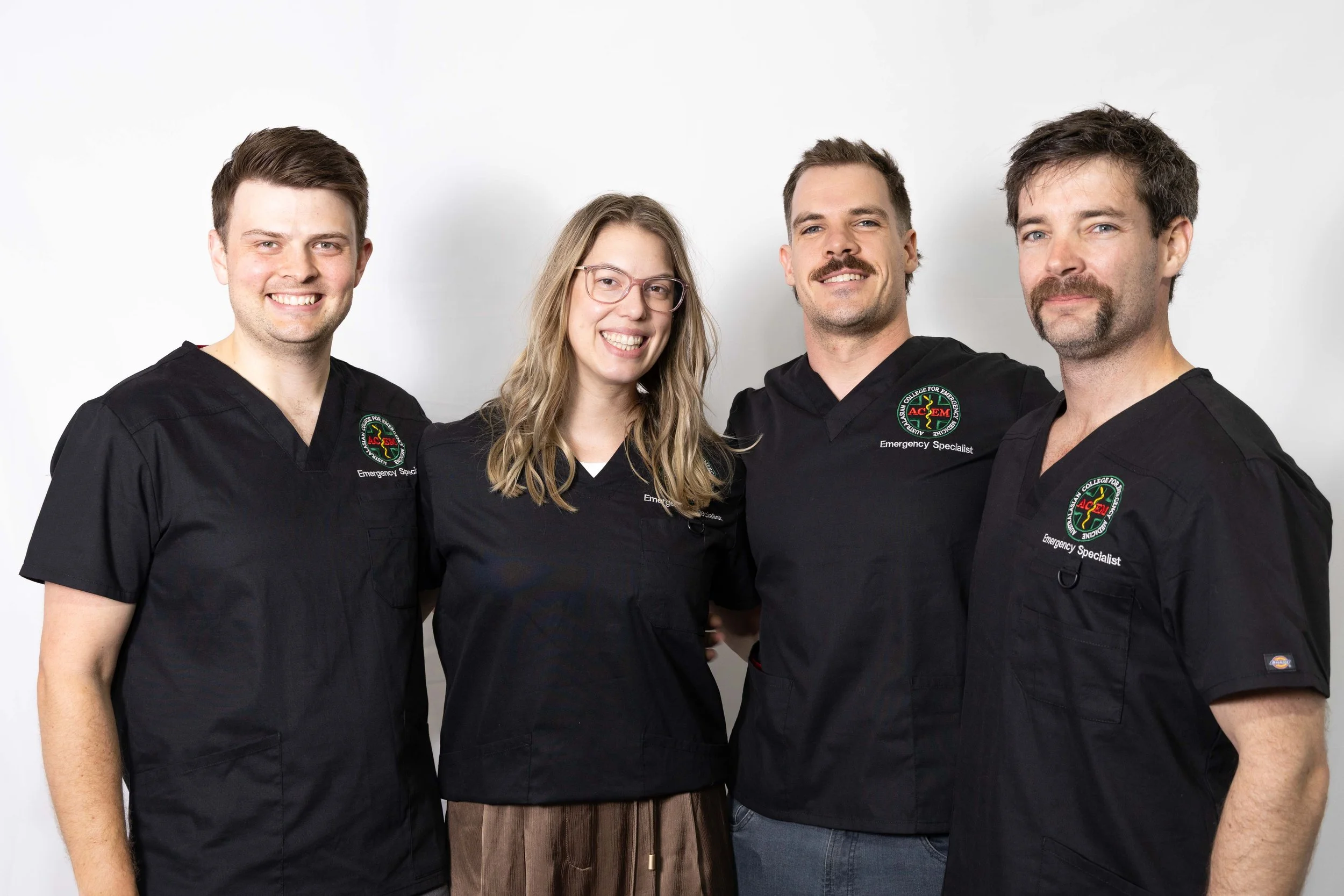
FACEMs Dr James Wayte, Dr Blair Burke, Dr Daniel Shipman and Dr Zac Kesby met up in the photo booth
Trainee Dr Blair Burke agreed. ‘A lot of my friends are in emergency medicine. I look forward to coming and catching up with people. Zac, my husband, and I are both in emergency medicine and we've worked in four or five different states and territories now, so we get to see people from all the different hospitals that we've been in before.
‘It's really nice to just reinvigorate that passion for what other people are doing. And seeing people get through their fellowship, where Zac got his fellowship this year. It's really nice to see people progressing through. and just supporting all of our colleagues that are doing that.’
Rewarding research
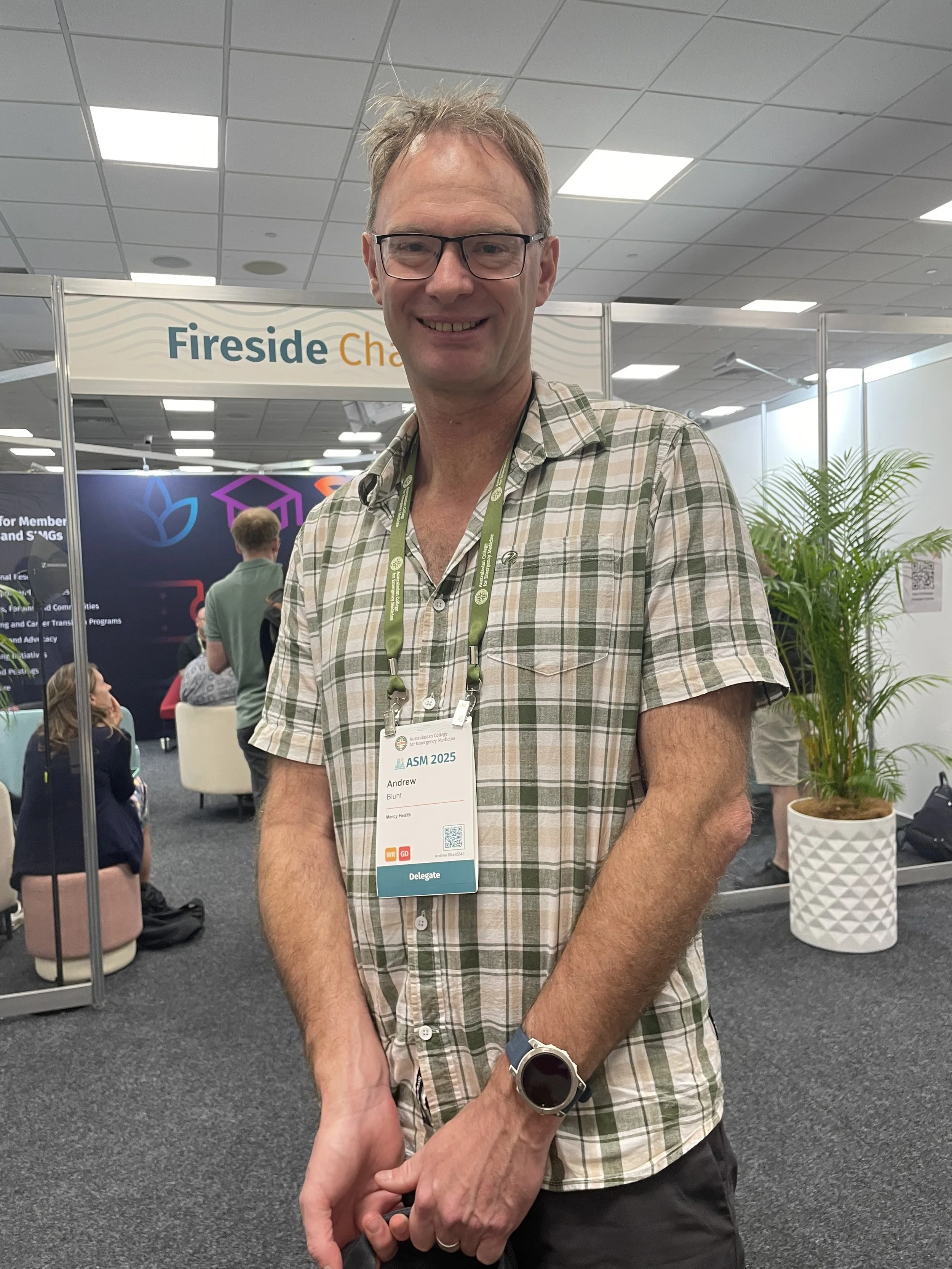
FACEM Dr Andrew Blunt
FACEM Dr Andrew Blunt appreciated the local angle of the ASM: ‘I think it's good to see all the networks and what they do and you can get to engage.
‘I like that the presentations are obviously local research, and I think that's really valuable because some of the context is meaningful to us.
‘There’s a friendliness that comes with knowing a few people at a conference as opposed to going overseas and feeling pretty isolated.’
Catching up with former colleagues was a drawcard for Dr Daniel Shipman, emergency advanced trainee at John Hunter Hospital, Newcastle.
‘I see people here that I have worked with over the years that I haven't seen since I was a junior doctor. I see where they're up to, I see what they've been doing, particularly the people who are presenting.
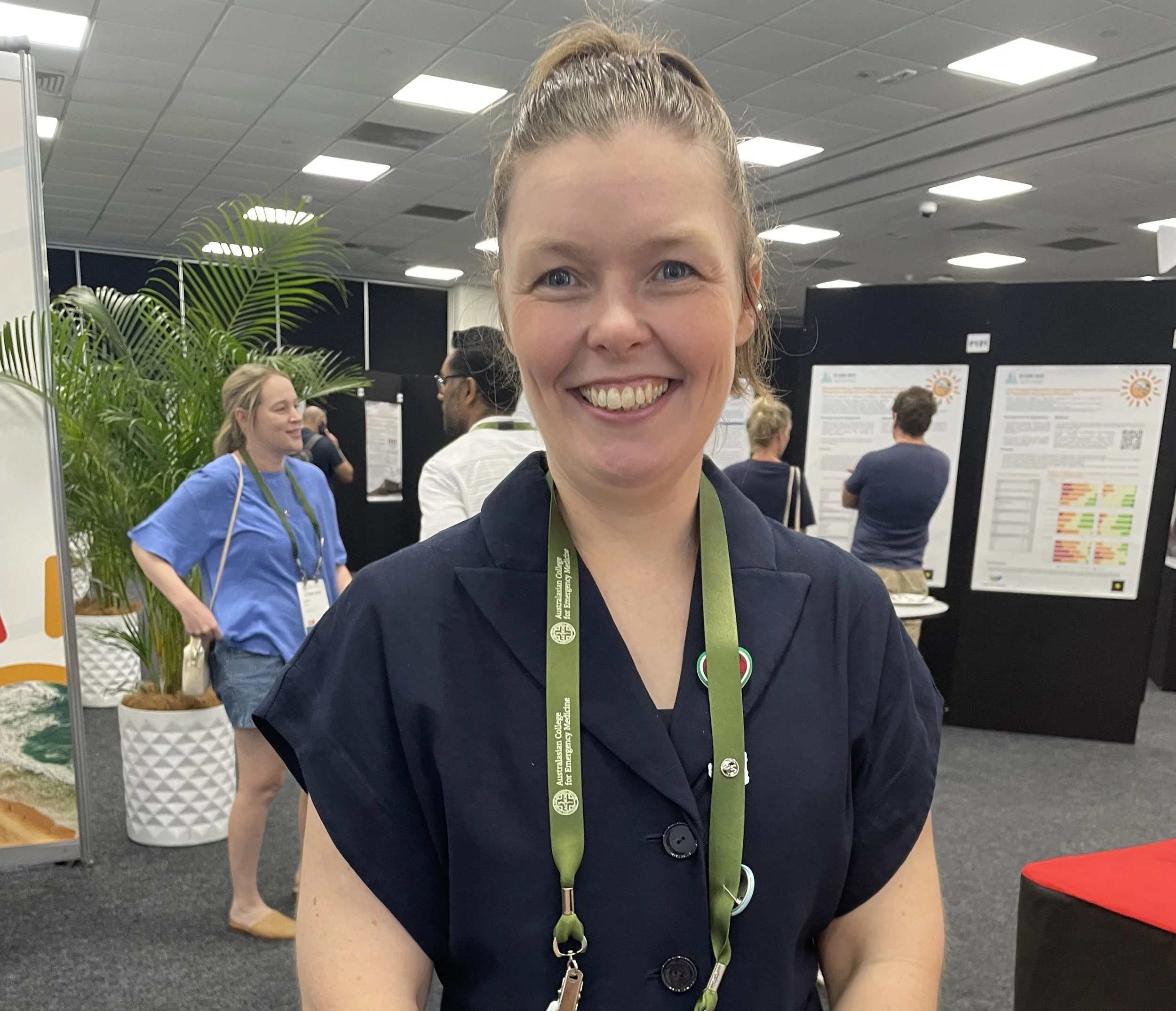
FACEM Dr Bridget Honan
‘Seeing their work on the big stage and seeing them get their flowers for the hard work that they don't get over the years, I always really appreciate,’ he said.
FACEM Dr Bridget Honan of Kingaroy Hospital, who chaired one of the three paper sessions, said: ‘I have to say one of the biggest challenges this week has been deciding which session to go to. There's some fantastic content.
‘I love coming to the ASM because it's such a great chance to reconnect with colleagues from across Australia and catch up with people I've previously worked with or read their research work.
“I love the themes of this conference, on geriatric emergency medicine, rural emergency medicine, and of course, research. ”
‘I love the themes of this conference, on geriatric emergency medicine, rural emergency medicine, and of course, research.
‘It's a really strong program. I've been listening to really, really exciting stuff.
‘It's fantastic.’
Recharge and reconnect
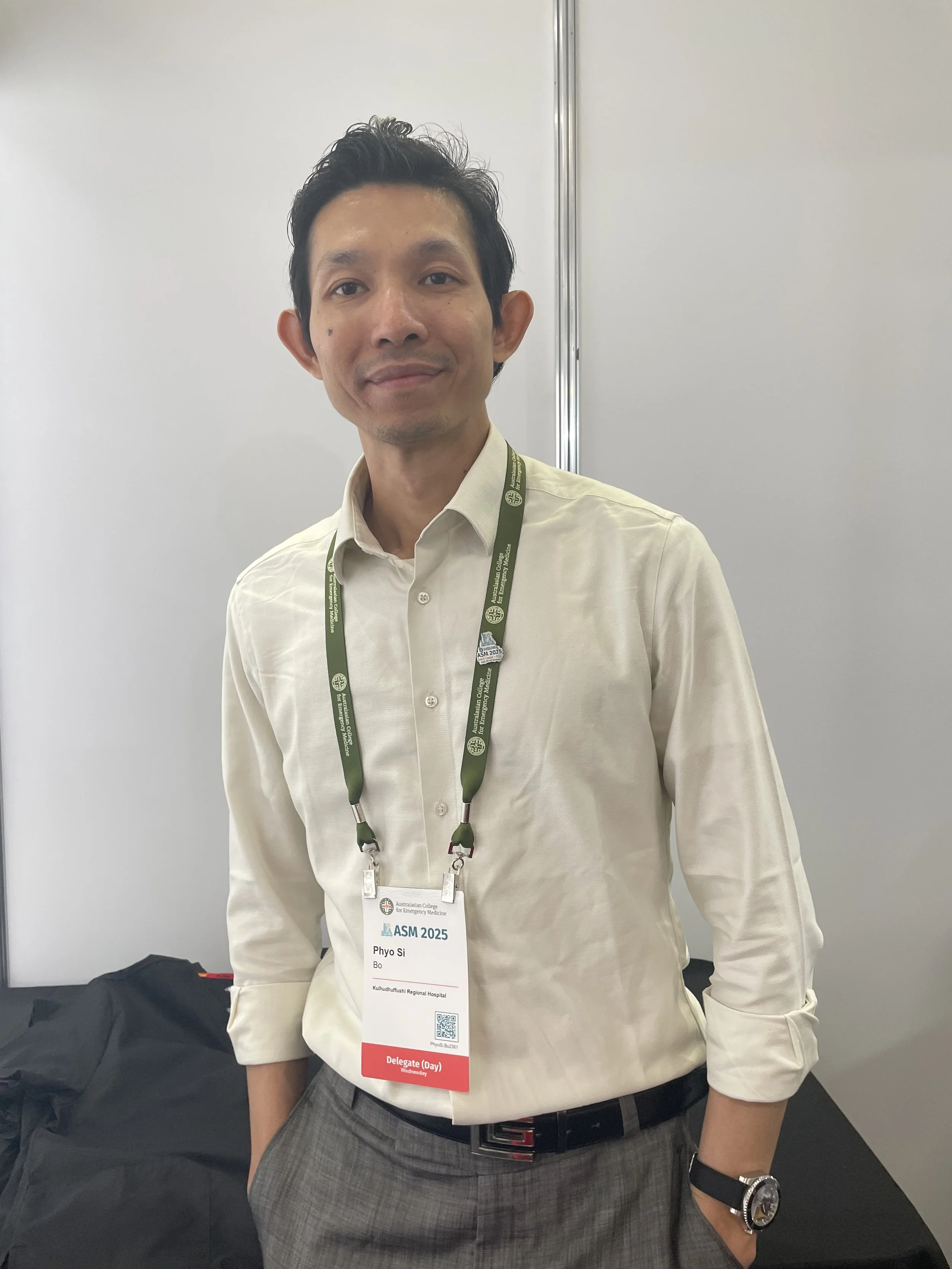
International Affiliate Dr Phyo Si Bo
International Affiliate Dr Phyo Si Bo, who trained in Myanmar and is now based in the Republic of Maldives at Kulhudhuffushi Regional Hospital, was also keen to connect with former colleagues and mentors and learn about new developments.
‘I have completed my Master of Emergency Medicine in my country, Myanmar. I am the first Myanmar national to practise as an emergency physician in the Republic of Maldives.
‘We have been affiliated with ACEM, and Dr Rose Skalicky and Dr Georgina Phillips, they are my mentors,’ he said.
‘I'm really excited to see my colleagues. Some I really miss them, and I suddenly found them, then I was really happy.’
He said that for him, the most valuable sessions were on trauma emergency and the role of EDs and virtual EDs in managing domestic violence. ‘Trauma emergency is very important for us. Nowadays, family and domestic violence are common, so we have to face that. We have to manage. So this is very important.’
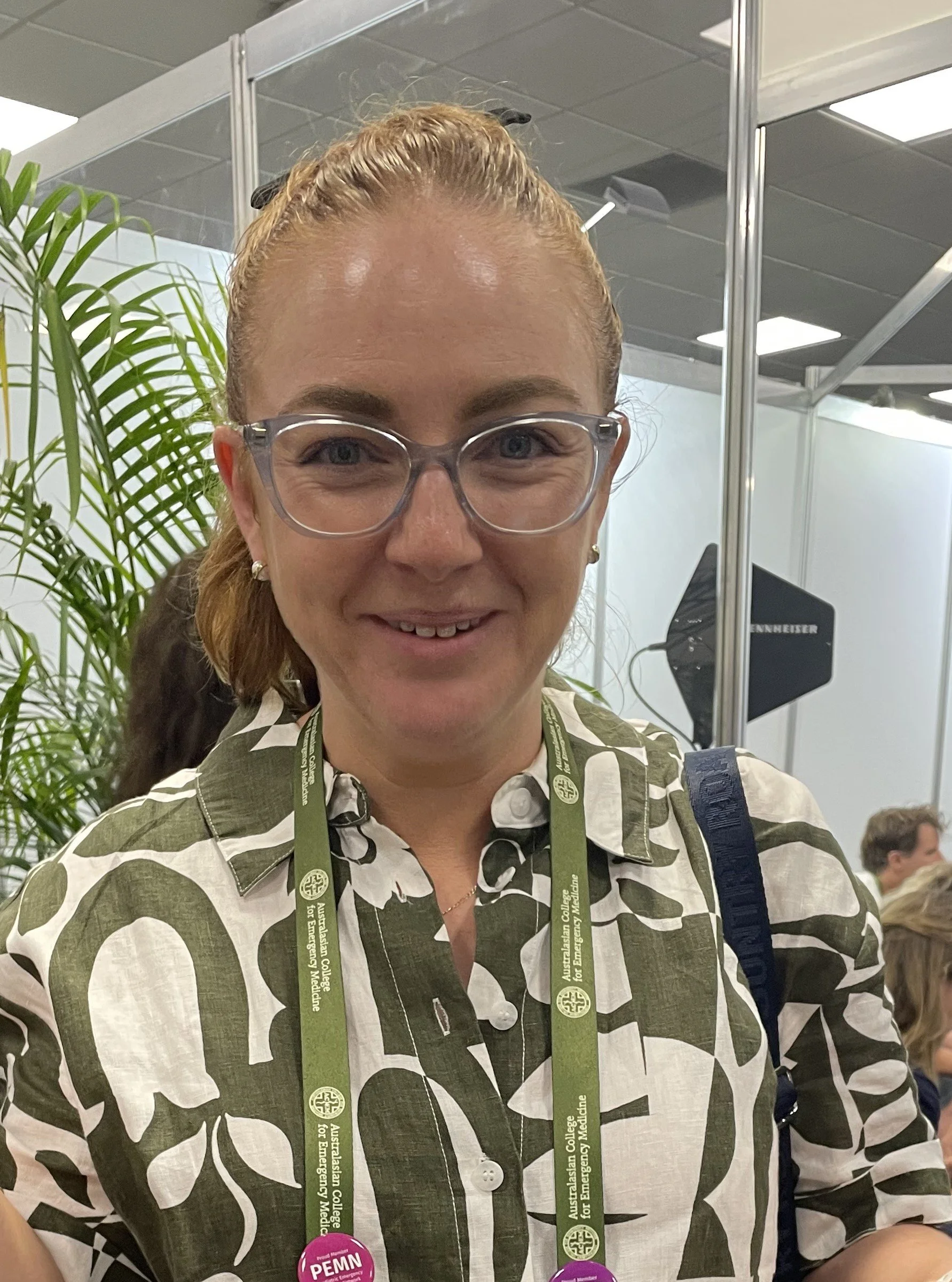
FACEM Dr Jess McDonald
2024 Buchanan Prize winner and FACEM Dr James Wayte came from Canberra Hospital for his second ASM to refresh and reconnect.
‘I think that sometimes over the year you get worn down by the grind of clinical work and all the pressures we face on a daily basis.
‘It's nice to come and get inspired about the great things that people are doing to try and improve things in their area. And hopefully take lots of ideas and some enthusiasm back to our own place of work.’
Paediatric emergency physician FACEM Dr Jess McDonald, who works between Launceston General Hospital in Tasmania and the Royal Children's Hospital in Melbourne, said: ‘My big motivator was that I trained here in Queensland and welcomed the opportunity to come back, learn, recharge, and reconnect with colleagues from across Australia.
‘I loved the shark bite session - that’s not something I think I'm going to see in Tassie very much!’
“ I loved the shark bite session - that’s not something I think I’m going to see in Tassie very much!”
‘It’s been an incredible conference,’ Dr Allely said in his closing address, noting that he had been particularly impressed with the science and research elements in the program and the inspiring speakers, collectively a ‘triumph of overachievers.’
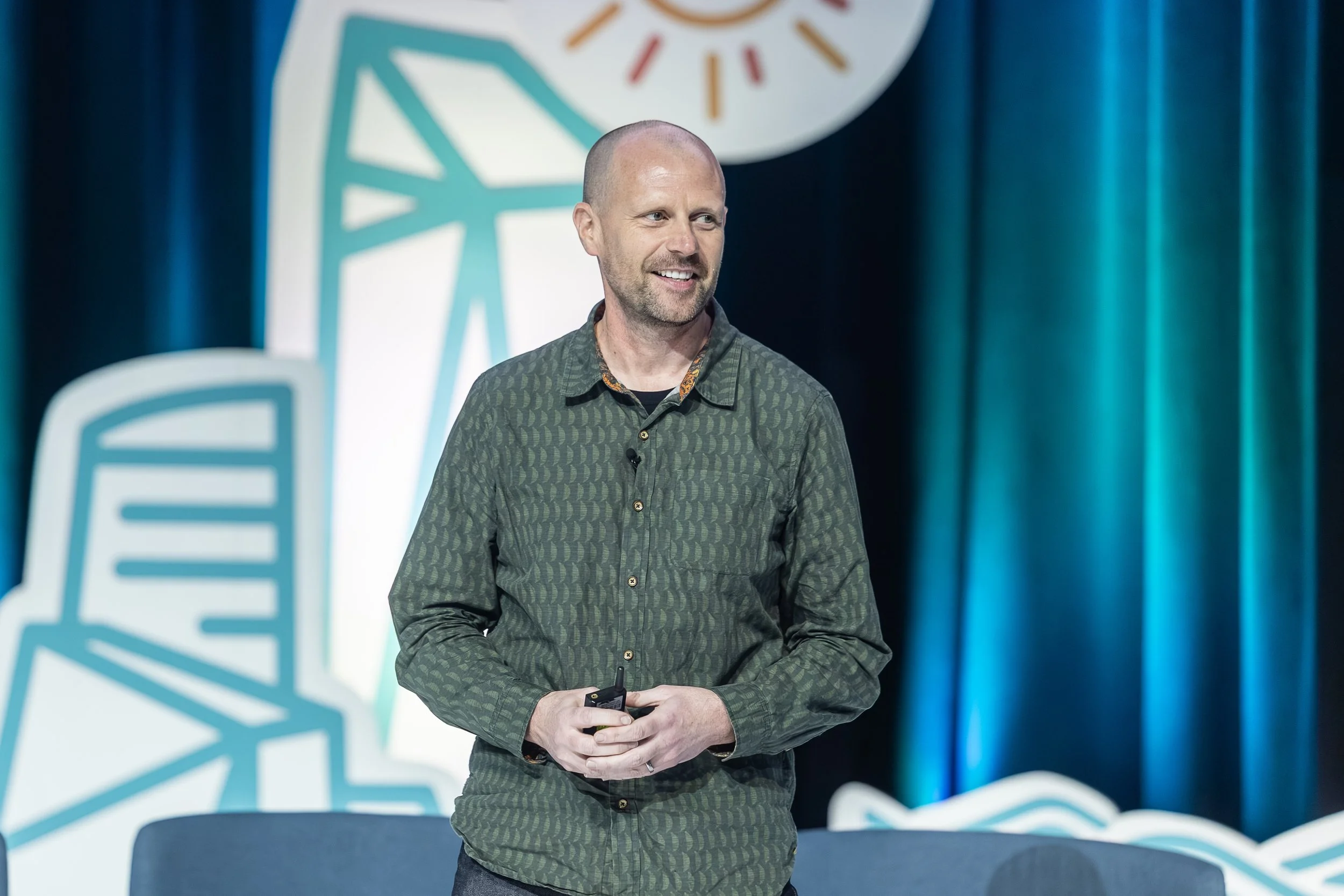
ACEM President Dr Peter Allely: “Thank you for doing what you do.”
He thanked Dr Gourley, ACEM CEO Brendan Peek, COO Olly Jones, delegates, the organising committee, ACEM events team and staff for their passion and dedication, and looked forward to welcoming everyone to Perth for the next ASM.
“Thank you for doing what you do.”
Catch up
Watch the ASM Conference Wrap-Up video here.
Missed out?
ACEM members can now access CPD-accredited recorded sessions and presentations approved for publication by speakers from the ASM 2025 On Demand. Login to Educational Resources using your ACEM ID.
Go west
The 41st ACEM ASM will be held from 21 to 26 November 2026 at the Perth Convention and Exhibition Centre. Save the date and read more here.
Head east
The Aotearoa New Zealand Emergency Medicine Conference 2026, with the theme of ‘Bright Horizons: Building the Future of Emergency Medicine’, will take place in Whakatū Nelson from 25 to 27 March 2026. Register here.