Cultural immersion tours enhance trust and engagement
Discussions among trainees about the poor health outcomes experienced by Indigenous patients were pivotal in the evolution of cultural immersion tours for ED staff at Dubbo Health Service (NSW).
‘It felt alarming to us that these poor outcomes were happening again and again,’ said ED registrar Dr Jamee McBride. ‘We discussed meeting with Aboriginal people, groups and organisations – in their own environment – to help improve our understanding of Indigenous culture and what they were experiencing so we could better meet their health needs.’
‘We wanted to be more inclusive and thought it would be good to have more hands-on experience with Indigenous patients and a stronger connection to the surrounding small towns that Dubbo provides healthcare services for.’
The tours, which began about three years ago and encompass visits to hospitals, multipurpose health centres and/or Aboriginal health services, led to Dubbo being awarded the Al Spilman Award for Cultural Safety Initiatives in an ED at ACEM’s ASM in 2025.
“We wanted to be more inclusive and thought it would be good to have more hands-on experience with Indigenous patients and a stronger connection to the surrounding small towns ”
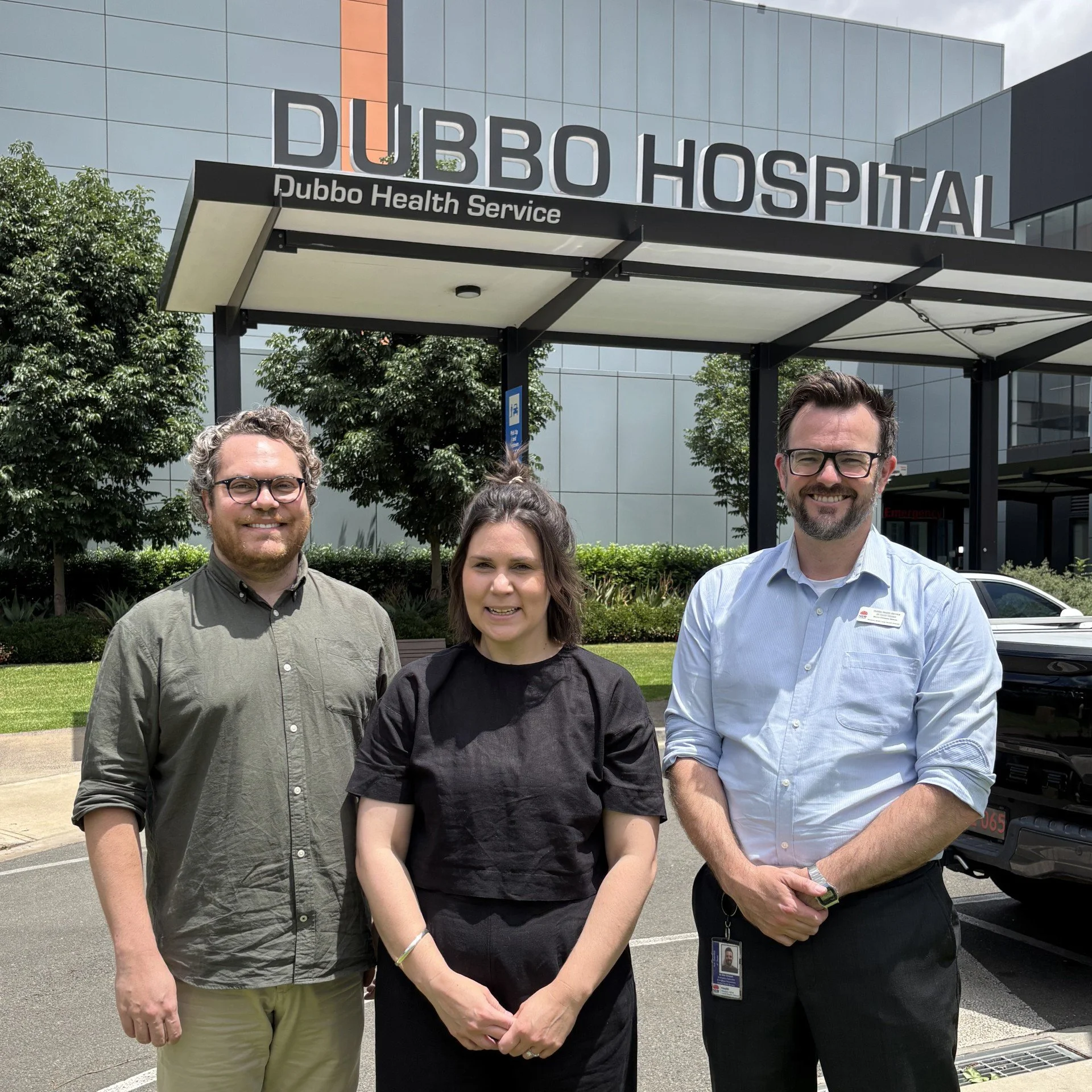
Dubbo Health Service ED director and FACEM Dr Daniel Stewart said the tours have enhanced cultural understanding and safety among staff and the award was an affirmation of the two-way engagement and strengthened relationship between the hospital and Indigenous communities.
Jamee said the tours, now available to all hospital staff beyond the ED, were an excellent way to hear firsthand about the challenges faced by rural, regional and remote communities.
Community engagement, trust and sharing lived experiences
FACEM Dr Khyarne Biles, a Ngemba/Wiradjuri woman, said that the community groups were initially quite shocked when Dubbo Health Service approached them to host cultural immersion tours as they had never experienced this kind of engagement.
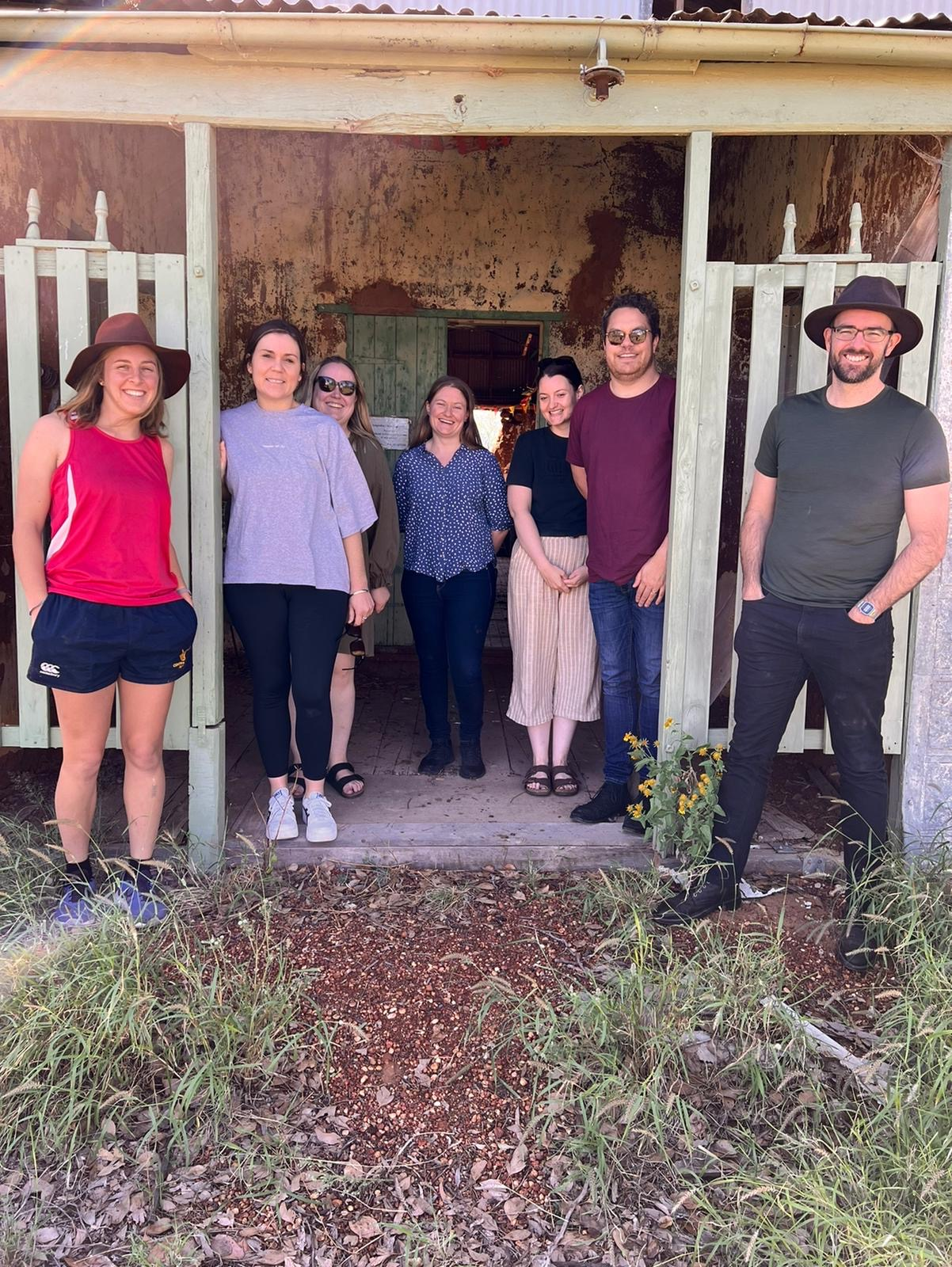
Left to right: Dr Jean Littlewood, FACEM Dr Khyarne Biles, RN Maddie Prestridge, Dr Elizabeth Hudson, Dr Rebecca Gough, ED Registrar Dr Jamee McBride and FACEM and Director of Emergency Medicine Dubbo Health Service Dr Daniel Stewart
‘Trust was an issue at the beginning. You do need to demonstrate that you are there for the right reasons. Once they realised that we were there to listen and learn about their experiences with healthcare and to really take on their feedback – the good, the bad and the ugly – they were happy and proud to talk to us about their community and people, showing us what they’re all about.’
‘I think it was beautiful that they felt comfortable to share their experiences with us. It really opened up the conversation and gave us insight on the healthcare they receive from us. One of the big positives was that they felt heard and seen, and their experiences were validated by us.’
“Trust was an issue at the beginning. You do need to demonstrate that you are there for the right reasons”
Khyarne said that engaging with community health facilities enabled staff to see what services are offered, including for critically ill patients, in resource-constrained settings. ‘I really think they make miracles happen in these areas with the care they provide despite the challenges.’
Daniel said they had also had meetings with local councils where community leaders and members spoke openly and shared their thoughts and feelings.
‘This helped to build rapport and relationships built on trust.’
Better understanding of Indigenous culture also came from taking part in cultural immersion activities such as going to the bush, visiting heritage sites, and cooking and trying different foods.
Staff knowledge and behaviour
Staff feedback has been incredibly positive, said Daniel, with many saying that of all the educational resources available to them, ‘these tours are the most useful and relevant’.
Jamee adds that staff have described the tours as ‘well rounded’ as they cover both health and social aspects.
‘They have a better understanding of the limited resources in a small town, and the challenges people face, including geographical distance, having to travel four hours to get to Dubbo. You don’t always really understand what this is like until you’ve travelled that distance yourself as we did for these tours.’
When asked to share an experience that has stood out or resonated the most, Daniel recalls his first tour and a question he asked about patient transfers to Dubbo.
’Over the years we’d hear about Aboriginal patients who were unwell and refusing to be transferred, even when their situation was life threatening. We’d hear that they preferred to die on country. One of the council members told me that this wasn’t the case, and that the core issue is getting back home – and it’s true, we will transfer patients from far flung areas to Dubbo but there is no arrangement to get them back home. Those that return home have to resort to catching a bus, which is not appropriate when you’re sick and recovering.
’It was a big deal for me because I’d assumed it was a cultural issue and it shifted the narrative from a philosophical, spiritual one of being tied to the land, to more of a practical issue.’
He said that one of the greatest benefits of the tours are ‘having these conversations and gaining insights’.
“A highlight of the tours has been the discussions it has sparked on how to improve care for Indigenous patients”
Khyarne shares that the tours have improved cultural understanding and relationships.
‘One of the biggest things I’ve noticed is that sometimes Aboriginal people, and this has been my own experience, we can often be seen as aggressive just by the way we talk and how we come across and in actual fact it’s just general chit chat. I think, for our non-indigenous colleagues, they better understand that while someone may come across as aggressive that’s just an expression of who they are.
‘It helped our staff to not become defensive, to avoid confrontation and engage better with Indigenous patients.’
For Jamee a highlight of the tours has been the discussions it has sparked on how to improve care for Indigenous patients.
Advice to strengthen cultural understanding
For health services considering a cultural tour or other direct engagement with Indigenous communities, Khyarne provides reassurance that it is likely they will be receptive to being approached.
‘They will want to be involved because we really want what is best for our people and to build understanding among our non-indigenous colleagues to help our communities. They are not going to withhold that.’
She advised that engagement does not need to begin with travelling to remote areas. ‘You could start with having elders come to speak to your department about their lived experience because that is so vital.’
Plans for future cultural immersion tours
The hospital plans to expand, refine and evolve the tours and other engagement.
‘There is still a lot of learning and adapting for us to do,’ Jamee said. ‘We want to continue to work closely with the community to build trust and relationships, and for other communities to see this and the mutual benefits of engaging.’
Khyarne enthusiastically highlights that the department has put up Indigenous art murals in the waiting area of the hospital, funded by an annual grant, for patients to feel a connection between their home and hospital.
Daniel concludes that as a non-Aboriginal person it’s important to focus on the connection and commonality between Indigenous and non-Indigenous people.
‘We shouldn’t think of ourselves as two separate groups. We have a lot of Aboriginal staff working in the hospital, living in our community, and we are all part of a wider community, working and living together.’
Al Spilman Award for Cultural Safety Initiatives in an ED background
The Al Spilman Award for Cultural Safety Initiatives in an Emergency Department was established in 2018 following a generous donation by Mr Al Spilman. The award, provided by the ACEM Foundation and open to an ACEM-accredited ED from either Australia or Aotearoa New Zealand, highlights the importance of cultural safety to improve health outcomes for Australian and Aotearoa New Zealand Indigenous communities. The award recognises a significant step taken towards cultural safety by an emergency department, while acknowledging that cultural safety is a journey of many steps.